Thirteen apartments. A 540-room four-star hotel. Years of complaints, conflicting tests and sleepless summer nights. Now a resident has taken Torremolinos Town Hall to court.
Olive Press multimedia reportUpdated August 2026
Scroll to enter the story
Residents living beside the Meliá Costa del Sol say they have endured years of what they describe as an 'excruciating racket' from the hotel's cooling system.
Rodrigo Rico, president of the Gaona Sol community, has now taken Torremolinos Town Hall to court, accusing the council of violating his fundamental rights by remaining inactive and failing to provide an effective solution.
The legal action is against the Town Hall, not the hotel. The Meliá hotel is identified as the source of the alleged noise disturbance.
13Apartments in Gaona Sol
540Rooms at the four-star hotel
2010Community records show complaints
13 homes, 540 rooms
A tiny community in the shadow of a giant
Community meeting records shown to the Olive Press indicate neighbours were raising concerns about the noise as far back as 2010. Rico has kept pushing for a lasting answer.
Years before the court case
The issue was formally reported to Torremolinos Town Hall in June 2021. Residents described 'serious disturbance' from cooling machinery at the four-star seaside hotel.
The council later required corrective work. Noise barriers were installed around some of the equipment. Residents say they were not good enough and did not stop the problem.
The scale of the fight can feel almost quixotic: 13 apartments facing a 540-room hotel and years of official procedure. But Rico has remained persistent, gathering reports, measurements and community records and taking the matter back to the authorities again and again.
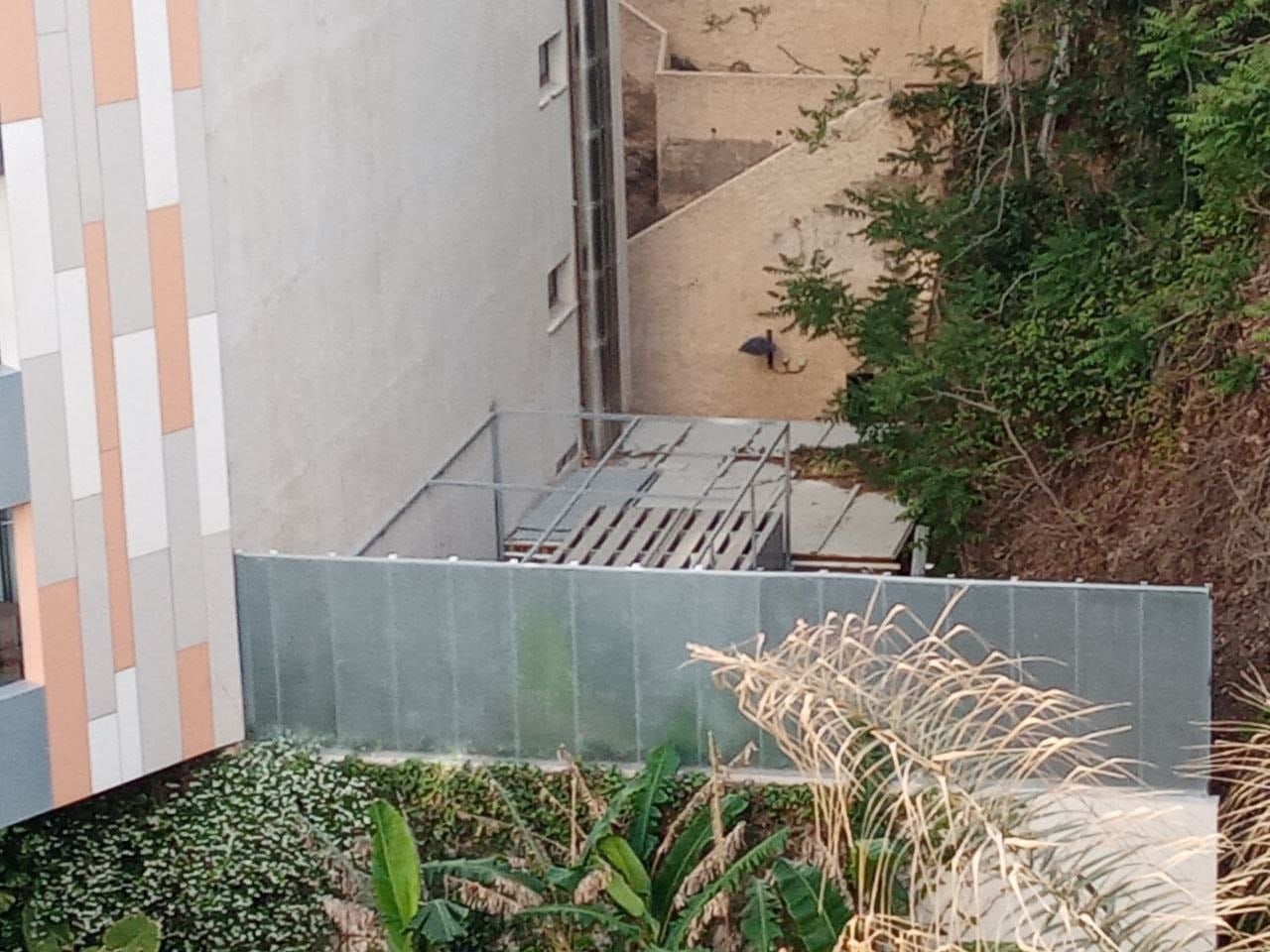
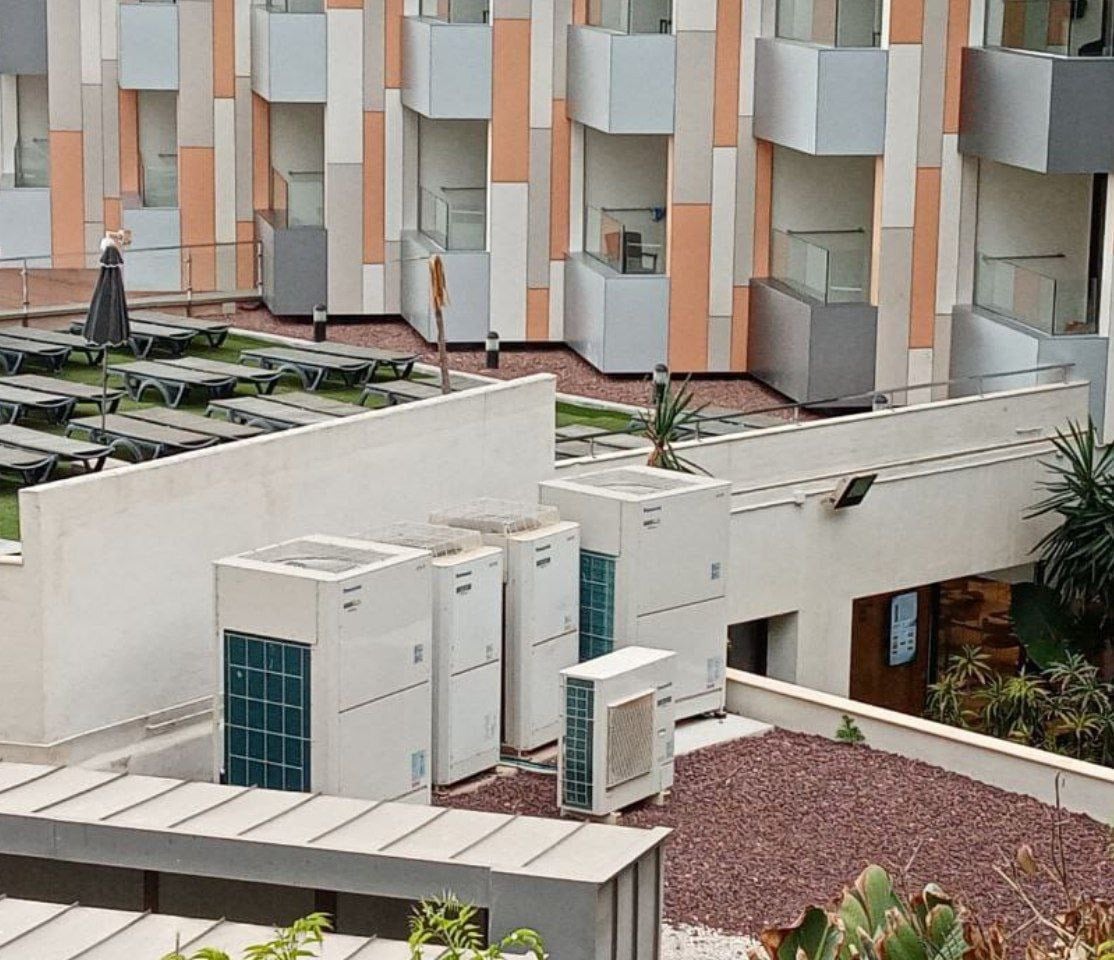
The barrier. Residents say the screens installed around the machinery have not been enough to stop the sound reaching their homes.The source. Cooling equipment at the back of the hotel can operate day and night.
What residents point to. The red boxes highlight the machinery on the left and the barrier/screen area on the right. Neighbours say the layout helps explain why the noise continues to travel into the homes opposite.
Resident evidence
Rico with the result he says changed the argument
Rodrigo Rico stands in front of the hotel holding the July 2026 Calpe result that concluded the average night-time level was 11 dBA above the legal limit.
For Rico, this was more than another technical page. He says it showed in simple terms what residents had been saying for years: the problem had not gone away.
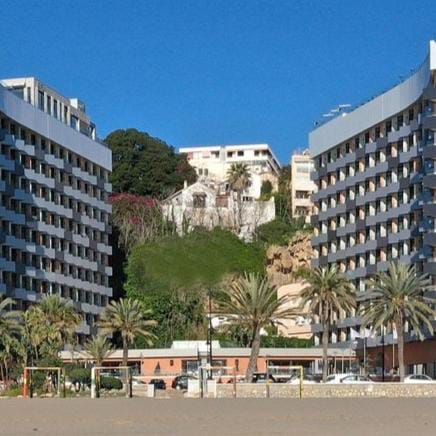
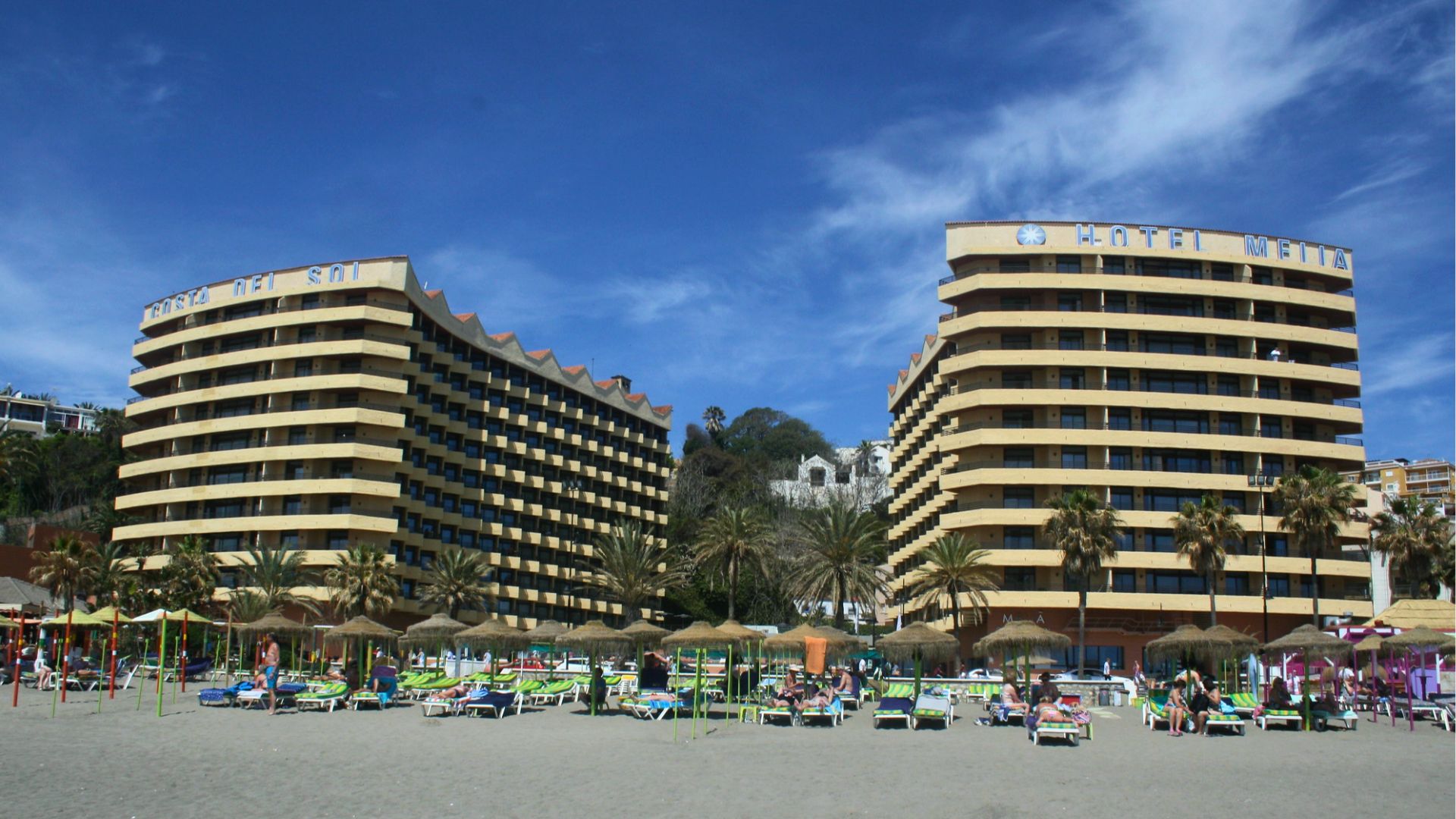
The setting. A view from the seafront shows the Meliá Costa del Sol sitting below the homes behind it.The scale. The four-star beachfront hotel has 540 rooms, dwarfing the 13-apartment Gaona Sol community behind it.
‘Only when the chillers are turned off can you realise how noisy they were and how tranquil the environment can get without them.’William Hands, 80, British pensioner and long-term resident
‘Horrendous’
William Hands, 80, a British pensioner who has lived in the community for many years with his 82-year-old wife, who is in poor health, describes the sound as ‘horrendous’.
‘The noise is constant as a background noise,’ he told the Olive Press. He says it becomes particularly bad in summer, when the cooling systems ‘work around the clock’.
‘We cannot enjoy a glass of cool wine on hot summer evenings on our balconies, or even have breakfast outside in peace,’ he added.
At night, residents say windows and shutters often have to remain closed even during the hottest weather. That is especially hard for children and older people living in the community.
Listen to the setting
The sound residents say follows them through summer
This night-time clip supplied by residents captures the background noise they say dominates summer evenings.
Night-time video supplied to the Olive Press by residents.
A trail of tests
Same noise. Different conclusions.
The dispute is marked by years of reports that do not always agree. These are the key moments.
2010
Complaints appear in community records
Gaona Sol meeting records shown to the Olive Press indicate residents were already raising concerns about the noise.
4 Jun 2021
Formal complaint to Town Hall
Residents report 'serious disturbance' from the hotel's cooling machinery.
10 Jul 2022
Council test closes the case
The Town Hall measures at around 1am and concludes the hotel complies. The case is closed without sanctions.
Council: compliant
10 Feb 2026
A council-commissioned test says no
Virocem records a corrected night-time result of 52 dBA and declares the hotel non-compliant under the rules used in the inspection.
Non-compliant
21 Apr 2026
A second test says yes
Another Virocem test reaches 50 dBA and is declared compliant. Rico says he had initially refused access because the machinery was switched off and the proposed test was being coordinated in advance with the hotel. The test was eventually carried out in April.
Later challenged
21–22 Jul 2026
Independent test: 57 dBA
Calpe Institute of Technology records about 57 dBA and concludes the night-time average is 11 dBA above the applicable limit under its stated decision method.
Calpe: non-compliant
28 Jul 2026
The April result is challenged
Calpe issues a counter-report saying the April Virocem report contains ‘serious errors’ and that its compliant conclusion should not stand.
Aug 2026
Town Hall says enforcement is moving forward
The council tells the Olive Press it has concluded the hotel has not complied with the law and says the matter has been referred to the department responsible for enforcement and sanctions.
Council: action referred
The numbers that drive the story
Three tests, three turning points
The detailed reports contain many calculations. For residents, these are the headline results.
52
dBA · February 2026
The council's contractor marked the result non-compliant.
50 dBA inspection threshold
50
dBA · April 2026
Virocem marked this compliant. Calpe later said the interpretation was wrong and the result should have been treated as a breach.
the disputed line
57
dBA · July 2026
Calpe's independent test was unfavourable. Its daily night-time calculation was 11 dBA above the applicable limit.
Calpe daily limit: 48 dBA
The Town Hall now says the hotel has not complied
‘The matter has been referred to the department responsible for enforcement and sanctions, with a request that the appropriate corrective measures be taken.’
Torremolinos Town Hall spokesperson · statement to the Olive Press
But residents say they are still waiting
Neighbours say they have been waiting for enforcement proceedings to begin but have grown increasingly frustrated by the council’s ‘inaction’.
For them, the issue is no longer simply whether a machine is loud. It is whether years of measurements, complaints and official files have actually protected the people living beside it.
The Olive Press contacted Meliá Costa del Sol management for comment. No response had been received at the time of publication.
Persistence
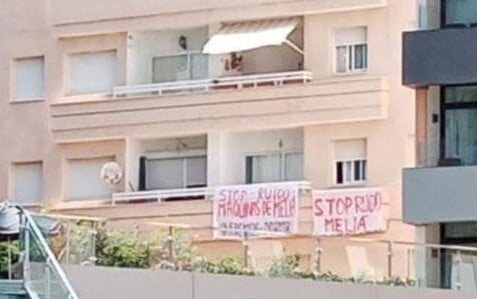
A small banner. A long fight.
The scale may look quixotic, but Rico's persistence has turned a neighbourhood complaint into a fundamental-rights court case. The defendant is Torremolinos Town Hall.
National attention
RTVE has already picked up the story
Spain's national broadcaster has covered the dispute. With the case heading to court, the story has moved far beyond one small residential community in Torremolinos.
RTVE Play footage supplied to the Olive Press, including Malas Lenguas.Further RTVE Play footage supplied as source material.
The homes behind the hotel
Daytime footage shows how close the residential community sits to the hotel buildings and cooling equipment. Residents say the noise is most intrusive during the high season, when cooling demand is at its strongest.
Daytime footage supplied by residents.
The lawsuit
The Legal Case
Rico's lawsuit is against Torremolinos Town Hall. He argues that the local authority's failure to secure an effective and lasting solution has violated his fundamental rights.
He is seeking immediate action and compensation. The filing asks the court to require the Town Hall to ensure that the disturbance is fully resolved.
The council has not simply ignored the case: it has investigated, ordered works and commissioned tests. Rico's case is that, after years of that activity, residents are still living with the problem.
The court will now decide whether the Town Hall's response was legally sufficient.
Next chapter · Mid-September
Now, a judge will hear it.
With RTVE already covering the row and years of reports pointing in different directions, many are eager to see what happens when the case comes before a judge in mid-September.
Reporting notes and source material
Community meeting records supplied to the Olive Press, showing historical complaints dating back to 2010.
Formal complaint to Torremolinos Town Hall, 4 June 2021.
General submission by Rodrigo Manuel Rico Ríos, 6 May 2022.
Torremolinos Town Hall acoustic report, measurements of 10 July 2022; resolution dated 2 August 2022.
Virocem acoustic inspection, 10 February 2026; report dated 12 February 2026.
Virocem acoustic inspection, 21 April 2026; report dated 23 April 2026.
Calpe Institute of Technology independent acoustic test, measurements 21–22 July 2026; report dated 12 August 2026.
Calpe Institute of Technology counter-report on Virocem A26095, dated 28 July 2026.
First page of court claim against Torremolinos Town Hall, fundamental-rights procedure 44/2026.
Interviews with Rodrigo Rico and William Hands, plus updated photos and the night-time noise video supplied to the Olive Press.
Statement supplied by Torremolinos Town Hall to the Olive Press.
Legal note: The court has not yet ruled on Rico's allegations. The legal action described in this report is against Torremolinos Town Hall. The Meliá Costa del Sol is described as the alleged source of the noise but is not the defendant in this court action.
More reporting on The Olive Press
Front pageFor more Spain news in English, visit the Olive Press front page.
This multimedia report keeps just one main external link, taking readers directly to the homepage.