
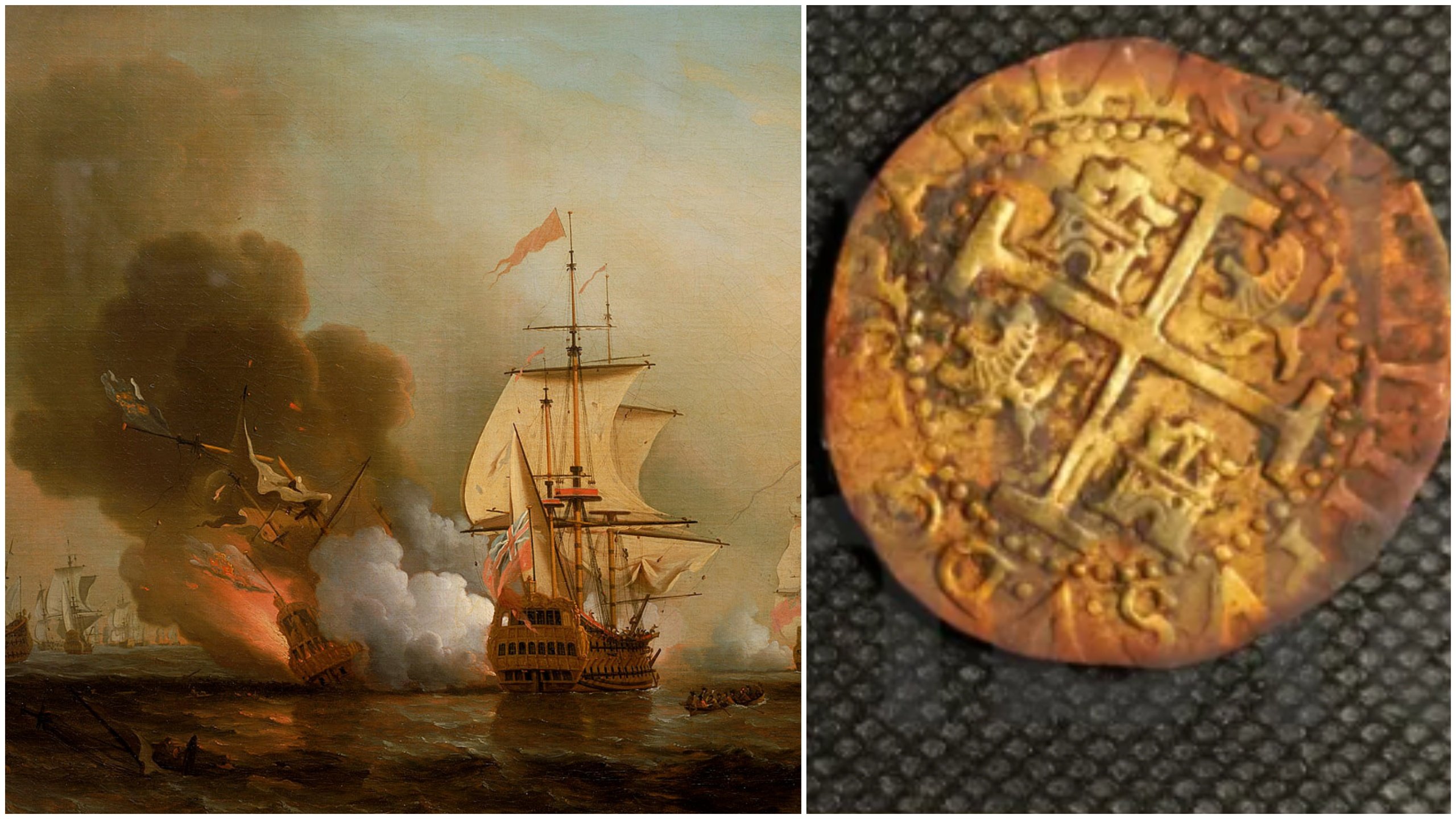
THE first treasures of an 18th-century Spanish galleon dubbed the ‘holy grail of shipwrecks’ have been brought to the surface, with over €15 billion of lucrative bounty thought to be lying on the seafloor.
Widely believed to be the richest shipwreck in history, three gold coins, a cannon and a porcelain cup have been recovered by Colombian researchers from San Jose, a Spanish ship that sank in 1708 in the Caribbean Sea.
The 64-gun galleon vanished during the Battle of Baru near Cartagena, Colombia, after a chastening encounter with a British squadron under the command of Charles Wager.
A volley of gunfire is believed to have ruptured the hull and set the vessel alight, sending San Jose plummeting towards the seabed.
Of its 600-strong crew, only 11 survived.
A member of the Spanish treasure fleet during the War of the Spanish Succession, the galleon’s wreck is believed to have gone down carrying a fortune in gold, silver and emeralds as it attempted to ferry wealth from Panama back to the Iberian peninsula.
For centuries, its fortunes lay undisturbed until Colombian researchers located the wreck in 2015, lying at a depth of over 600 metres.
The discovery prompted a fierce custody battle involving Colombia, Spain, a US-based company and Latin American Indigenous communities.
Sea Search Armada (SSA), an American firm, claims it first located the wreck in the 1980s and struck an agreement with Colombia to share the site – as long as the company received a chunky share of the profits.
But the Colombian government refuted the claim and instead said they had the sole right to its fortunes as it lies within the country’s territorial waters.
The government, currently headed by Gustavo Petro, has kept the exact location a secret and created a protected archaeological area to prevent the wreck being privately exploited.
Spain threw its hat into the ring, claiming the cargo remained Spanish public property under maritime and heritage law – but attempts to intervene were quashed at the Hague in 2023.
Some even argued that the fortune belonged to Indigenous communities in South America, as much of the treasure was largely extracted by Spanish colonialists via forced or exploitative labour of the local population.
Click here to read more Spain News from The Olive Press.