

EXACTLY 45 years ago today, a moustachioed Guardia Civil officer burst into Spain’s parliament, fired a submachine gun into the ceiling and ordered everyone to the floor.
“Quiet everyone,” shouted Lieutenant-Colonel Antonio Tejero as he hijacked the beating heart of a fragile young democracy.
It was February 23, 1981, a date forever etched into the Spanish psyche as ’23F’.
For 18 terrifying hours, the nation held its breath as Tejero and 200 armed men held MPs hostage in Madrid.
READ MORE: The anniversary of Spain’s coup d’état
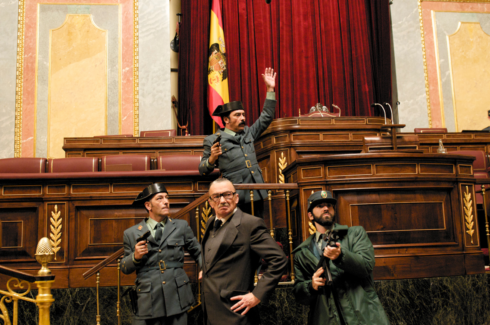
Politicians from the PSOE (the Spanish Socialist Workers’ Party) were forced to sit facing blank walls, staring down the barrels of machine guns and waiting for what felt like inevitable execution.
Outside the chamber, tanks rolled onto the streets of Valencia.
Spaniards frantically packed bags, terrified that the dark, bloody days of the Franco dictatorship had returned just six years after the despot’s death.
Yet today, the man who nearly destroyed modern Spain lives a remarkably quiet life just a few kilometres from the bustling resorts of the Costa del Sol.
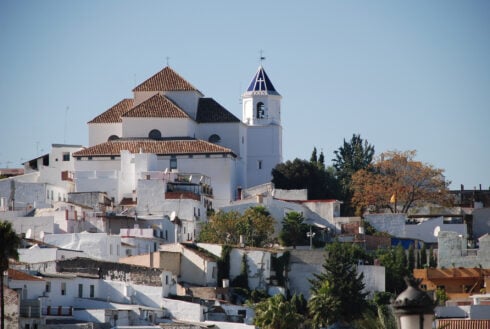
Now weeks away from his 94th birthday, Tejero resides in the sleepy Malaga town of Alhaurin el Grande.
He is a familiar face in the pueblo, a pensioner browsing the local shops and enjoying the warm Andalucian sun alongside thousands of British expats who are completely unaware of the dark shadow he casts.
It is a jarring contrast.

Most British expats are long-accustomed to a remarkably stable political environment back home where power shifts smoothly at the ballot box.
But for Spain, the transition to democracy was a far more perilous tightrope walk.
At the time of the coup, the country was in absolute turmoil.
The prime minister had suddenly resigned, and the violent Basque separatist group ETA was murdering politicians and police officers on a weekly basis.
Tejero, representing a hardline military faction that felt entitled to challenge the system with weapons, decided it was time to step in.
His plot only unravelled thanks to a late-night television broadcast by King Juan Carlos.
Appearing in full military uniform at 1am, the monarch firmly ordered the rebellious units back to their barracks.
READ MORE: Pedro Sanchez sworn in as Spain’s prime minister in presence of King Felipe VI
“We are now a parliamentary democracy,” the king declared to a terrified nation.
The coup collapsed, Tejero was arrested, and the king’s popularity soared to unprecedented heights.
The disgraced officer spent 13 years in prison for rebellion before being released on licence, or ‘libertad condicional‘, in 1996.
Since then, he has wisely kept his head down in Alhaurin el Grande, painting landscapes and avoiding the political spotlight.
The bullet holes remain clearly visible in the ceiling of the Spanish parliament today, a deliberate reminder of the day the country almost slipped backwards.
They serve as a chilling monument to the fact that the fragile peace enjoyed by locals and expats alike was once hanging by a thread, held at gunpoint by the quiet pensioner who now lives next door.
Click here to read more La Cultura News from The Olive Press.