
MARKETS reel as Iran war sparks historic sell-off across global stocks
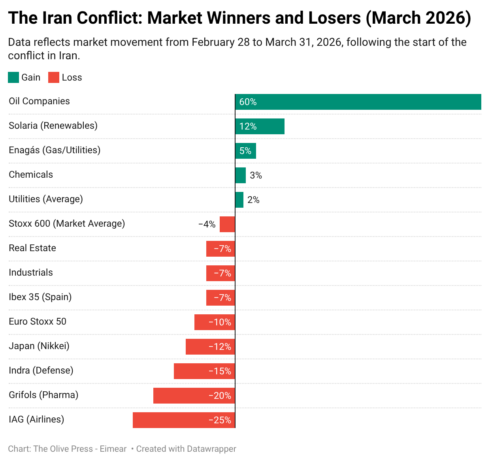
Spain’s Ibex 35 has plunged almost 8% since the Iran conflict began, sending shockwaves through investors and global markets.
The downturn follows attacks on Iran by the United States and Israel on February 28, which triggered a chain reaction across equities, bonds, and commodities.
Almost all sectors have suffered, with traditional safe havens such as gold and sovereign debt failing to protect investors.
Oil, chemical, and utility stocks are the only sectors advancing, benefiting from soaring energy prices and renewed demand.
Global equities have fallen sharply: China’s stock market is down 3%, Japan’s 12%, while Europe’s Euro Stoxx 50 has dropped almost 10%, marking its steepest monthly fall since COVID?19.
Brent crude, an oil benchmark has emerged as the standout performer, climbing from $72 per barrel on February 27 to nearly $120 for May delivery a historic monthly increase of over 60%.
The June contract has eased slightly to around $104 per barrel, giving some relief to jittery investors.
Other sectors showing resilience in the Stoxx 600 include chemicals (+2.6%) and utilities (+2%), supported by rising demand for alternative energy sources.
In Spain, energy companies such as Enagás, Solaria, and Endesa have gained between 5% and 12%, while Puig and Logista avoided monthly losses amid corporate manoeuvres.
Sectors most sensitive to interest rate hikes, such as real estate, and those hit by rising energy costs, like industrials, were the biggest losers, falling around 7% in Europe.
Within the Ibex, defense company Indra, steelmaker ArcelorMittal, pharmaceutical group Grifols, and airline owner IAG recorded declines of 15–25%, affected by failed acquisitions, steel market weakness, pharmaceutical volatility, and disrupted travel.
READ MORE: Inflation in Spain climbs steeply to 3.3% as impact of Iran war takes hold
Sovereign debt has also fallen sharply, particularly short-term bonds, amid fears that central banks may respond to inflation with rate hikes despite the Federal Reserve’s current restraint.
Long-term yields rose 0.3–0.5 percentage points, with Spain at 3.5%, Germany at 3%, and the United States at 4.3%, showing that bonds have failed as safe havens.
Precious metals, usually crisis assets, have also underperformed. Gold is priced just above $4,600 an ounce, far from January’s near $5,500 highs, while silver is down 20%.
Investors have cashed in on last year’s gains, when gold rose 70% and silver 150%, leaving metals vulnerable to potential rate hikes.
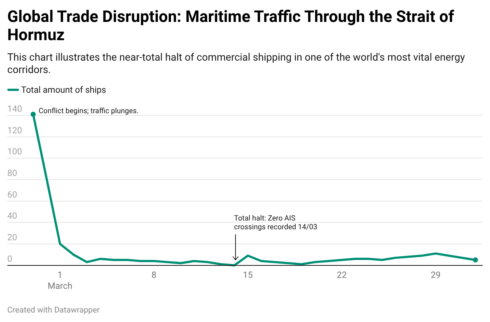
Market optimism now hinges on hopes for an early end to the conflict, despite the Strait of Hormuz remaining blocked.
Political volatility continues to fuel market swings, with investors eager to avoid missing a rebound, analysts warn.
Adolfo Monclús, director of Asset Management, Latin America, and co-director of Investments at EDM, explains that the volatility of political decisions creates fertile ground for market reactions.
He adds that the fear of missing out on a big rebound is also very powerful.
Click here to read more Spain News from The Olive Press.