
A CRITICALLY endangered orca has been found with what conservationists fear are shotgun pellet wounds after being spotted off the coast of Cadiz.
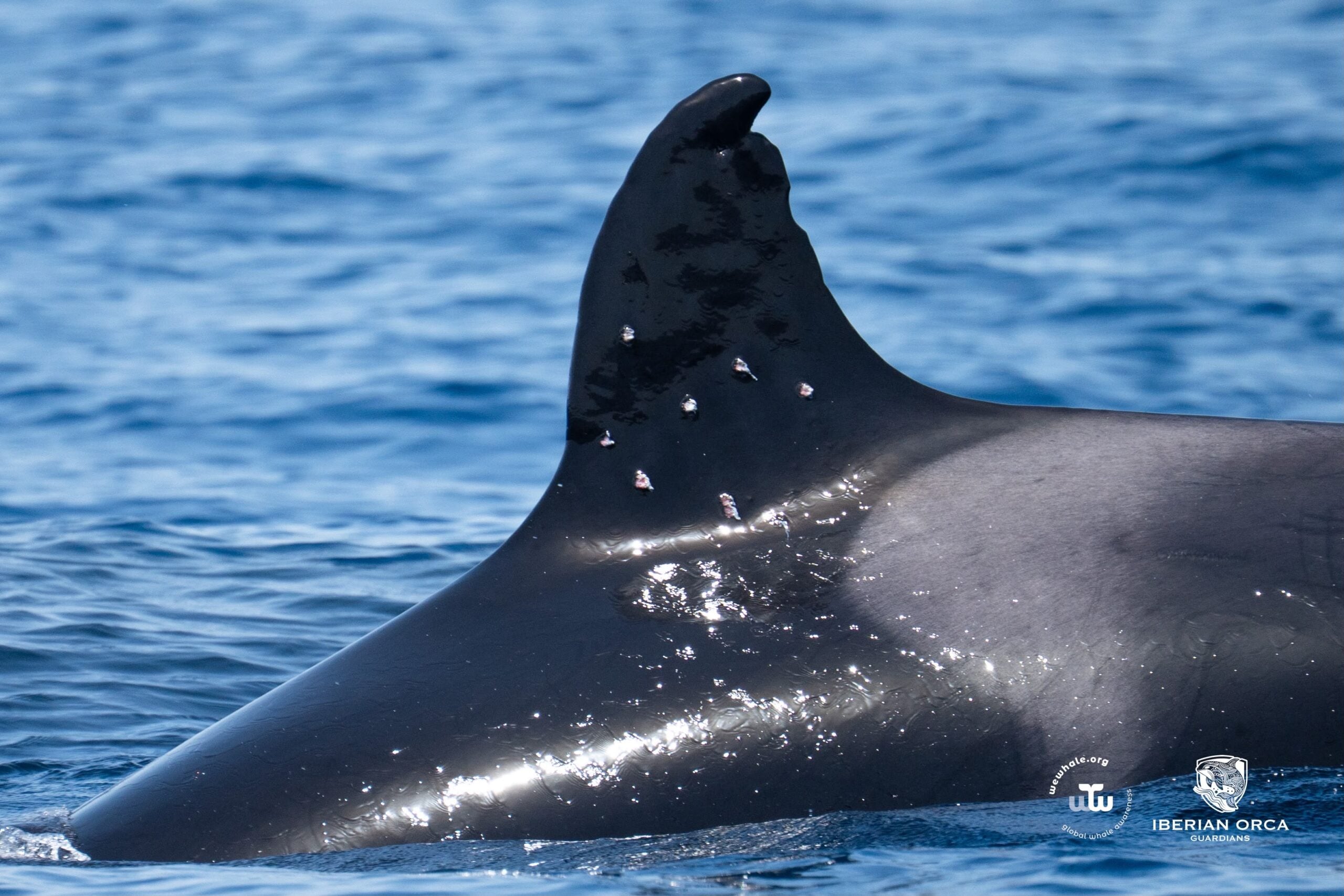
The injuries were discovered during field observations by WeWhale and Iberian Orca Guardians, who say several marks have appeared across the animal’s dorsal fin and back.
And there is one detail that makes the discovery particularly alarming: they were not there a few weeks ago.
The groups had photographed the same orca recently and say those earlier images show her without any of the wounds now visible.
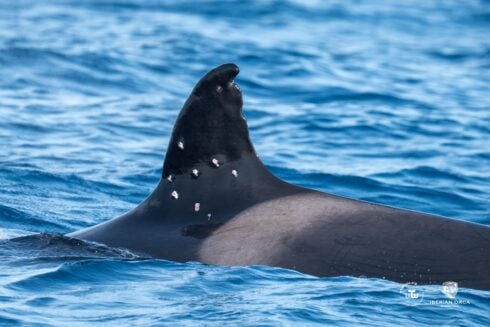
Based on their number, size and distribution, the conservationists believe the marks are consistent with a shotgun discharge.
“We know her. We were with her a few weeks ago and these wounds were not there,” said Janek Andre, founder and president of WeWhale and the Iberian Orca Guardians Foundation, told The Olive Press.
“Now we are seeing multiple impact wounds across her dorsal fin and back which, in our assessment, are consistent with her having been shot with a shotgun.”
The animal, known as Toñi or La Abuela (the Grandmother), is believed to be the oldest known member of the Iberian orca population.
For the teams who have spent years following the animals, the latest pictures have hit hard.
“For us, these aren’t anonymous animals. We know them individually, we know their families,” Andre said.
“Seeing La Abuela like this is devastating.”
No shooter has been identified and there is currently no evidence establishing who caused the injuries.
But if the conservationists’ suspicions are correct, the incident would be particularly troubling given just how vulnerable the Iberian population already is.
Only a very small number of the animals survive, meaning the loss or serious injury of a single orca can matter to the future of the entire population.
The discovery also comes after years of headlines over Iberian orcas interacting with boats around the coasts of Spain and Portugal.
Those encounters have divided opinion, particularly among sailors, after a string of vessels were damaged.
Andre said that whatever people think of the controversial interactions, deliberately attacking an orca could never be justified.
“Whatever someone’s opinion about those interactions may be, shooting at these animals can never be an acceptable response,” he said.
“These orcas need protection, not retaliation.”
The organisations have kept the original photographs and observational material and say they will continue following the animal closely to monitor her condition and behaviour.
For now, exactly what happened remains unknown.
But the photographs leave conservationists with an uncomfortable question: what happened to one of the Iberian Peninsula’s most endangered marine animals in the few weeks between those two sightings?
Click here to read more Spain News from The Olive Press.