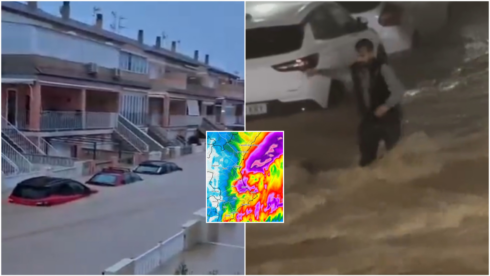

THE US National Hurricane Center has begun tracking a rare August storm forming off the coast of Spain that threatens to batter the peninsula this weekend.
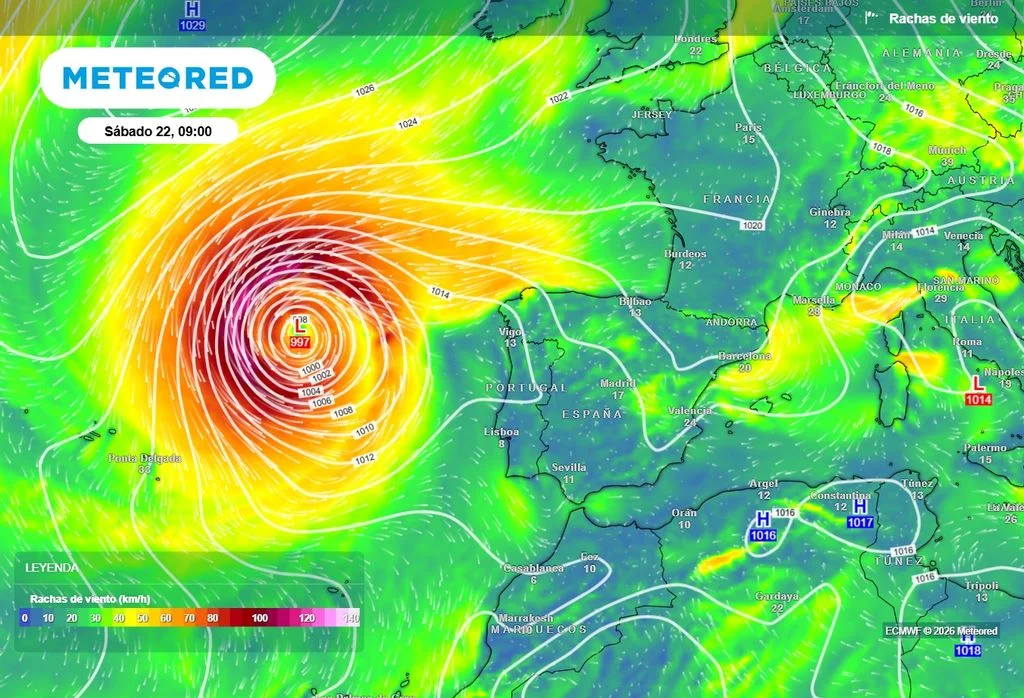
The deep low-pressure system is currently developing rapidly in the Atlantic between the Azores and the Spanish mainland.
Meteorologists warn the storm is undergoing a rapid and violent drop in atmospheric pressure.
This extreme pressure drop, often referred to as a ‘weather bomb’, causes the storm to intensify incredibly fast.
The American agency has given the system a 20% chance of developing traits of a tropical storm by early Sunday.
This means the system could start acting more like a hurricane, drawing its energy directly from the unusually warm ocean waters rather than cold weather fronts.
Offshore winds are expected to reach hurricane-force gusts exceeding 150kph in open waters on Saturday morning.
While the core of the storm will reach its maximum intensity over the ocean, it will begin moving towards the mainland from Sunday.
Remnants of the storm and an associated weather front will sweep across the country between Sunday and Monday.
This will bring heavy rain, gales and thunderstorms to western, northern and northeastern regions.
Wind gusts are forecast to exceed 60kph along western coastlines and inland mountain areas, particularly on Monday.
Intense Friday downpours are set to hit Catalunya and northern Castellon before pushing into the Ebro valley.
Meanwhile, thick morning mist is forecast across the Andalucia coast facing the Alboran Sea and the Galician coast on Sunday.
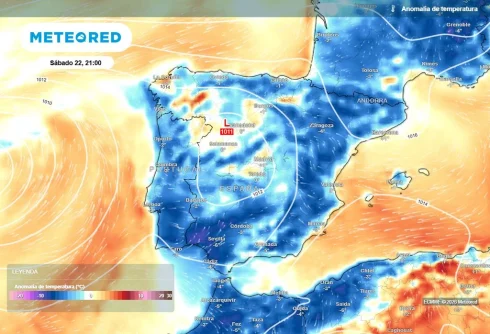
The storm arrives as a separate polar air mass sweeps across the country today, plunging temperatures by up to 10C along the Mediterranean coast and across the Balearics.
Sea temperatures remain exceptionally high at over 25C in the Cantabrian Sea and above 30C in the Mediterranean.
This extreme sea heat is providing extra moisture and energy to fuel the incoming storms.
The stormy conditions are expected to linger into the middle of next week across the northern half of the country.
Click here to read more Weather News from The Olive Press.