

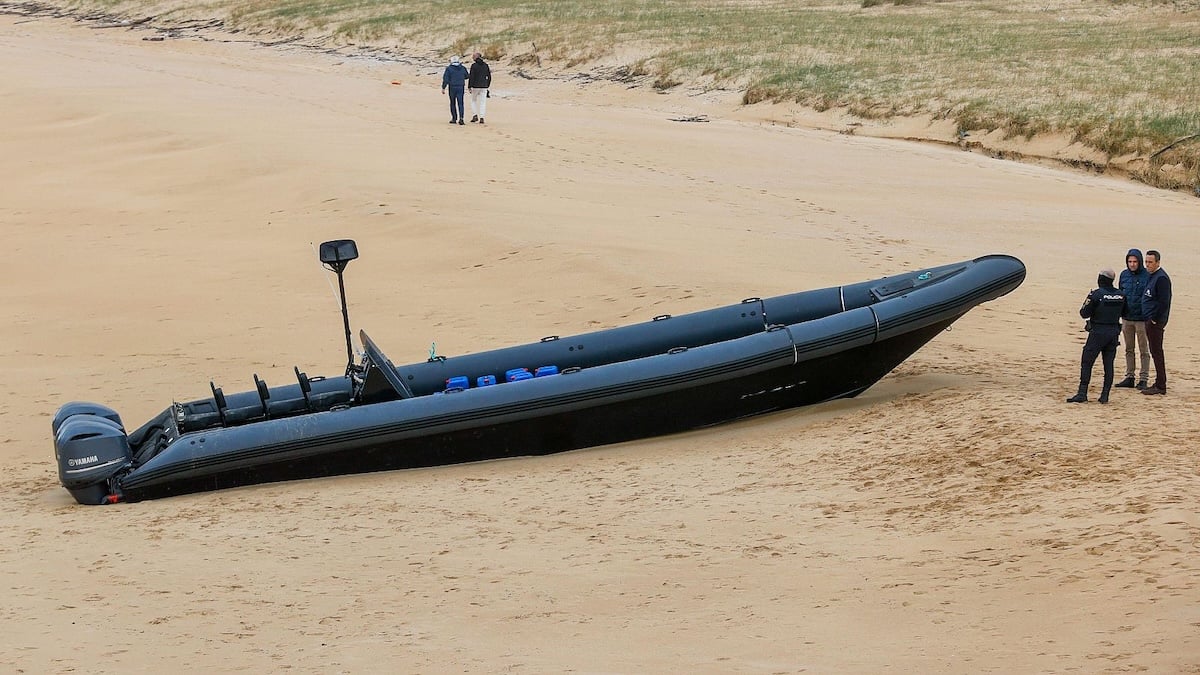
THE drug gangs smuggling cocaine onto Spain’s southern coast have come to the attention of American audiences after a damning investigation by the Wall Street Journal.
Hundreds of souped-up narcolanchas (drug boats) operating in the Strait of Gibraltar now have the upper hand over the Spanish state, the paper reports.
While the deteriorating situation with the drug traffickers in southern Spain is well known within the country and in the near abroad, it has rarely made a such impression on international audiences farther afield.
The WSJ sent two of its top reporters to Cadiz province in Andalucia to track the illegal trade and the law enforcement efforts to stop it, meeting top law Spanish enforcement officials within the Guardia Civil and customs.
They even tagged along on a customs boat along the southern coast and into the Guadalquivir River, often dubbed the ‘cocaine superhighway’.
The report the Americans sent back to Washington was chilling, detailing how the gangs use drones, radar and thermal imaging to track patrols and dodge them, and their boats can reach 60 knots (around 70mph.)
The authorities cannot keep up. Of the roughly three dozen patrol boats available to law enforcement across the south, fewer than ten can match a narcolancha for speed.
Officers are only allowed to open fire if the traffickers shoot first.
Juan Luján, who heads the National Police’s organised crime unit on the Costa del Sol, told the WSJ that Spain’s security forces had effectively surrendered control of their own waters.
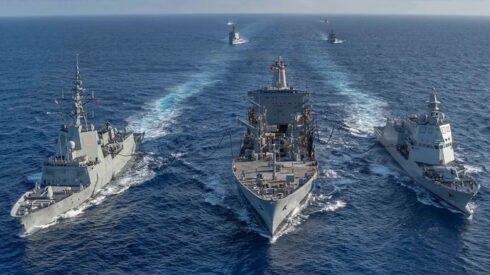
Lisardo Capote, head of the customs surveillance service in the Campo de Gibraltar, put it more bluntly: “We can see them. The problem is stopping them.”
On the night of February 9, 2024, a drug boat violently rammed a Guardia Civil inflatable in the port of Barbate, Cadiz, instantly killing Miguel Angel Gonzalez, 39, a diver with the underwater activities unit, and David Perez Carracedo, 43, of the rapid action group.
Four other officers were injured, and onlookers on the quayside were filmed cheering the smugglers on.
The case is finally heading to court. Last week a Barbate judge ordered the Moroccan pilot of the boat to stand trial at the Cadiz provincial court on two counts of murder and four of attempted murder, one for each officer who survived.
He has been held in custody without bail since September 2024.
Barbate was not the last tragedy. In May, two more Guardia Civil officers were killed and two injured about 80 miles off the Huelva coast, when their two boats collided during a high-speed chase after the smugglers made dangerous evasive manoeuvres.
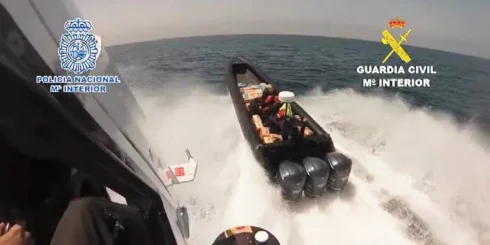
The narcolancha was reportedly carrying around 4,000 kilos of hashish.
The WSJ says the violence is being driven by a flood of cocaine, with global production at record levels. Cartels ship the drug from Ecuador and Brazil via West Africa, and Europe is now the world’s second-biggest market after the US.
Spain is on the frontline. Cocaine seizures doubled in 2023 to around 117 tonnes. In 2024, according to the EU’s drugs agency, Spain seized more than Belgium, the Netherlands and Germany combined, even though those three countries are home to Europe’s biggest ports.
This May, the Guardia Civil intercepted more than 30 tonnes off the Canary Islands, the largest single cocaine seizure ever recorded anywhere.
Even hauls that size barely dent the trade. Wholesale prices in Spain have collapsed to as little as $15,000 a kilo, compared with $35,000 two years ago and up to $45,000 before the pandemic.
Street prices have held steady, but so much cocaine is arriving that the gangs no longer bother to cut it, so purity is higher than ever.

The boats themselves are illegal in Spain, and owning one can carry five years in prison. Even buying 100-litre jerrycans of diesel is now a crime, because the fuel is presumed to be destined for a drug boat.
That has not slowed the gangs. The boats are built in secret workshops in Portugal and brought into Spain by lorry or river.
Four-man crews can wait for up to a month in international waters, fishing for food, until cocaine is dropped from freighters or narco-subs.
Once the cargo is collected, the maze of channels along the Guadalquivir river offers endless places to land and hide it.
A fully kitted-out boat costs more than $500,000, and pilots earn around $350,000 a trip. Both figures are loose change against a three-tonne load, which can fetch more than $250 million on the street.
By contrast, the WSJ calculates that Spain has spent less than $230 million over a whole decade on its Campo de Gibraltar security plan.
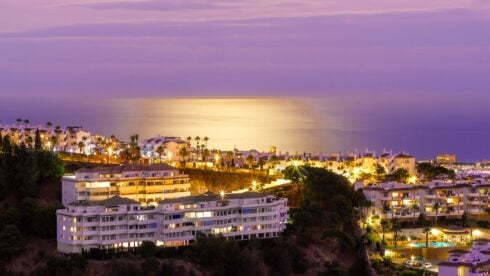
One Marbella trafficker told the paper that the speedboat route now undercuts the container ports, with gangs charging a 12% freight fee compared with 21% for shipments through Algeciras.
Readers on the Costa del Sol will not be surprised to learn that Marbella features heavily.
The WSJ traces the city’s reputation back to the Franco era, when the dictator was happy for criminals to spend their money there as long as they kept the peace.
Today, according to an officer specialising in money laundering, dirty cash is washed through property, nightclubs, gyms and shell companies abroad.
Gangs are said to buy up avocado harvests to sell to supermarkets, and even pay lottery winners a premium in cash for their winning tickets.
Defence lawyer Ricardo Alvarez-Ossorio told the paper his cocaine caseload has risen at least fivefold in two years. He warned that foreign gangs, including Serbian and Mexican groups, have brought a new willingness to shoot at police.
The profits reach further down the coast. In La Linea de la Concepcion, where unemployment runs at around 30%, teenagers are offered thousands of euros for an afternoon’s lookout or portering work.
Marbella police union rep Oscar Camacho summed up the pull of the gangs: “In the end, who feeds them? The narcos.”
Click here to read more Andalucia News from The Olive Press.






America’s Intelligence Agencies must be a-ma-zing to work out southern Spain is teeming with drug gangs. A bit like saying there’s possibly, maybe some money laundering scammers based in Dubai these days. The only people who seem to not know about it must be the Spanish and American authorities. My cat knows all about it and he can’t read.