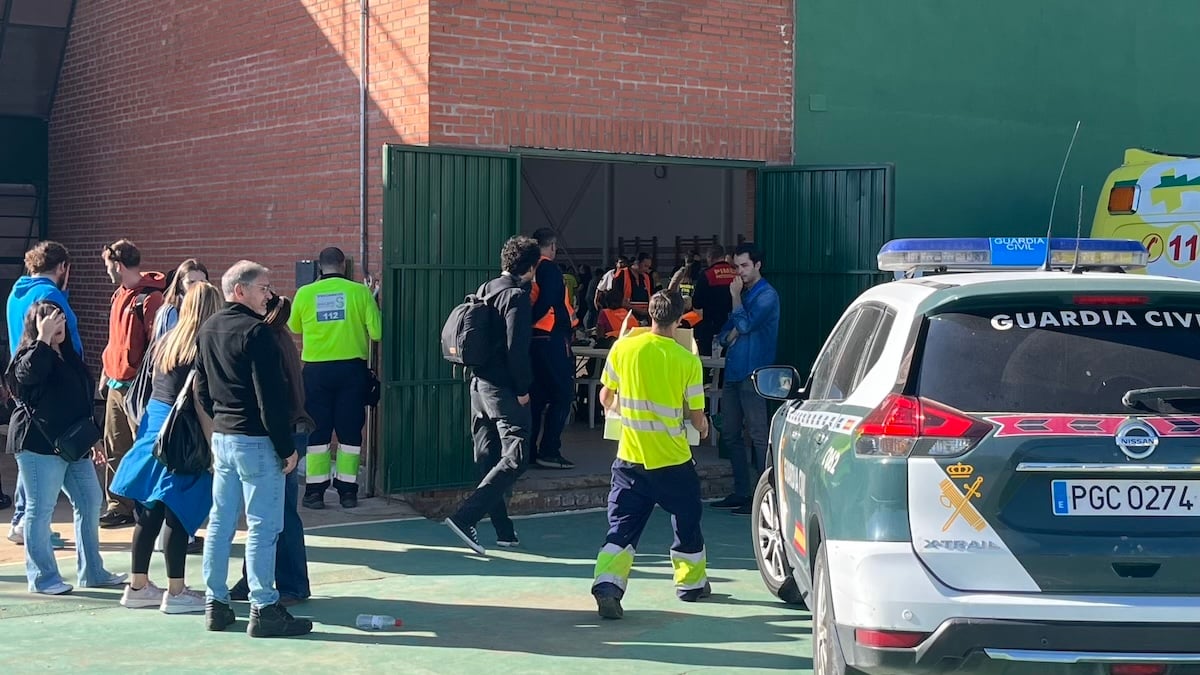
THE small Toledo town of Urda has become the scene of Spain’s deadliest rail disaster in more than a decade. Outside the makeshift medical centre in the community gymnasium, the Olive Press found a community in deep shock.
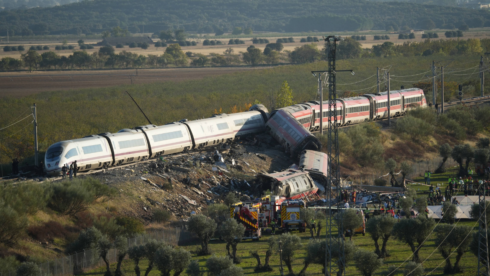
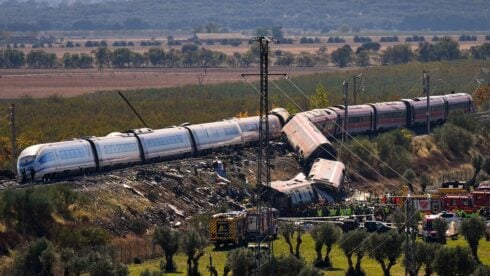
At least 68 people were killed on Wednesday morning when a high-speed train ploughed into the back of a stationary Iryo service on the Madrid–Seville line, just outside the town.
The collision happened ahead of one of the busiest travel periods of the year, as Spaniards head home to spend All Saints’ Day with their families. Planned industrial action later this week meant that many passengers had decided to take an earlier train to beat the strikes.
READ MORE: Toledo train crash round-up: At least 68 dead in Spain’s worst rail disaster since 2013
From outside the local sports hall, which had been turned into a makeshift hospital, the Olive Press spoke to survivors, rescuers and friends of the missing who had come in search of any information they could find.
As friends and family waited outside the hall for news, the wait was repeatedly punctuated by the screams and cries of victims’ relatives. One woman ran out of the building and broke down in tears in the street.
Tangui Binier, who was on board the Iryo train that was struck from behind, said it had been stationary for around ten minutes when the collision happened.
“At first we didn’t know what it was,” he said. “We looked out of the window and saw falling cables and smoke and no-one was really sure what to do.
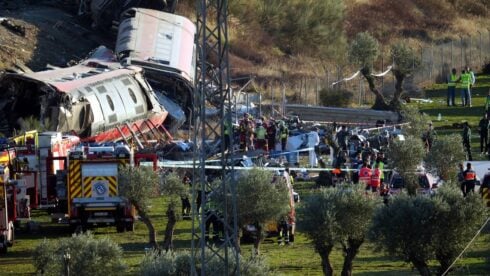
“There were some wagons that were tilted sideways, people were trapped in there with broken ribs, a lot of older people that had mobility issues. It was hard to see, to be honest.”
He told us that corpses and limbs were strewn across the track as he worked to help as many as he could.
He added: “I never imagined this would happen this morning when I was getting ready to go to Sevilla.”
Another survivor, Juan Francisco, said the force of the impact knocked him unconscious – and when he came round, he found himself in a different carriage entirely.
“It launched me through the aisle in the other direction,” he said. “All the other passengers were thrown out too.”
Across Urda and the surrounding communities, support flowed in. Food, water and blood were all delivered to support the injured.
Almost every business in Urda was closed as residents gathered to wait for news.
The stories we heard of those who had died were also harrowing. One family told us how they had come to search for news of a close friend who had been travelling in the first carriage of the Renfe train.
He was on the way to Seville to begin a new life with his wife and young child.
Another victim was on the way to attend her daughter’s wedding.
When night fell, residents of neighbouring Consuegra gathered outside the church to hold a vigil, applauding in celebration and remembrance of those lost.
What we know so far
It is the worst train crash in Spain since the Angrois derailment near Santiago de Compostela in 2013, which claimed 80 lives – and officials have warned the death toll is likely to rise.
It is also the second fatal high-speed crash in the country this year, coming nine months after 45 people died near Adamuz, in Córdoba province, in January.
According to Iryo, its service 6076 from Madrid to Seville left the capital at 7.54am and was hit from behind by a Renfe Series 103 train at 8.48am, at kilometre point 118 near Urda.
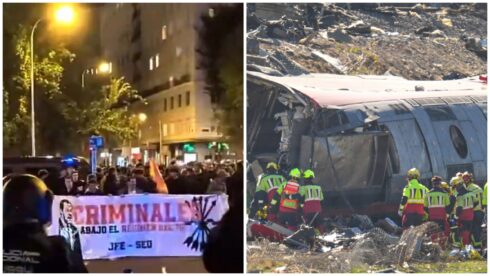
The impact knocked the Iryo train’s two rear carriages off the rails. One was torn apart, leaving twisted metal and debris strewn down a gravel embankment on a flat, straight stretch of track between Urda and Los Yébenes.
Transport Minister Óscar Puente said the control system at Urda had failed, bringing six trains to a halt. One was then allowed to set off again and travelled around 25km before hitting the stationary train at high speed – something Puente called “inexplicable”.
Castilla-La Mancha regional president Emiliano García-Page said around 80 people had been injured, some 50 of them seriously and 15 critically, and warned that some of the most badly hurt might not survive.
Trains run by the same two operators, Renfe and Iryo, were also involved in January’s Adamuz disaster, which shook confidence in Spain’s high-speed network.
Prime Minister Pedro Sánchez cancelled his agenda and is due to travel to Urda. High-speed services between Madrid and Andalucía have been suspended until further notice.
A town in shock
Urda itself is reeling. This corner of La Mancha is best known as the landscape that inspired Don Quixote, its countryside lined with windmills, but today it is the centre of a national tragedy.
The Guardia Civil has taken control of the scene and closed most of the main roads, directing survivors, first responders and delayed passengers to a single central point.
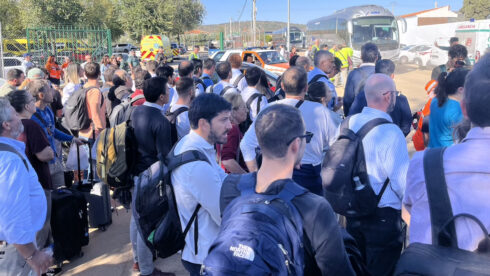
When the Olive Press arrived, a fleet of coaches was ferrying passengers away from the area. Hundreds of people had been taken off trains that were travelling behind the two involved in the collision.
A military emergency brigade has been deployed to support firefighters, police and paramedics at the crash site.
Details are still emerging, but rescue crews in Urda continue working through the night. The Guardia Civil has flown in 30 temporary refrigeration units to store bodies.
When the sun comes up tomorrow, it will dawn on a community that has been changed forever by what they experienced today.
Click here to read more Exclusive News from The Olive Press.