With Alessio Ghirlanda
AT least 68 people have died and dozens were injured after two high-speed trains collided south of Madrid.
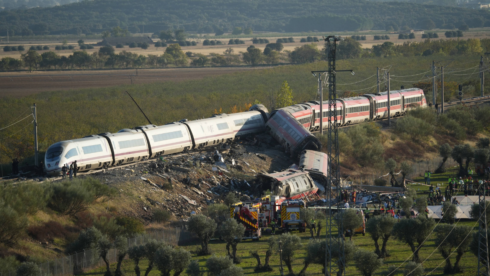
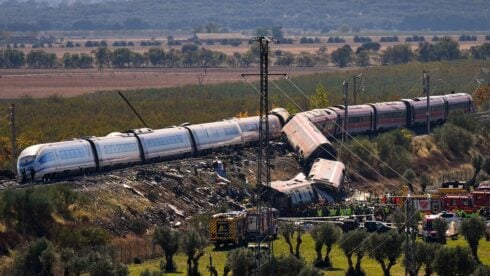
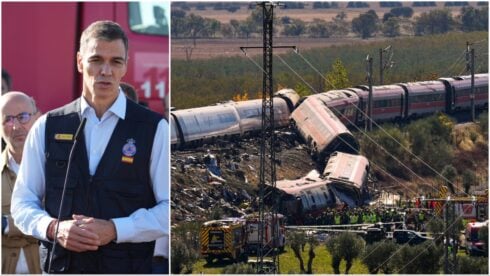
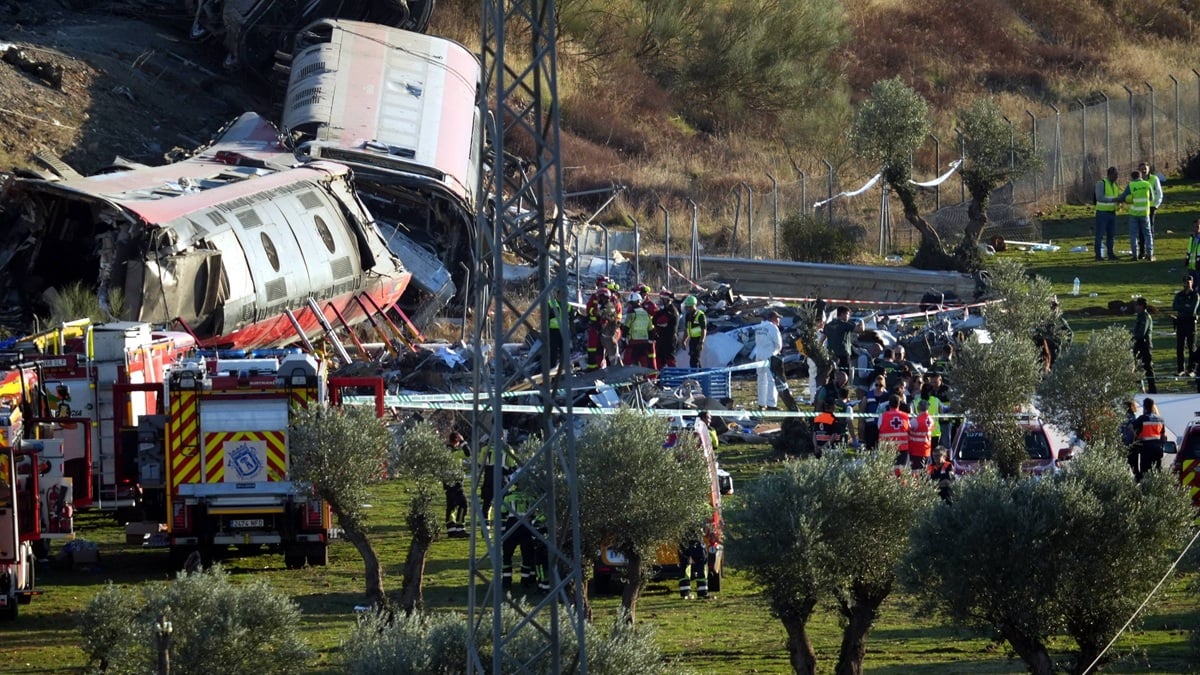
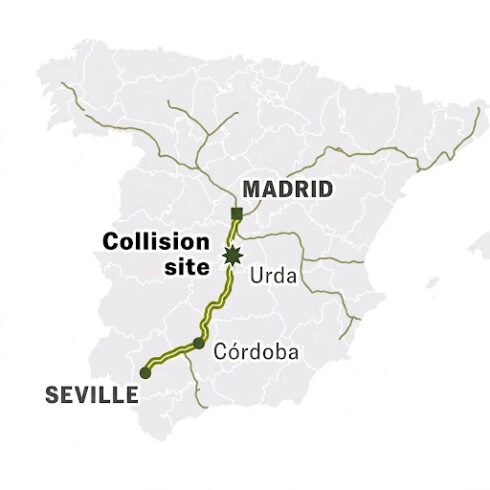
The crash happened at 8.54am on Wednesday near Urda station, in the province of Toledo, with three carriages plunging down an embankment after the collision.
A total of 77 people are being treated for their injuries in nearby hospitals, with 15 reportedly fighting for their lives.
It is the deadliest rail disaster in Spain since 2013, when a high-speed train derailed near Santiago de Compostela, killing 80 people.
The death toll has also surpassed that of the Adamuz train crash earlier this year, which killed 46 people when two high-speed services collided near the Cordoba town on January 18.
Castilla-La Mancha president Emiliano Garcia-Page said the death toll could continue to rise as rescuers reach the deepest parts of the wreckage.
The two trains involved in Wednesday’s crash were carrying a combined 544 passengers.
The collision involved a Renfe AVE service that left Madrid at 8am bound for Sevilla and a train operated by private company Iryo. The crash happened between the villages of Los Yebenes and Urda.
Spanish Transport Minister Oscar Puente said the Iryo train was stationary on the tracks when the Renfe service ploughed into it from behind at high speed.
READ MORE: Madrid rail controllers gave ‘wrong’ orders before deadly Toledo crash, transport minister says
The crash sent two Iryo carriages and one Renfe carriage plunging down an embankment.
According to the minister, the accident happened after a rail traffic controller in Madrid authorised the Renfe train to travel at ‘normal speed’, even though the Iryo had come to a complete halt on the tracks.
The controller was questioned by Spain’s Guardia Civil on Wednesday afternoon, El Pais reported.
The disaster prompted heartfelt condolences from leaders across the political spectrum, with most parties cancelling their engagements for the day despite the ongoing election campaign.
Spanish prime minister Pedro Sanchez arrived at the crash site shortly before 4pm, saying Spain was ‘in mourning’ and vowing to ‘get to the bottom’ of what caused the accident.
“If there has been negligence, it will come to light; if there have been failures in the system, we will respond with the utmost firmness,” he told reporters.
Meanwhile, the regions of Madrid, Andalucia and Extremadura have declared three days of mourning to pay tribute to the victims of the crash.
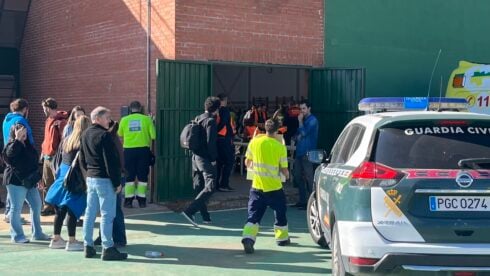
Hundreds of firefighters and emergency workers were deployed to the site, while a SAMUR-Proteccion Civil ambulance and two psychologists assisted grieving families at Madrid’s Atocha station.
Spanish King Felipe VI said he would return to Madrid from Valencia, where he cut short a visit to a military training exercise.
Speaking to reporters on Wednesday, Felipe said: “This is a terrible tragedy.
“I want to extend my condolences to all affected families. They have all our love and support.”
Castilla-La Mancha’s 112 emergency service has set up a helpline for the families of those involved in the crash on 900 122 112.
Iryo has also opened a helpline on 900 001 403, while Renfe’s number is 900 101 020.
Madrid’s blood transfusion centre has issued an urgent appeal for blood donations amid ‘a possible sudden increase in care needs.’
The incident has forced the closure of the high-speed line between Madrid and Andalucia, disrupting more than 100 rail services between the two regions.
Renfe said services between Madrid, Ciudad Real and Andalucia were suspended, and that passengers on affected trains could change or cancel their tickets free of charge.
The operator has also set up alternative bus and rail services for ticket holders.
Click here to read more Spain News from The Olive Press.