
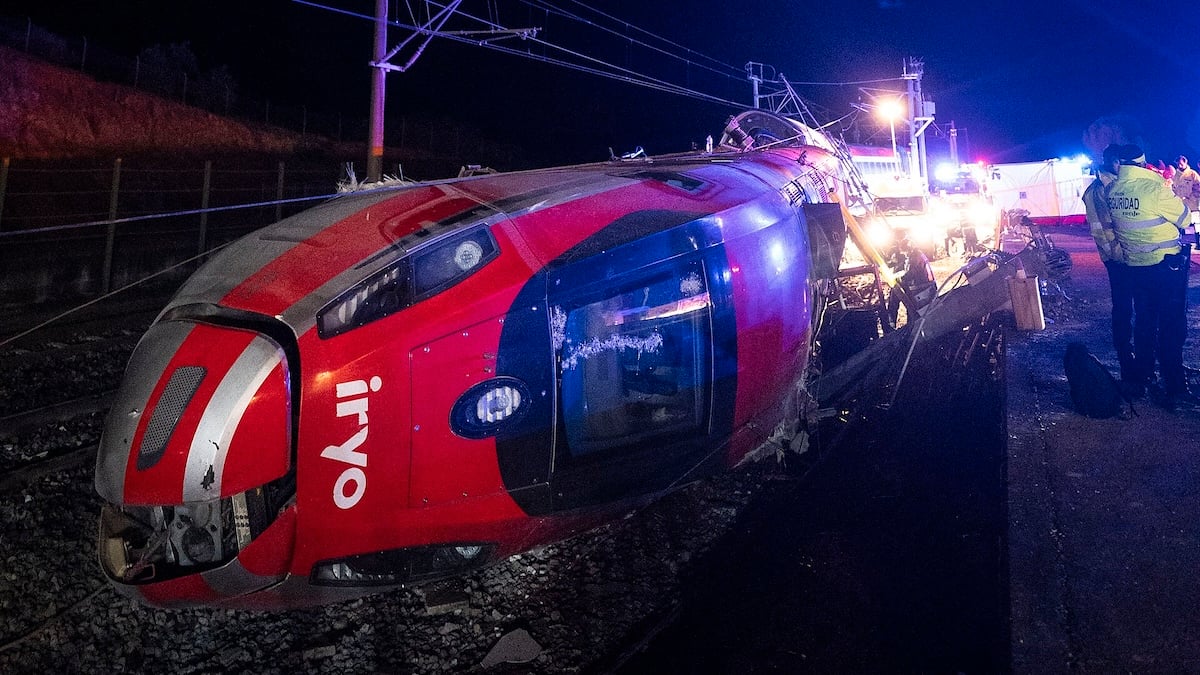
SPAIN’S rail infrastructure manager Adif knew that its safety systems could not detect the type of broken rail that caused the Adamuz crash since 1992, according to a new Guardia Civil report.
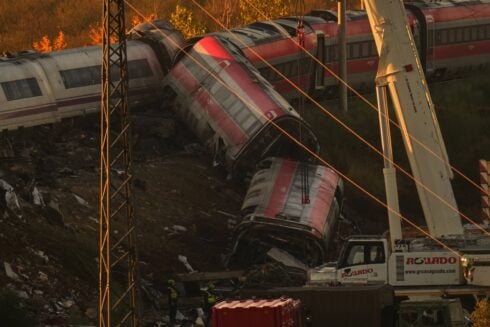
Forty-six people died in the disaster on the Madrid-Seville high-speed line near Cordoba in January.
The report, sent to the judge investigating the crash on November 24, concludes that the way the line was set up made it impossible to detect a break on the outer rail, which is exactly where the rail broke.

The Guardia Civil says Adif was “fully aware” of the problem.
A memo written in 1992, before the line was built, warned that the overhead power system had to be designed to allow rail breaks to be detected, and set out how to do it.
Investigators and court-appointed experts maintain that the broken rail caused the crash. The question now is why it broke.
According to the report, the safety systems on the line could only detect a rail break if it was complete and cut the electrical circuit.
“It is because of this inability that Adif excluded from its requirements for Thales the obligation to detect the break,” the report states.
Technical documents given to Adif listed two ways the line could have been set up to make detection possible. According to investigators, the Madrid-Seville line met neither.
They conclude that the design made detecting rail breaks “technically unfeasible” with the type of track circuits used.
The report also examines data from a maintenance system that records voltage levels on the track.
It does not monitor the line in real time or raise alarms. Its data is only checked when a fault is reported or during routine maintenance.
From 9.46pm on January 17, the voltage on one track circuit near Adamuz dropped from around two volts to around 1.5 volts, and stayed there.
It fell to zero at around 7.43pm the following day, when the rail broke and the crash happened. In the meantime, 47 trains passed over that stretch.
The Guardia Civil says the sustained drop was “not usual”. Because it stayed above the alarm threshold, though, no warning went to signalling staff or maintenance teams, as the system wasn’t set up to send one.
READ MORE: Remarkable tale of passenger who walked away unhurt from both Adamuz and Toledo train disasters
Hitachi said the records could have been downloaded and checked. The Guardia Civil says no procedure has been produced that required anyone to do so, even though the system was known to have blind spots.
According to Adif data in the report, 950 rail breaks were reported across Spain’s network between 2020 and 2026. Of these, 593 were detected by track circuits.
Over the past decade, there have been 47 rail breaks on high-speed lines.
The carriages of the Iryo train involved in the crash will be examined on December 14.
Click here to read more Andalucia News from The Olive Press.