
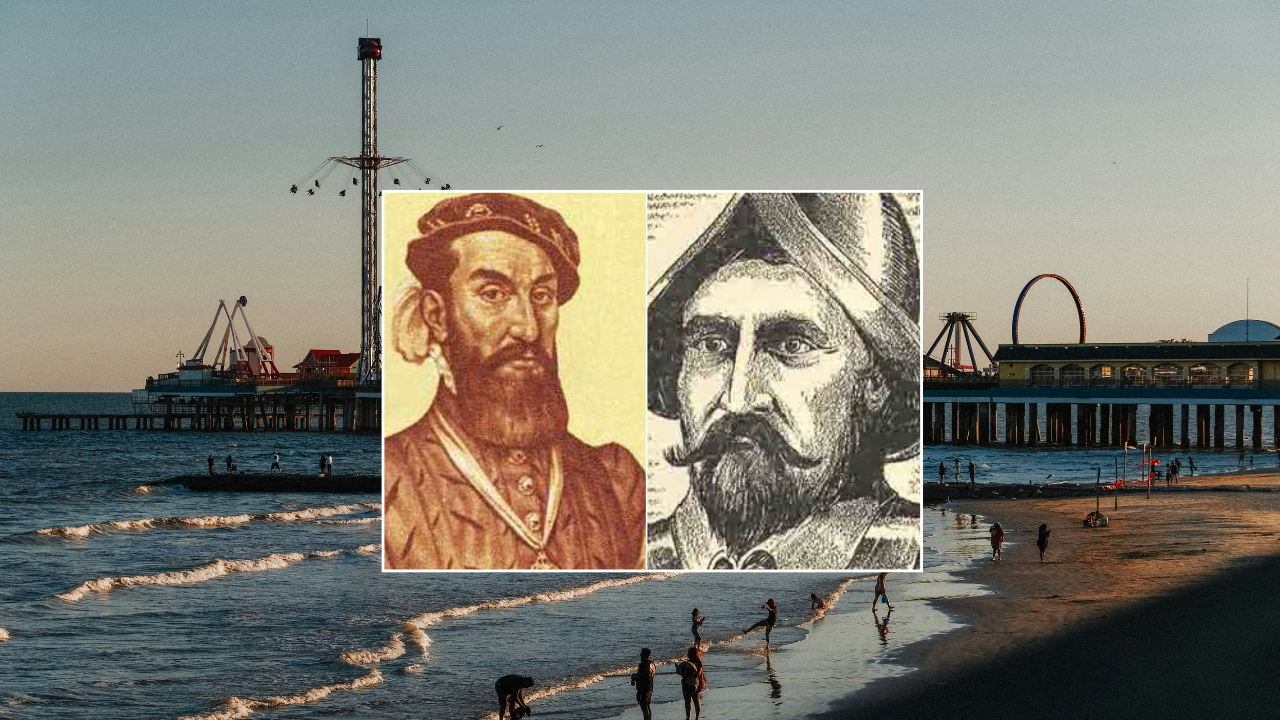
ON November 6, 1528, a young man from Jerez found himself shipwrecked on an island.
He had already lived through a lot of hair-raising escapades, but (though he didn’t yet know it) the story was just beginning.
As an adolescent in Andalucia at the end of the 1400s, Alvar Nuñez had a comfortable life, but suffered from two disadvantages.
His family title was “Cabeza de Vaca’ (imagine having ‘Cow’s Head’ as your surname!) and he was a hidalgo.
The hidalgos were the lowest rank of the nobility. It was strictly forbidden for them to have jobs or run businesses, and they were dirt-poor.
A young man like Alvar had two choices – become a monk, or join the army. He chose the latter.
In 1511 (when he was 19) he arrived in Italy, where he fought in various battles. Back in Spain in 1513, he spent eight years helping to put down the Revolt of the Comuneros – a popular uprising in the Avila-Segovia area.
Next, in 1521, he fought against the French in Navarre.
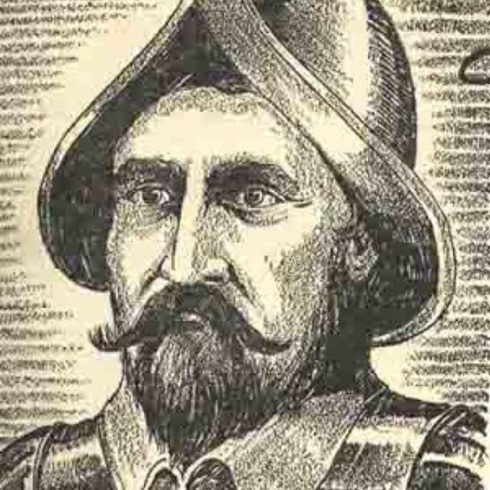
Nuñez was wounded more than once. Had he been killed at this point, we could say that he was a 30-year-old who’d packed a lot into a short life. But what lay ahead would dwarf these experiences.
In the year 1527 the Spanish king sent for him, and ordered him to join the Narvaez Expedition as Royal Treasurer.
It was Spain’s huge stroke of luck that Columbus opened up the Americas during this period. As the dominant power in the New World, Spain could extract the unexplored continent’s wealth.
Equally important, the ‘conquest’ of the Caribbean and Mexico gave the restless, impoverished hidalgos something to do.
As Treasurer, Nuñez was automatically the Expedition’s Number Two. His job was to seize as much gold, jewels or whatever as he could, on the king’s behalf. The Number One was Panfilo de Narvaez.
If you carry in your head a negative stereotype of Spanish Conquistadores, Narvaez will tick all your boxes.
Arrogant, cruel, greedy, incapable of listening to advice and not very bright, he was exactly the wrong man for the job.
But in Spain in those days, it was people’s ranking in the aristocracy that got them big appointments, not ability.
On paper, the Expedition was supposed to go to La Florida (a vast area which took in the modern states of Florida, Georgia, Louisiana and Texas).
The 600 soldiers were ordered to gather wealth and slaves, found colonies, and bring the ‘goodies’ back to Spain.
Once out of the king’s sight, of course, Narvaez would please himself what he did. The fleet of five ships set off in June 1527.
When they got to the big island of Hispaniola (nowadays Haiti and the Dominican Republic), a quarter of the troops deserted.
They knew enough about the Gulf of Mexico to foresee typhoons and hurricanes (it was the season). Better see out the next few weeks in a bar, as opposed to on a vulnerable ship.
The ‘force’ was very short of horses. They had no luck in buying any. A storm destroyed two of their ships and killed 60 men and 20 of the few horses they possessed.
Narvaez chose to press on. Another storm drove them off course, and they landed on a shore with a lot of swamps and mangrove trees (modern historians think it was Tampa Bay).
They told the local Indians that they wanted gold, and they were directed north to ‘Apalachee’ (what is now Alabama).
Narvaez had a brilliant (i.e. stupid) idea. He would lead the men through the rain forest, and the ships could sail ahead, and wait for them.
Nuñez tried to reason with him. No-one had any maps, so a rendezvous was a sheer lottery, and you don’t divide your forces when you don’t know what dangers lie ahead.
“Are you a coward?” asked Narvaez. No hidalgo could ever have that accusation left unanswered. He joined the rain forest march, certain that he was walking to his death.
Constantly attacked by local tribesmen, the Spaniards lost all contact with their ships. They melted down all the metal they could spare (armour, buckles, stirrups) to make nails, and built some rafts.
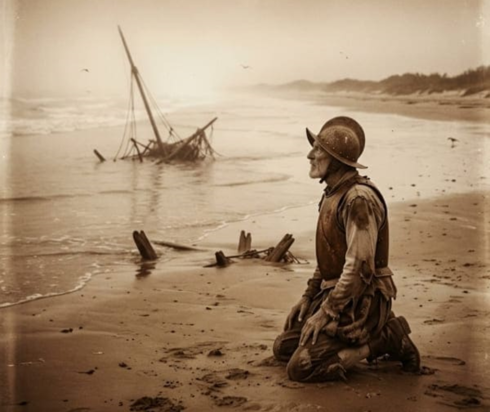
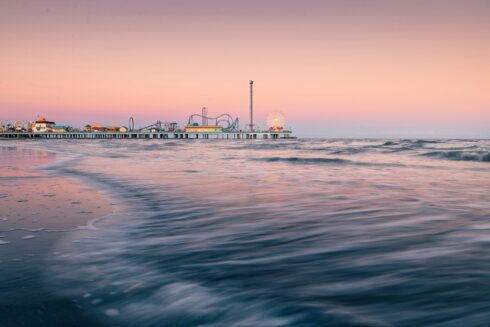
Another storm blew up and drove Alvar Nuñez and four companions ashore on an island. Today, Galveston is a resort where Texans go to top up their tans, but in 1528 it was a savage wilderness.
For the next eight years this tiny group moved around what is modern Texas. They knew that Mexico, and fellow Spaniards, and therefore safety, wasn’t far away, but how to find it?
Their clothes perished and were discarded. They went naked. They learned the basics of native language, and avoided being killed by claiming powers to heal the sick.
Nuñez says in his book that often, they actually did cure people! “When you have to,” he says, “you’d be amazed at what you can do.”
Finally, in 1536, they reached Mexico. Nuñez returned to Spain – and never went near the New World ever again!
Click here to read more Spain News from The Olive Press.