
TWO of Britain’s outstanding painters, Constable and Turner, lived and worked in London in the 1820s and knew each other well.
A similar coincidence in the 1600s made Sevilla a cradle of art, with Diego Velazquez (1599-1660), Francisco de Zurbaran (1598-1658) and Bartolome Murillo (1618-1682) sharing the city and knowing one another’s work.
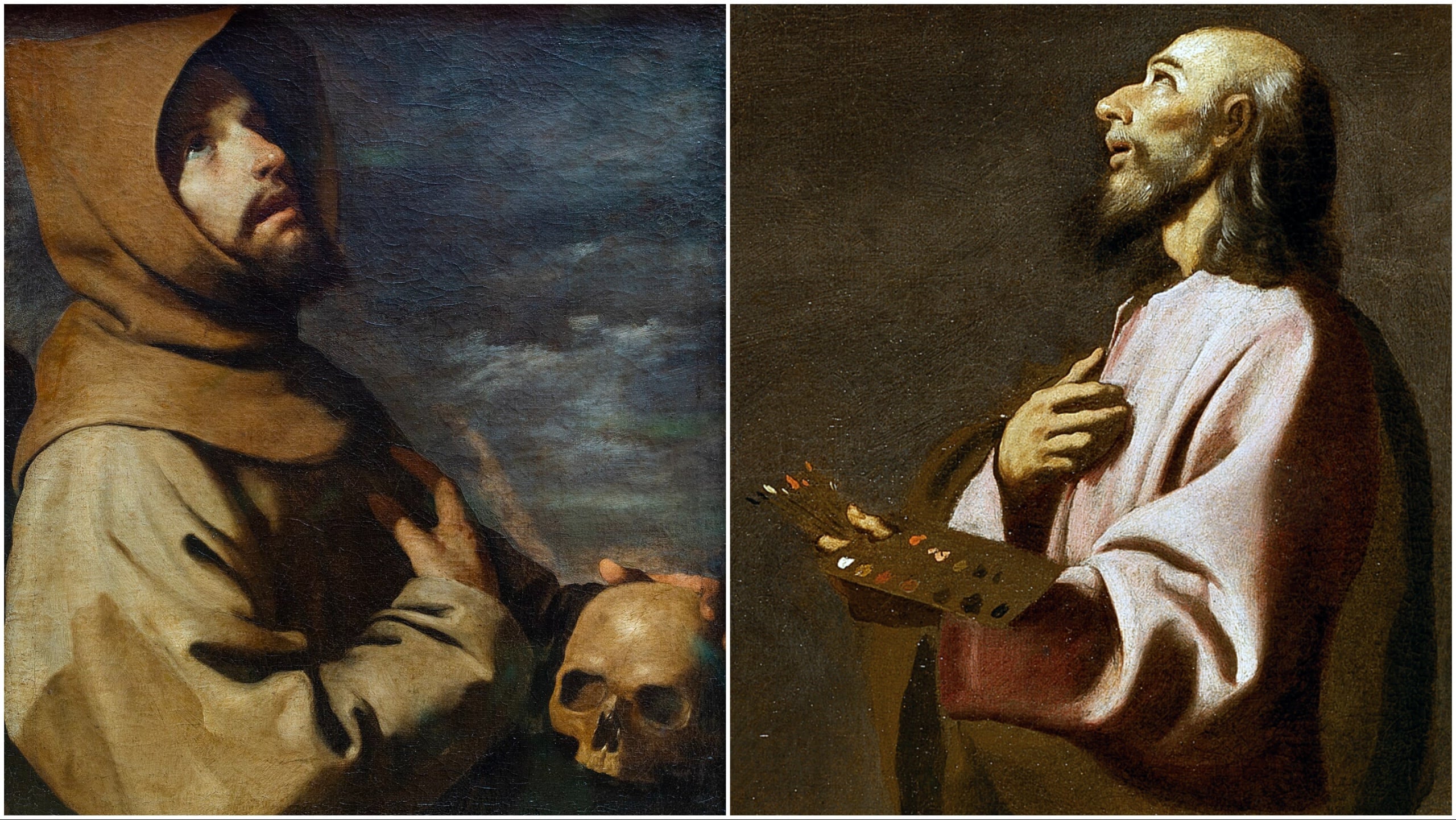
Today we focus on Zurbaran, whose 428th anniversary fell on November 7.
Francisco de Zurbaran is unquestionably one of Spain’s greatest artists.
Most of his paintings deal with religious themes, but we should not read too much into that about his personal beliefs.
Back in the 17th century, the sponsors of new art were the churches and convents, and like all the other painters, Zurbaran took work where he could get it.
For all we know, he might even have been an atheist.
Francisco was born in Extremadura in 1598. We know that the baby was baptised on November 7, so we can safely assume that he was born on that day or the day before.
At the time, it was commonly believed that no-one could enter heaven unless they had been christened, so parents organised the baptism as soon as possible in case the child died before it could take place.
As a young boy, Zurbaran was constantly drawing with charcoal.
His father wanted to develop his son;s talent, and had him apprenticed to a professional painter in the nearest large city, Sevilla.
Another great Sevillian artist of the time, Murillo, poses the same problem for modern art historians as Zurbaran does.
We have very little biographical detail about either of them, as painters were not regarded as anything special and had roughly the status of plumbers.
What we know about the daily lives of Zurbaran and Murillo comes from the parish registers that have survived.
When he was 19, Francisco married a woman named Maria.
The gap in their ages (she was 28) hints at an unplanned pregnancy, but we can only guess.
In any event, the couple went on to have three children together, with Maria sadly dying while giving birth to the last.
In purely material terms, things started to look up for Francisco.
In 1625, a year after Maria’s death, he remarried, and his new wife, Beatriz, was wealthy.
At the same time, the Dominican monks of Sevilla signed a contract with Zurbaran for him to supply 21 paintings.
At the age of just under 27, he was set up for life.
The following year, things got even better when another order of monks, the Mercedarians, hired him to paint 22 canvases.
Anxious not to lose him, the city of Sevilla, which had seen Velazquez ‘escape’ to Madrid, offered Zurbaran the status of ‘favourite son’ if he lived permanently within the city walls. He seems to have been happy in Sevilla.
Though he and Beatriz had no children together, they raised the three from his first marriage in a fine house with no fewer than eight servants! Beatriz died in 1639.
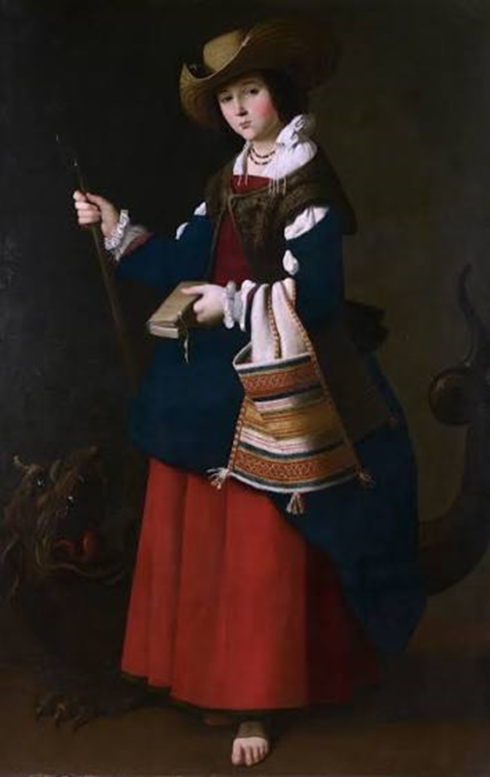
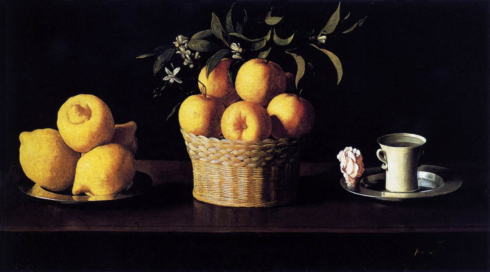
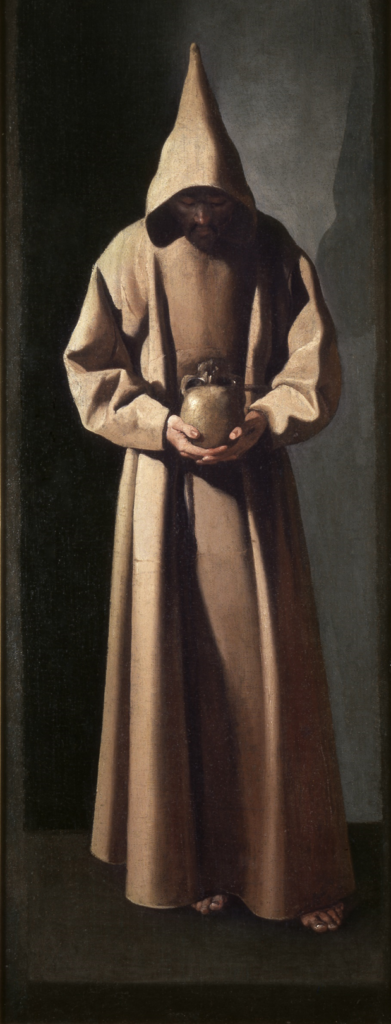
The Italian word for Zurbaran’s painting technique is ‘chiaroscuro’. Figures are painted in sharp, almost photographic detail, which some would call harsh, with the drama supplied by the skilful use of shadow.
This style appears to have gone out of fashion in the 1640s, at least in Europe.
We can deduce this from the fall-off in new contracts that Francisco experienced, though he continued to receive and complete orders from churches in South America.
Even so, Zurbaran’s good fortune didn’t desert him. In 1644 he married for the third time, to another rich woman, this time named Leonor.
When he travelled to Madrid looking for contracts, he was able to rekindle his friendship with Velazquez.
There is a legend, believed by many Spaniards, that Zurbaran died in poverty in 1658. The year is correct, but in fact the artist left a substantial estate to his children.
For any readers interested in exploring Zurbaran further, Sevilla’s Museo de Bellas Artes has a fine collection of his work.
Click here to read more Spain News from The Olive Press.