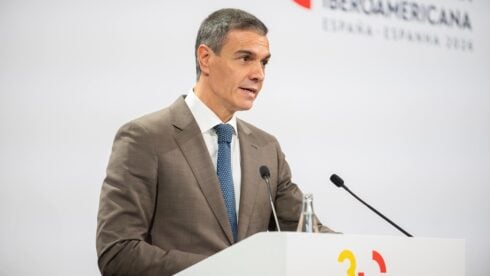
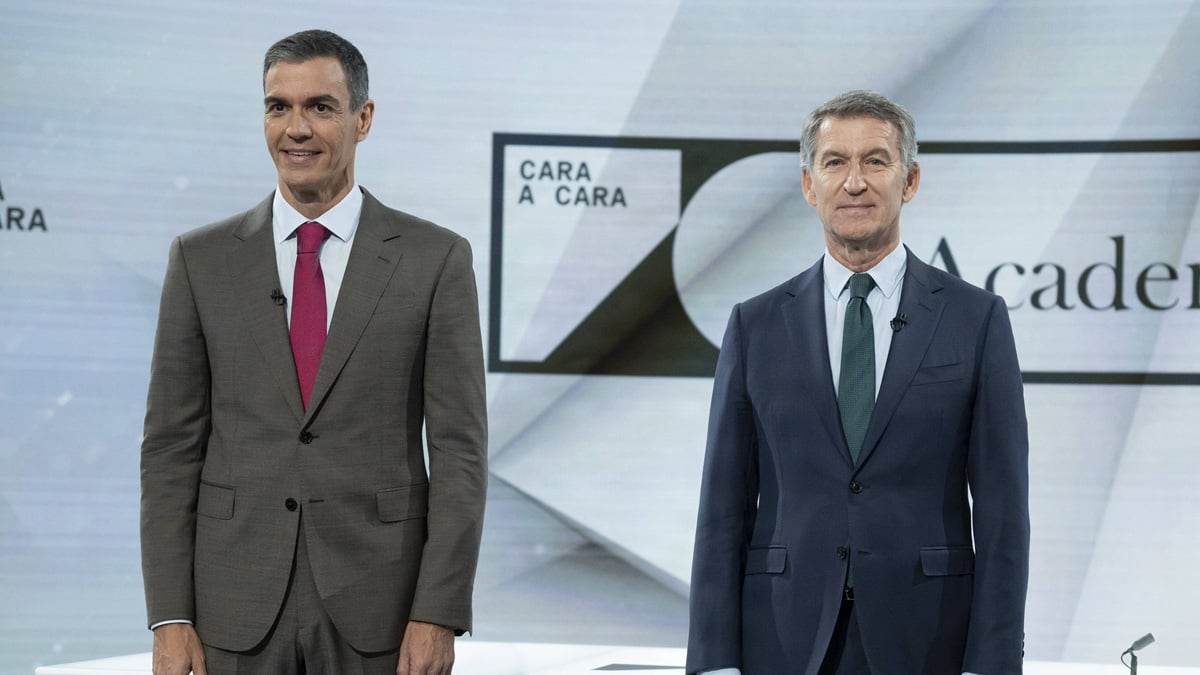
PEDRO Sanchez and Alberto Nuñez Feijoo went the full 12 rounds in their televised debate just nine days before Spaniards head to the polls.
There were no sledgehammer knockouts as the political heavyweights traded blows under the eye of 10 million viewers, and neither came remotely close to throwing in the towel.
There were, however, long spells when Feijoo, leader of the conservative Partido Popular (PP), had the prime minister on the ropes.
He pounded the socialist leader with accusations of corruption and incompetence, and rubbed salt into Sanchez’s open wounds as he brought up allegations against his brother and former ministers.
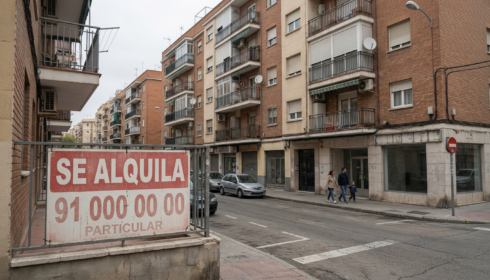
READ MORE: Spain’s rental market hits crisis point as a dozen cities list just 30 or fewer available homes
The verbal blows came so thick and fast that Sanchez ended up calling his opponent ‘rude’ – he simply would not let him finish speaking.
But debates are not won with good manners. And if last night’s showdown had been a boxing match, Feijoo would have secured the judges’ decision.
According to the election polls of the population’s sentiment, the outcome was hardly surprising. Sanchez’s PSOE has been trailing since before the 2023 election, with the PP cementing its lead as hard-right Vox gained more and more ground.
The disadvantage has become even more apparent since Sanchez called a snap general election for November 29, with a PP-Vox alliance now polling to win around 190 seats in Spain’s 350-seat Congress of Deputies.
But still, the televised debate was a sorry spectacle for the millions of left-wing voters across Spain.
READ MORE: Spain’s rental market hits crisis point as a dozen cities list just 30 or fewer available homes
Sanchez, who is a sharper politician than the lukewarm Feijoo, had to pour his energy into fending off attacks instead of launching his own.
And the problem was that the PP leader had plenty of ammunition to keep going.
Sanchez was confronted on everything from the corruption scandals that have engulfed his presidency to the two deadly train crashes that rocked Spain in under a year.
There were the accusations of embezzlement against his wife, as well as the worsening housing crisis – which is hardly the PSOE’s fault, but that the party only really began to tackle almost eight years after coming to power.
For Sanchez, it was a night of reckoning.
The PSOE leader endured the most pain when Feijoo got him to apologise to the victims’ families over the Urda and Adamuz rail disasters – though, granted, Sanchez took the hit with grace.
“If I have to apologise to victims’ families over the Urda and Adamuz crashes, I do. This is a grief I’ll take with me,” he said.
Throughout the evening, Feijoo kept fact-checkers busy – as Sanchez himself quipped at one point in the debate.
Feijoo claimed vice-president Carlos Cuerpo had admitted Spain’s pension system was about to ‘burst’, which is not true.
He claimed the PSOE had been indicted over irregular financing, which is not true.
He claimed the number of homes available for rent in Barcelona had plunged by 69%, which is not true.
READ MORE: Spain’s PM Pedro Sanchez in fierce TV election debate clash with main opposition leader Feijoo
Other statements were shockingly misleading, such as when Feijoo said tourist apartments make up just 1% of Spain’s housing stock – implying they could not be blamed for the country’s crippling housing emergency.
The figure is correct nationally, but the proportion skyrockets to 30% in areas under particular housing pressure, such as Marbella or parts of Madrid city centre – hence the housing problem.
But despite Feijoo’s shortcomings and lack of debating technique, the fact is that Sanchez’s presidency has been riddled with errors and failures – both real and perceived.
And Feijoo used those as cannon fodder for a final, ferocious onslaught ahead of next week’s election.
“I am not a textbook candidate,” he admitted in his closing statement. “But I don’t steal, and I don’t lie,” he added.
And if we trust the polls, millions of voters seem to believe him.
Click here to read more Politics News from The Olive Press.