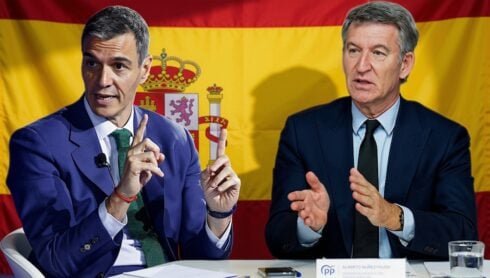

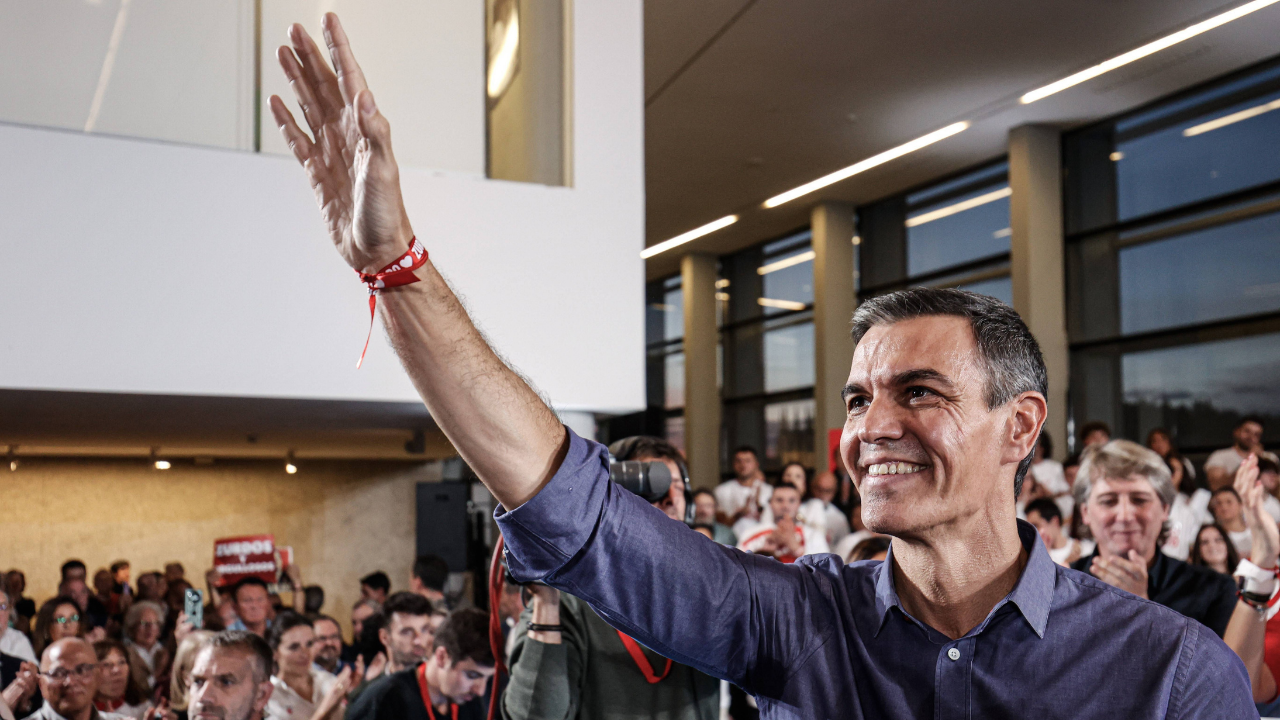
HE was the man they called ‘El Guapo’ – the suave, square-jawed Socialist who vowed to clean up politics after the sleaze-stained reign of Mariano Rajoy.
Eight years later, Pedro Sanchez is set to be ousted, with the far-right on course to return to power for the first time since the dictatorship of General Franco.
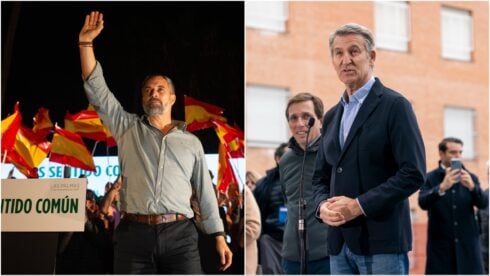
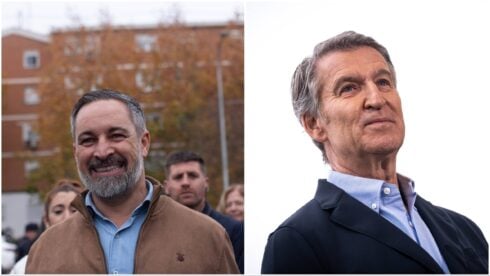
Sanchez tonight called Alberto Nuñez Feijoo to congratulate him on his victory, after the PP and Vox secured a comfortable majority that leaves the PP leader poised to take over and Santiago Abascal’s party on the brink of entering a national government.
For a politician who built his career on improbable comebacks, it is a harsh and sobering end.
Sanchez was famously ousted as PSOE leader by his own party – only to drive the length of Spain in his old Peugeot, winning back the grassroots and reclaiming the leadership a year later.
In June 2018, he pulled off his greatest coup, toppling Rajoy in Spain’s first ever successful no-confidence vote after the PP leader was found to have benefited from a dodgy kickbacks scheme.
The handsome newcomer promised a fresh start – and for a time he delivered.
His supporters will point to an economy that has consistently outpaced its European neighbours, with impressive GDP figures and unemployment falling to its lowest level since before the 2008 crash.
He steered the country through the pandemic, upped the minimum wage by more than 60 per cent and won plaudits abroad for his firm stance on Palestine and standing up to Donald Trump.
Yet the man elected on a mandate to stamp out corruption ended up mired in it.
His former right-hand man and transport minister Jose Luis Abalos, his adviser Koldo Garcia and close ally Santos Cerdan have all been caught up in scandals, while his wife Begoña Gomez and brother David faced court investigations.
He also faced backlash for a controversial amnesty deal, granted to Catalan separatists implicated in the illegal push in return for precious votes in Congress.
It left Sanchez at the mercy of a fragile coalition of nationalist and far-left partners – with Junts ultimately voting alongside the PP and Vox to sink the PM’s flagship housing reforms in October, triggering the snap election.
For many Spaniards, the collapse of public services was the final straw.
In January, 46 people were killed when two high-speed trains collided in Adamuz, Cordoba, in the country’s worst rail disaster in more than a decade.
READ MORE: Spain’s PM Pedro Sanchez revels in Donald Trump’s mid-term election disaster
That was until last month, during the campaign trail, when two more trains crashed into one another in Urda, Toledo, leaving 69 people dead and hundreds more injured.
Transport minister Oscar Puente eventually resigned, while Sanchez admitted that ‘failures and errors were made’.
Housing, meanwhile, became one of the defining issues of the election, with rents and prices soaring and leaving a generation of young Spaniards priced out of leaving home.
Immigration, too, played a big part.
Sanchez’s government’s regularisation of undocumented migrants provoked anger, while the Ceuta crisis and a surge in small boat arrivals in the Canaries handed Vox ammunition throughout the campaign.
Add in the infamous April 2025 blackout that plunged Spain into darkness, and it is easy to see why Feijoo’s campaign plea to ‘vote with memory’ found a receptive audience.
Sanchez took one final gamble, hoping that a snap election would mobilise the left, just as a surprise poll in 2023 had kept him in power against the odds.
However, this time, the comeback kid finally ran out of road.
Click here to read more Spain News from The Olive Press.