Whom should we choose as our heroes? John Wayne? Cristiano Ronaldo? Nigel Farage? Should we have heroes at all?
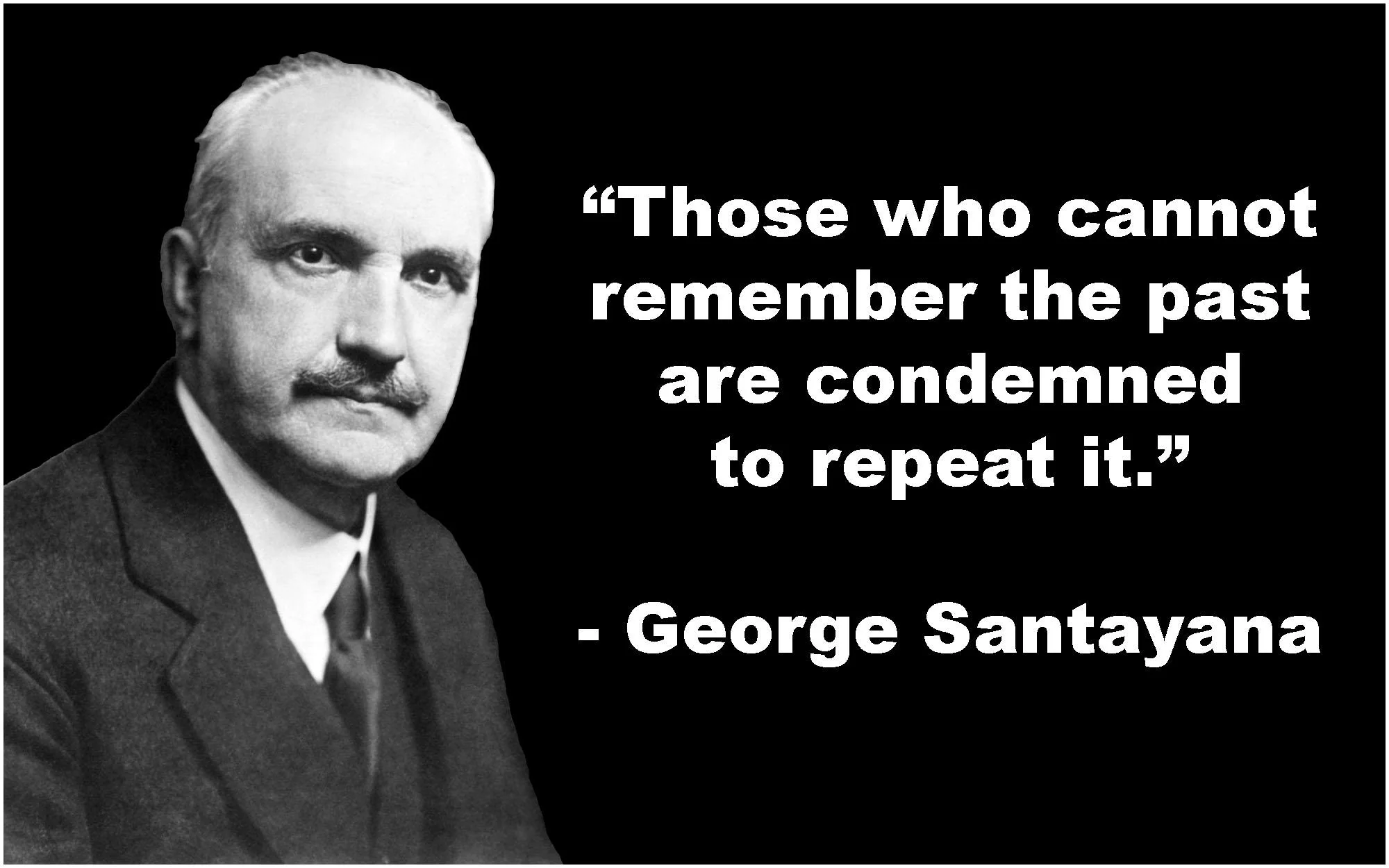
MICHAEL COY introduces us to one of his own favourites, George Santayana, and celebrates the 162nd anniversary of the great man’s birth.
It’s fairly certain that you’ve heard the saying, “those who don’t know history are condemned to repeat the mistakes of history”. What’s equally likely is that you’re not quite sure who said it.
It was George Santayana, who was famous in the first half of the 20th century for his clever sayings.
He also came up with, for example, “the only people who will never suffer another war are the poor folks who died in the last one”.
Pinning George Santayana down isn’t easy. He wasn’t wholly Spanish, but neither was he entirely American.
He wrote two dozen important books of poetry and philosophy, but he is not regarded as either a poet or a philosopher. And we know nothing at all about his love life.
Santayana was born in Madrid on 16 December, 1862. His mother had been married before, and she had promised her husband (who died young) that if she ever went on to have any children, she would make sure they were educated in the USA.
And she kept her word.
When George was eight years old, the family moved to Boston, Massachusetts.
It was soon very clear that the boy was super-bright, and he breezed his way through school, effortlessly finishing top of every class.
He was readily accepted at Harvard University, where he studied philosophy and edited the literary magazine.
Very ‘at home’ in America, George nonetheless felt attached to his native Spain, and made a point of spending all his holidays in Madrid and Ávila. Harvard was so impressed by him that as soon as he graduated, he was offered a post as a professor – the pinnacle of American achievement – but until his dying day, he retained his Spanish passport.
One of the recurring themes in Santayana’s writing is that a truly cultivated person should never stop learning.
Even though he was now a teacher at one of the world’s most prestigious universities, he made sure he took time off to study more deeply, completing courses in both Cambridge (England) and Berlin.
In the year 1912, Santayana gave up his professorship to move permanently to Rome.
He was 50, and he still had another 40 years to live. In the agreeable surroundings of the Eternal City, he spent his time writing books and thinking up “bon mots” – his trade mark clever sayings.
Most of us would feel psychologically uncomfortable with the notion of not really belonging to a definite country, profession or social group. George made it his superpower.
He wrote several books of observations on American life. He was, after all, ideally placed – he knew America intimately, but being Spanish, he could also comment on the culture from arm’s length.
But we mustn’t think of George as isolated. He was much-loved by many of the great British and American thinkers of his day – Bertrand Russell, Gertrude Stein, Ezra Pound and TS Eliot were all close friends, to name just a few.
When acquaintances challenged Santayana to write a novel, not only did he accomplish the task, but he pulled off a triumph. “The Last Puritan” became a best-seller.
True to form, the close of George’s life was enshrouded in ambiguity. He was officially a Catholic, but in his will he expressly asked not to be buried in consecrated soil.
He was far too independent a thinker to have his corpse ‘claimed’ by one faith-group. However, in Rome 70 years ago, there were very few options for non-Catholic coffins.
The Spanish Embassy got involved, and a compromise was reached. He was interred in the private cemetery of a religious order.
No big adventures, no medals, no tumultuous love affairs. But are those the only things that denote a hero?
Surely there’s a place on our ‘trophy shelf’ for a keen, observant, understated intelligence which spots all our foibles, but which still smiles on us.
Such was the genius of George Santayana.
Click here to read more Spain News from The Olive Press.