
SCIENTISTS in Spain are celebrating their second major breakthrough in a matter of days after researchers successfully restored vision to a blind man whose eye injury was previously thought to be incurable.
Boffins at Miguel Hernandez University in Elche, headed by leading neuroscientist Eduardo Fernandez, used a novel brain implant to restore partial sight to Miguel Terol, a man who suddenly lost his vision in 2018 due to a severed optic nerve.
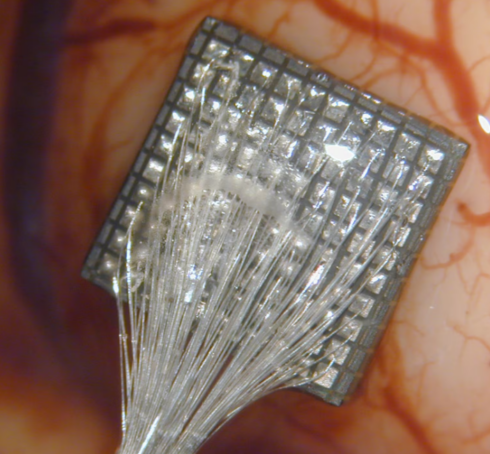
The operation bypassed the damaged optic nerve entirely, instead using an implant with 100 microneedles to directly stimulate the visual cortex in the brain with electrical signals that correspond to lights and shapes.
Unexpectedly, the patient regained enough vision to perceive light, detect movement, identify objects and even read large characters on a screen.
“[Previous patients] had visual hallucinations, but with Terol the recovery was real,” said Fernandez, lead author of the study which has been published in the scientific journal Brain Communications.
“We ran a series of tests and saw that he had recovered some of his visual perception. He wasn’t seeing lights; he was seeing what was right in front of him.”
The positive results offer fresh hope for people with optic nerve damage previously thought to be irreversible, with the human trial now entering its next phase.
READ MORE: Spanish scientists cure pancreatic cancer in mice – raising hopes for a breakthrough in humans
Fernandez added: “When I was studying medicine, if a patient like this hadn’t recovered within two months, it was already irreversible; there was nothing you could do, and they would have to go to the Spanish National Organisation of the Blind (ONCE).
“Now what we see is that after three years, it’s still not completely reversible, but there are options, and we should try to understand what we can do, how far we can go.
“Perhaps it can serve as a foundation, opening new avenues for developing new therapeutic approaches in the case of sensory pathologies like vision impairment, but also for others like stroke.”
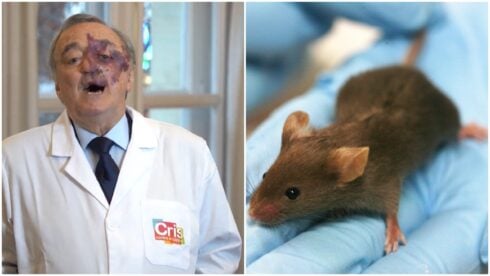
The revelation comes just days after a team of Spanish researchers successfully treated pancreatic tumours in trials using mice.
Scientists from the National Cancer Research Center (CNIO) in Madrid, led by leading oncologist Mariano Barbacid, eliminated pancreatic cancer cells by treating the mice with three low-toxicity drugs.
The breakthrough opens the door to groundbreaking treatment in humans with the triple therapeutic combination set to go through clinical trials.
According to the Spanish Society of Medical Oncology (SEOM), over 10,000 people are diagnosed with the disease in Spain every year – with less than 10 per cent of patients surviving more than five years after diagnosis.
Click here to read more Spain News from The Olive Press.