
FOR many outsiders, Benidorm conjures up images of drunken holidaymakers, street fights and a version of Spain that feels more like a caricature than an authentic place.
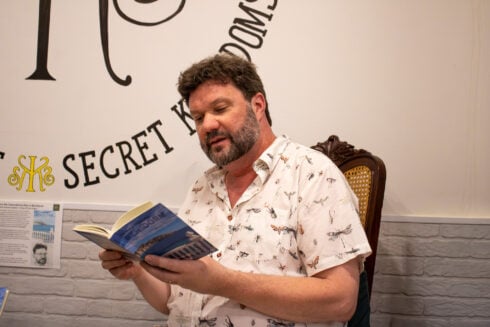
But for British expat author Matthew Clapham, who calls the city home, he believes it deserves far more credit than it gets – and in its sheer verticalness does one thing better than any other in Europe.
The author of Looking Down on Benidorm told the Olive Press in an exclusive interview that while tourism has brought prosperity, it has also created serious challenges.
“People are coming in, they want to go to bars and restaurants, but the people who work in those bars and restaurants can’t afford to live there,” he said.
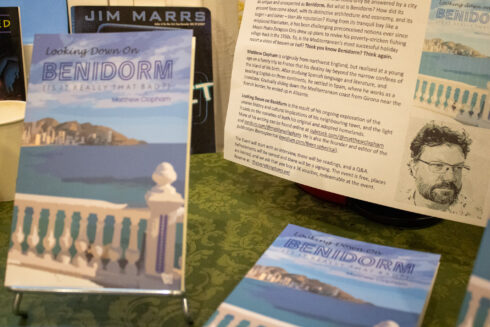
Originally from northwest England, Clapham hopes his new book Looking Down on Benidorm (Is It Really That Bad?) will encourage people to think more carefully about ‘that balance between just the size and the scale of what a place can absorb.’
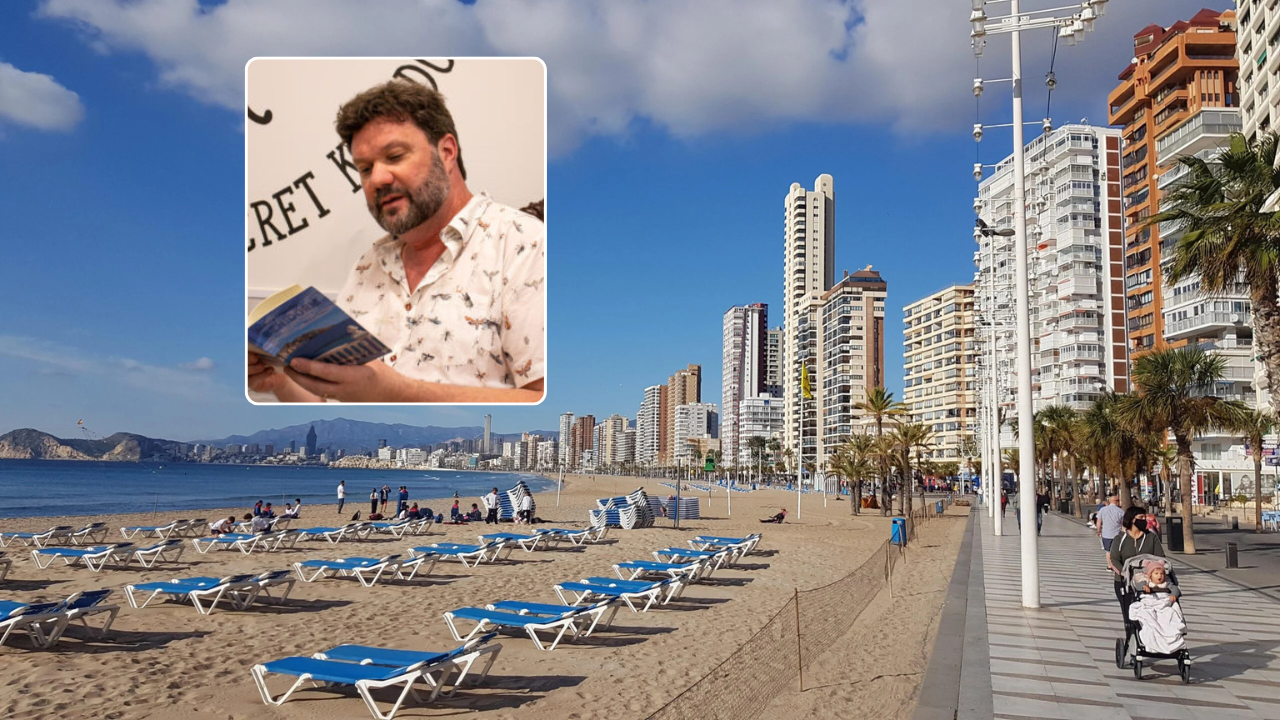
Benidorm, famous for its forest of skyscrapers overlooking the Mediterranean on Spain’s east coast, has become one of Europe’s best-known tourist destinations.
But Clapham points out the paradox of mass tourism.
“The more tourists come in, the less you can offer what people originally wanted to see, because a sandy beach covered in sun loungers is no longer as attractive as the sandy beach with no one there.”
In the book, Clapham examines the stereotypes surrounding the Alicante resort and asks a simple question: ‘Is it really that bad?’
He traces the city’s transformation into a tourism powerhouse in the early 1950s, explaining how the ambitious mayor, Pedro Zaragoza, pursued a strategy of attracting as many visitors as possible.
But relying almost entirely on tourism comes with risks, as the city acquired an unsavoury reputation for the lower quality, bargain basement end of the spectrum.
READ MORE: Benidorm earns €100k from its first local fines for illegal holiday rental flats
Clapham admits he shared many of those views himself a decade ago, before moving to Altea, just 17 kilometres from the much-maligned resort.
However, after getting to know the city, his opinion changed.
“It’s a much more interesting place than most people give it credit for.”
“It has more dimensions to it than this very superficial image that people tend to have,” he says.
One example, he argues, is Benidorm’s approach to urban planning.
“Benidorm does one thing better than other tourist cities, and that is building vertically.”
His view runs counter to the common perception that Benidorm is simply a ‘cheap’ version of Manhattan or downtown Chicago.
“I mentioned it in the book. When you’re driving down the AP-7 and you come round the corner, you see at night these skyscrapers with all the lights reflected in the bay, and it’s really beautiful.
“Exactly the same image that you might see on a postcard of New York or Chicago, painting a dreamlike picture.”
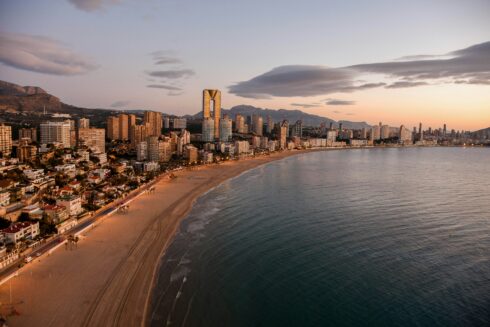
“With this kind of architecture, you can fit more people in without sacrificing the coastline or losing space because of the mountainous surroundings.”
For Clapham, the difference lies not in the architecture but in people’s perceptions.
The same skyline admired in New York can be dismissed as tacky in Benidorm simply because of the city’s reputation.
As he puts it, “It depends where you look, and you can find all kinds of different things, as with anywhere.”
Click here to read more Benidorm News from The Olive Press.