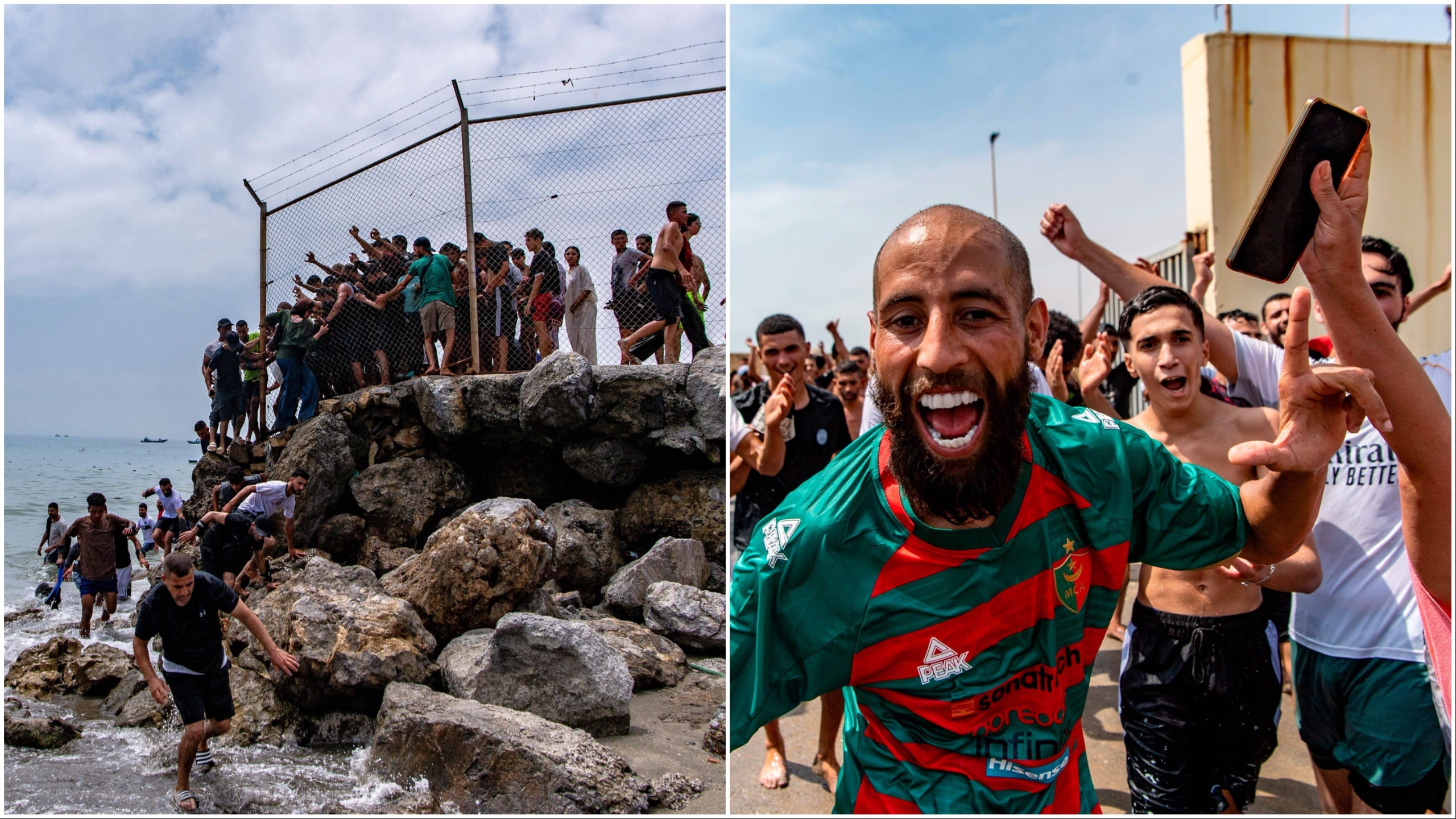
SPAIN’S Interior Ministry has blamed trafficking gangs – not the courts – for driving thousands to storm into Ceuta.
In a statement issued on Thursday, the ministry accused organised trafficking networks of ‘instrumentalising’ a Spanish Supreme Court ruling to convince young Moroccans they now have a better chance of being allowed to stay in Spain if they arrive by sea, Spanish news agency EFE reports.
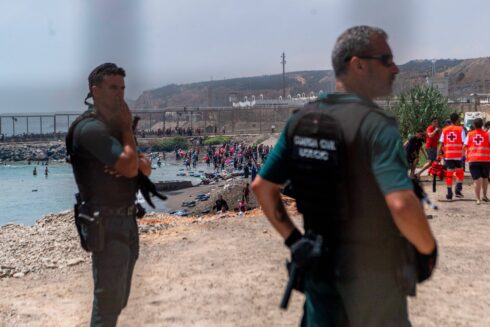
However, the ministry also admitted hundreds of migrants broke into Ceuta this week through border fences that were left unguarded by police.
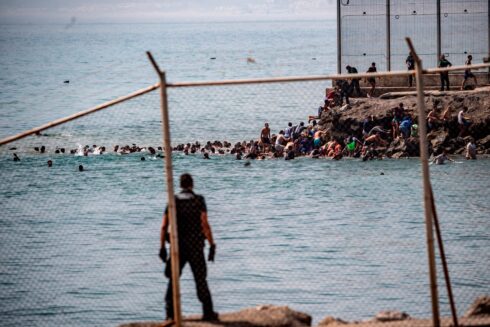
Earlier this month, Spain’s highest court ruled that migrants intercepted swimming towards Ceuta or Melilla cannot be automatically turned back at the border, the way people are when they try to climb over the land fence instead.
Anyone caught in the water must now go through the standard immigration process, which can take months and gives migrants a formal chance to apply to stay in Spain.
The ministry insists that ruling is not to blame for the surge itself, but says traffickers are using it as a selling point to talk more people into attempting the sea crossing.
A study published this week supports the thesis, pointing to social media as one driver of irregular migration from northern Morocco.
The survey, by the Observatorio del Norte de Derechos Humanos de Marruecos — a Moroccan human rights NGO, not a government body — polled 500 young people in Tangier, Tetouan and Al Hoceima.
Four in five (81%) said migration content on social media makes irregular migration look like a solution to improving their living conditions.
Equally, 78.4% said young people easily find posts encouraging irregular migration, and 74.2% said they follow pages that help plan the journeys themselves.
It comes as thousands of people scaled Ceuta’s border fences on Thursday at a moment when they were not being guarded by Spanish police, according to the same ministry statement.
Moroccan auxiliary forces responsible for security on the Moroccan side reportedly pulled back as the group passed, allowing the crossing to happen unchecked.
The scramble took place at Fnideq, known in Spanish as Castillejos, a Moroccan border town facing Ceuta across the frontier fence.
Spain and Morocco have agreed to speed up the return of everyone who has entered Ceuta illegally in recent days.
The Interior Ministry described the relationship between the two countries as an ‘exemplary collaboration’, crediting Moroccan security forces with stopping thousands of other attempted crossings.
Interior minister Fernando Grande-Marlaska has been in constant contact with his Moroccan counterpart, Abdelouafi Laftit, the ministry said.
Between 1,500 and 2,000 people had entered Ceuta illegally in the past 10 days, according to the city’s president, Juan Jesus Vivas.
Vivas said the situation amounts to ‘an absolute humanitarian and social emergency’ and has asked the Spanish government to take direct control of the response.
Grande-Marlaska is due to travel to Ceuta on Friday to see the situation for himself.
Click here to read more Spain News from The Olive Press.