
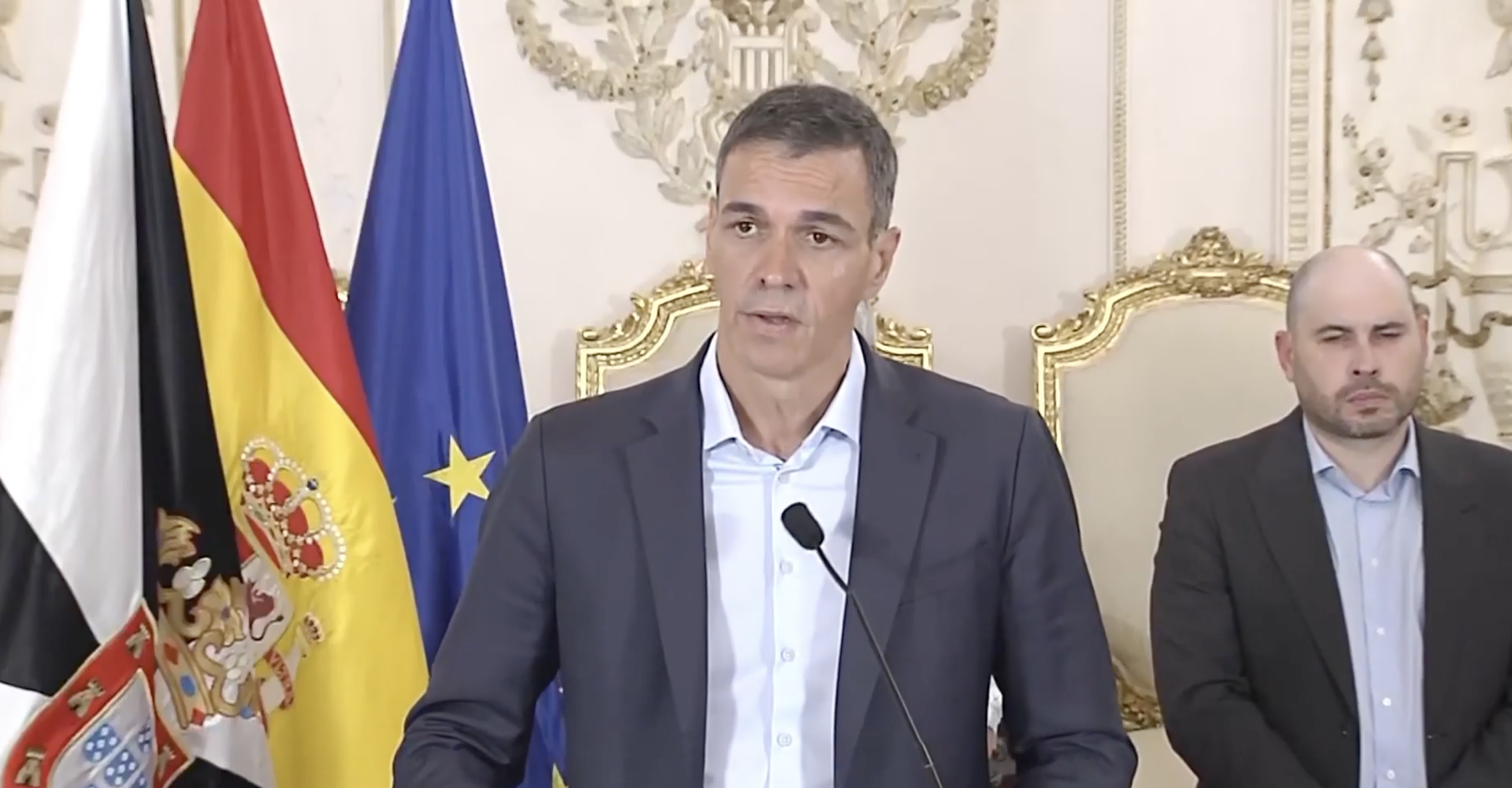
SPAIN’S prime minister reassured Ceuta residents that the government will guarantee their safety after arriving in the territory via helicopter.
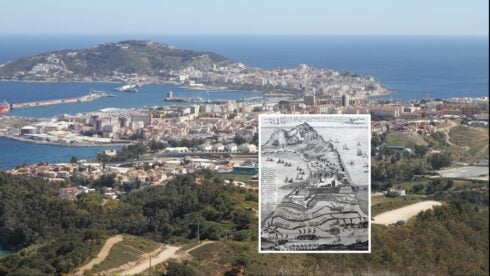
Pedro Sanchez travelled to Ceuta, at the centre of a migrant crisis that has left at least 34 people dead this week.
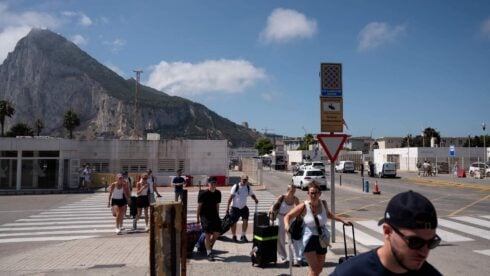
More than 50,000 people have crossed into the city illegally since Thursday, according to the interior ministry, most swimming around the border breakwater at El Tarajal or walking through an unguarded crossing point.
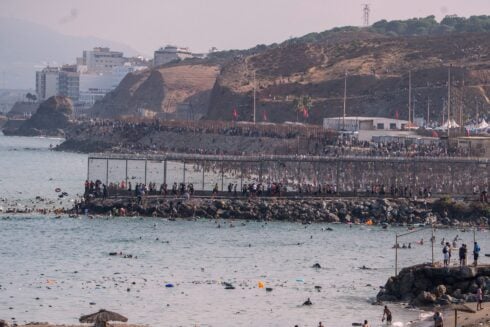
Roughly half, close to 25,000, have already returned voluntarily to Morocco, the Interior Ministry has said.
“What happened yesterday was an attack, a violation of Spain’s territorial integrity,” Pedro Sanchez said, speaking from Ceuta on Friday.
He said the government will guarantee residents’ safety by intensifying the presence of the Guardia Civil and Policia Nacional on Ceuta’s streets.
It comes after he received a tough reception including boos from the locals, with police needing to draw batons on protestors upon his arrival.
The Guardia Civil will deploy a barrier of buoys in the sea at the Tarajal breakwater to intercept new arrivals before they reach the beach, he said.
The barrier is designed to let officers process people for repatriation without breaching a recent Supreme Court ruling that bars turning back anyone who has already reached Spanish territory by swimming.
Spain will speed up the paperwork needed to repatriate migrants who entered the country irregularly, Sanchez said.
And the country will keep working with Moroccan authorities against the mafias trafficking the people making the crossing.
Defence minister Margarita Robles said 3,000 army units are ‘fully available’ to support the Guardia Civil, the police and Ceuta’s population.
But Sanchez’s reassurances came against a backdrop of critical comments from his European partners.
Sweden’s prime minister, Ulf Kristersson, said Spain must ‘regain control of the situation’ and said his government stands ready to act if the crisis threatens Sweden’s own security or migration position.
Italy has gone further: prime minister Giorgia Meloni and foreign minister Antonio Tajani have both raised suspending Spain from Schengen, the EU’s passport-free travel zone.
Finland’s interior minister, Mari Rantanen, backed the idea, saying Spain had shown ‘a complete failure’ to protect the EU’s external border.
European Commission president Ursula von der Leyen called the images from Ceuta ‘unacceptable’ and said the EU would send extra support, including help from the border agency Frontex.
Josep Borrell, the EU’s former top diplomat, said no member state has the legal power to unilaterally suspend another’s place in Schengen — meaning Italy’s threat is a political warning, not something it can currently carry out.
Click here to read more Spain News from The Olive Press.