

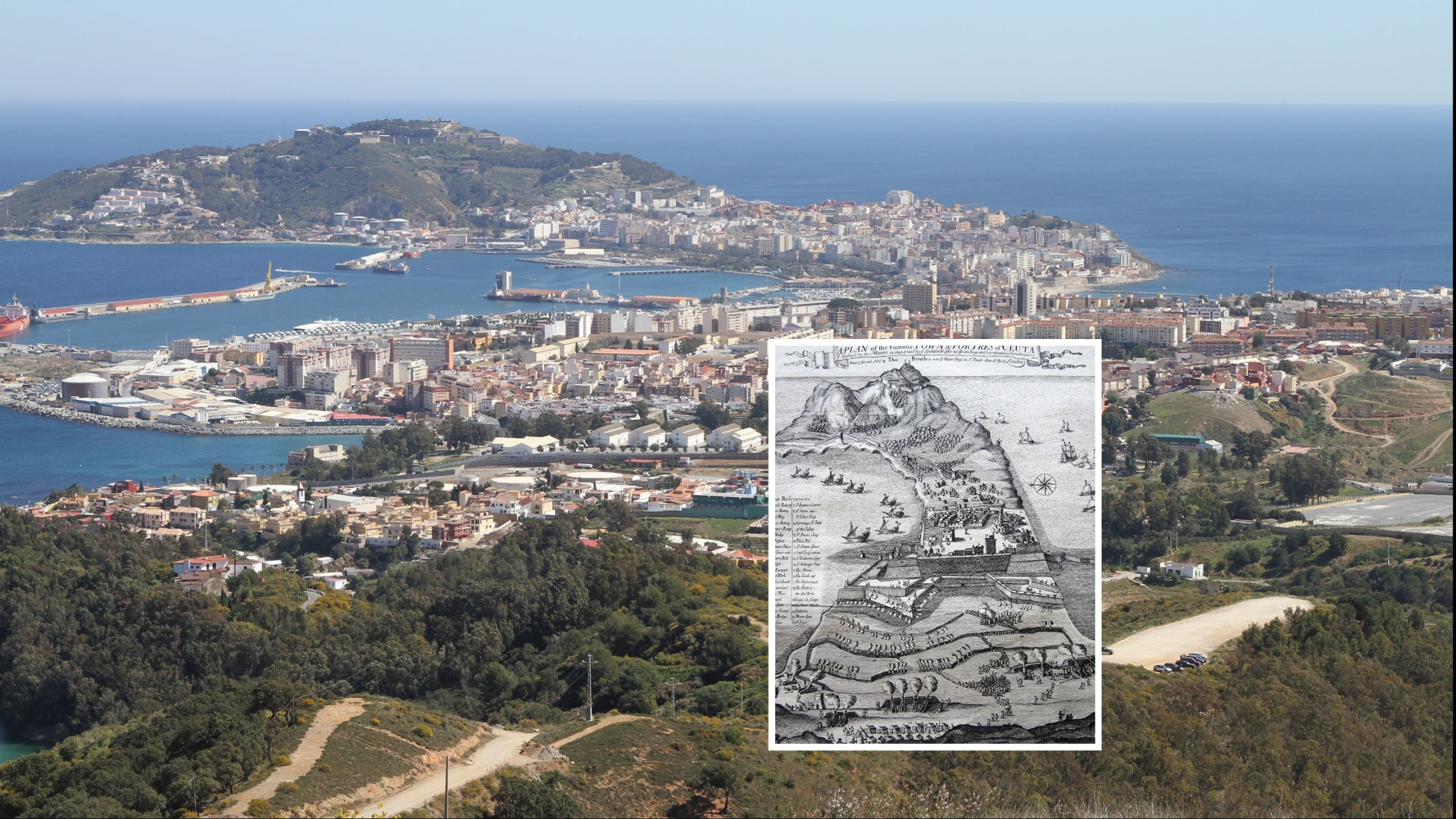
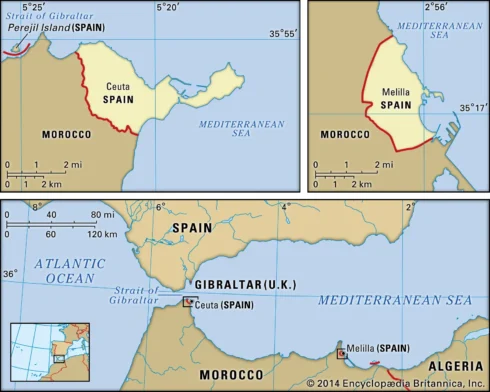
HOW did Spain come to own Ceuta and Melilla, two cities on the mainland of Africa that count as full parts of the Spanish nation?
Our collective European colonial past has a lot to answer for.
Go to the outskirts of almost any French city and you’ll find a banlieue where unemployment runs far above the national average.
Its residents are French citizens, but many can’t get near a decent job or a decent school. They, or their parents, or their grandparents, moved here from Tunis or Algiers.
Holland has its South Moluccans. Germany has its Turkish Gastarbeiter. And let’s not even mention Northern Ireland. When it was fashionable to have colonies, every advanced European power had one.
Now it’s payback time.
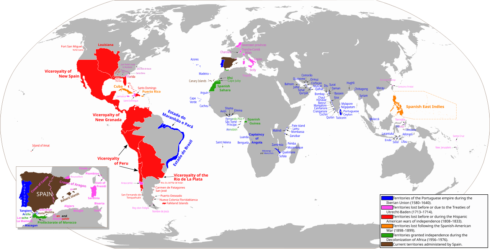
For centuries, Spain tried to conquer Morocco outright and never quite managed it. By the Second World War, that particular game was up for everyone.
The places that colonial-era newsreels had once patronised with footage of grass skirts and coconuts drunk from the shell wanted what everyone else already had: parliaments, investment banks, airlines, a say in their own affairs.
And if a bombed-out Old Europe wanted that lovely American Marshall Aid money, its colonies had to go.
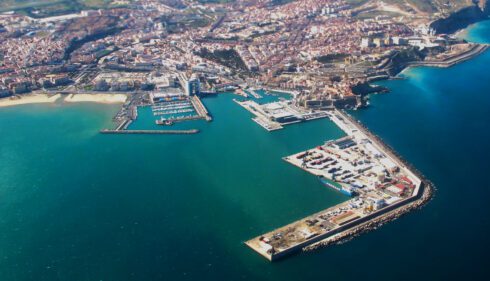
Ceuta sits on two of the world’s more important crossroads. East to west, it’s the gateway between the Atlantic and the Mediterranean.
North to south, it’s the last stop before Africa, or the first stop into Europe, depending which way you’re headed.
In short, the place is riddled with ambiguity. Its people are Berbers, not quite Arabs. Islam is the majority religion, not quite Spanish Catholicism. And it sits inside the EU (although not the Schengen zone), not quite Morocco.
Spain didn’t even conquer the place.
Portugal did, in August 1415 — there wasn’t a ‘Spain’ as such in those days. Things trundled along quietly until 1578, when the Portuguese king died trying, predictably enough, to make Morocco a colony.
He was succeeded by his great-uncle, a churchman, with no children of his own. The next Portuguese king would have to come from among the dead man’s grandchildren — which was where Philip II came in, of Armada and Mary Tudor fame.
He ‘fused’ the Spanish and Portuguese thrones, and picked up Ceuta in the process. Portugal eventually wriggled free of Spain’s embrace, but only at the price of formally handing Ceuta over for good, in the Treaty of Lisbon of 1668.
Finally, in 1956, Spain recognised Morocco as an independent country — no more of that conquering business — but kept hold of Ceuta regardless.
The thinking of the day made a certain sense: most of the world’s shipping still ran on coal, and a coaling station on the Strait looked like it might prove both lucrative and, in the event of another war, strategically priceless.
History has a way of robbing people of their certainties. Oil quickly eclipsed coal, and Europe never had the war that was meant to make a Spanish coaling station matter.
Instead, Ceuta filled up with young Africans and Arabs anxious to find any way at all across the Strait.
If the way Spain got its hands on Ceuta sounds less than convincing, the way it got Melilla is a more brazen story still.
In 1497, five years after the fall of Granada ended eight centuries of Muslim rule on the Iberian peninsula, the Duke of Medina Sidonia — one of the richest men in Castile — sent a naval commander named Pedro de Estopiñan to seize the town on the Catholic Monarchs’ orders.
He met almost no resistance and held the place within a day.
A Moroccan attempt to retake it shortly afterwards was beaten off by cannon fire from the Spanish ships offshore.
Melilla has been Spanish ever since — no papal small print required, just a duke’s private fleet and a great deal of nerve.
READ MORE: Fourth body pulled from the sea off the Costa del Sol – as Ceuta border crisis sees dozens drown
The European colonial age, roughly 1500 to 1950, made sense in a cruel sort of way. Advanced societies with metal ships, cannon and standing armies could rip off ‘backward’ paradises twice over.
You pinch Egypt’s cotton, ship it back to Huddersfield, and turn it into long, nightie-like shirts. Then you sell those shirts back to the Egyptians who grew the cotton in the first place.
It worked in Europe’s favour for a long time. Now comes the downside.
Look at the age pyramid of any African country and most of the population is under 30. Europe’s population, by contrast, is greying and shrinking.
Those young, ambitious Africans are saying to Europe: ‘Let us in. It’s our turn now.’
Watch the news out of Ceuta’s border fence this week, and that’s exactly what you’re seeing.
Click here to read more Spain News from The Olive Press.


The hypocrisy of the Spanish. They wish to retain their historical, colonial heirlooms in Morocco while demanding that the British return Gibraltar to them. The irony of it.
Why was my comment first approved and published, and then shortly afterwards removed?
It’s up now.
Gremlins.
Every African country in the continent is dysfunctional, chaotic and uncivilized. What makes you think these people wouldn’t want to turn Europe into the same?