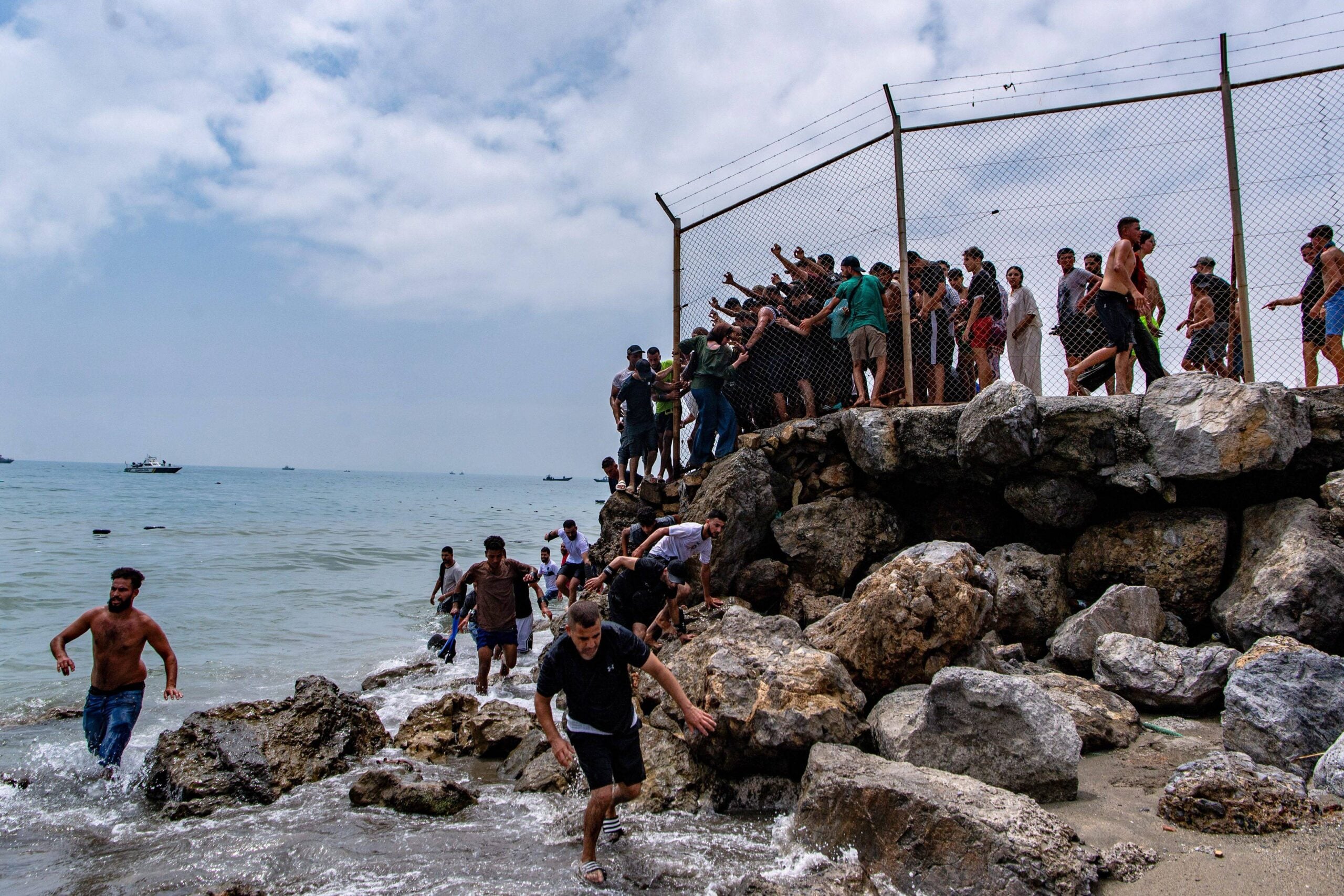
AS many as 60,000 migrants, mostly from Sub-Saharan Africa, were estimated to have entered the Spanish enclave of Ceuta on Friday.
The official death toll from the incident was 67, although some reports put the figure as high as 87. Local news outlet El Faro de Ceuta reports that a further 43 people are still missing.
While the vast majority have now gone back, up to 5,000 may still be there, with many now aiming to officially claim asylum, according to Juan Jesús Vivas, the regional president of Ceuta.
Why do so many people want to cross into Ceuta?
Ceuta is one of two Spanish exclaves in northern Africa, along with nearby Melilla.
The six-mile long border between Morocco and Spain is a frequent target for migrants looking to cross into Spain, and from there into other parts of Europe.
The mass migration appears to have been triggered by a June 29 ruling by Spain’s Supreme Court that authorities cannot summarily deport migrants who arrive by sea without due process, because a sea crossing doesn’t cross the ‘physical border infrastructure’ referenced in Spanish law — creating a legal loophole.
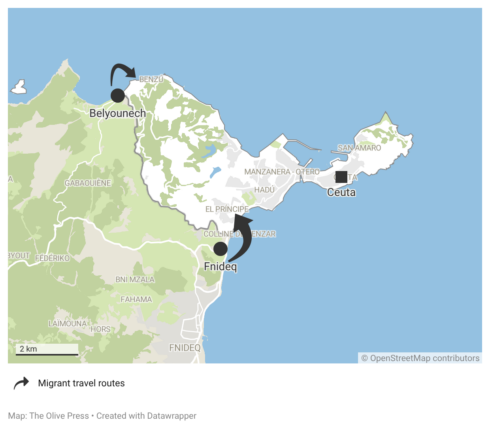
Spanish human rights lawyer Dario Gomez Duque told The Olive Press that “[Migrants] want to enter via Ceuta because there’s a breakwater there, meaning they can swim across.
“It’s also a transit area very close to mainland Spain, etc. It’s practically the gateway to Spain.”
“Many of them hope to reach CETI (Centro de Estancia Temporal de Inmigrantes), the immigration detention center. Once registered there, they would have to be taken to migration hotels [to be processed for asylum]”
Who is to blame for these latest crossings?
In the days leading up to the event, social media in the region was reportedly flooded with posts encouraging Moroccans to attempt entry in the days before it began, a pattern researchers had also seen in earlier failed mass-crossing attempts in 2024.
Spain’s El Pais newspaper has suggested that social media bots played a significant role in the latest crossings.
It has been further speculated that they were created in Russia (even Israel) or perhaps neighbouring Algeria in order to try to cause further unrest in Europe and, in particular, destabilise Spain.
While there have also been reports from some migrants that Moroccan border guards intentionally opened the Findeq border crossing, these have not been conclusively proven.
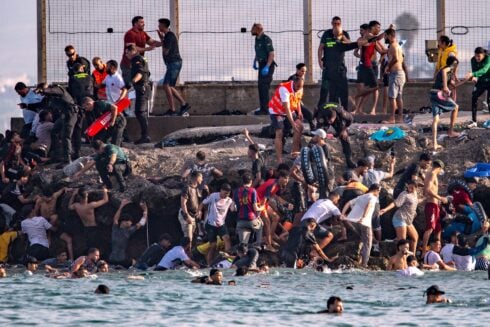
How many people normally try and cross into Ceuta?
Data from the United Nations shows that there had been 14,479 crossings from Morocco to Spain in 2026, before the events of last week. Of these, 2,826 were into Ceuta.
Previous mass crossings included an incident in 2025, where Reuters reported that as many as 85 people were believed to have swum into Ceuta.
However, the city sits on a spit of land that makes sea crossing from the Moroccan city of Belyounech or from El Tarajal beach in Findeq a relatively short swim, encouraging many potential migrants to make the crossing every year.
The region has large border fences, which were designed to prevent mass crossing of this type.
Spanish authorities have now begun to install a 500-meter containment barrier along the sea border, which the Interior Ministry said was being installed specifically to comply with the Supreme Court ruling that had exposed the loophole.
Will the migrants be able to travel to the EU?
In a word, no.
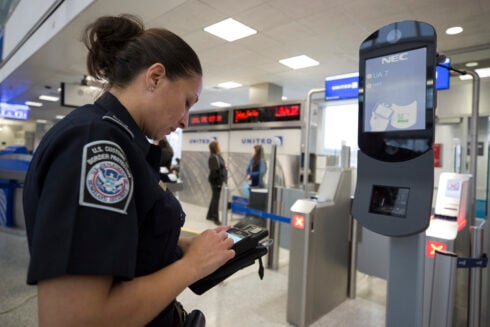
While Ceuta is a part of the European Union, additional border checks and travel restrictions are in place for travellers who wish to leave the city, meaning that legal permission to enter the EU is required for all passengers bound for Spain. Ceuta is not part of Schengen.
Despite this, controversially – and angering Spain – Italy has temporarily suspended Spain’s access to the visa-free Schengen travel zone in response to the crossings, meaning that travellers heading to Italy from anywhere in Spain will be required to pass through passport control.
Czech Prime Minister Andrej Babis has called on the entire 22-nation political bloc to impose travel controls on Spain.
Spanish army soldiers and police remain deployed and visible along the border and beaches, with additional reinforcements near the Tarajal and Benzú crossings.
Spain’s Foreign Minister, Jose Manuel Albares has said that the majority of those who crossed into Ceuta have already returned to Morocco.
Will Andalucia be affected?

No more than usual.
While Ceuta is 14 kilometres (8.9 miles) from Andalucia, across the Strait of Gibraltar, additional border controls exist for travellers wishing to cross from the enclave into mainland Spain.
Although Andalucía’s regional deputy president, Manuel Gavira, of the far-right Vox party, said Sunday that the migration crisis ‘is already spreading to the Andalusian coastline’, there appears to be little evidence that unusual numbers of migrants are crossing from Ceuta into mainland Spain.
Andalucía (particularly Algeciras and the Campo de Gibraltar) is the Spanish mainland’s main entry/reception point for migrants crossing the Strait more broadly, separate from the Ceuta/Melilla enclave route, meaning that it often sees significant ferry traffic, especially during the summer months, when many Moroccan residents of Spain return home for holidays.
Has this happened before and will it happen again?
Yes, and yes.
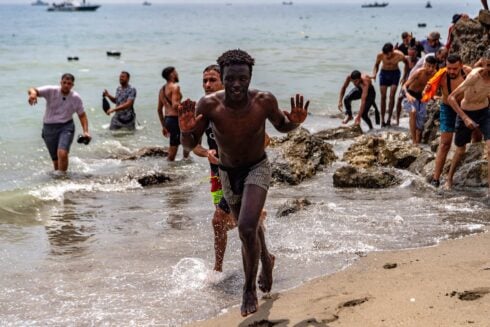
The most recent significant mass migration event in Ceuta took place in 2021, when up to 10,000 people swam across from El Tarajal, after a deterioration in diplomatic relations between Morocco and Spain saw Moroccan authorities loosen border restrictions.
While it is hard to predict exact numbers, a combination of economic, political and environmental factors are likely to keep crossing numbers rising in coming years — although a repeat of the events of July 2026 may not be as common.
Is it safe to visit Ceuta?
Mostly. While migrants have largely been detained, deported or voluntarily returned to Morocco, Olive Press’ Kirana Mostert reports that far-right groups have arrived in the city, intent on exploiting the current focus on the Spanish territory.
While the U.S. government has issued a Level 3 Travel Advisory – warning citizens to reconsider their travel plans, the UK government has not officially commented on events, with no current advice in place for holidaymakers planning to visit the area.
Gomez also notes that there are around 2,000 migrants still in Ceuta, who lack access to basic resources like water, care, and food.
“We are perhaps close to transitioning from a migration crisis to a true humanitarian crisis,” he told us.
Will my holiday to Morocco be affected?
No.
For most holidays in Morocco, travel plans should not be affected at all.
Major tourist destinations like Agadir, Casablanca and Marrakesh are all hundreds of miles from the unrest in Ceuta.
Click here to read more Explainer News from The Olive Press.