

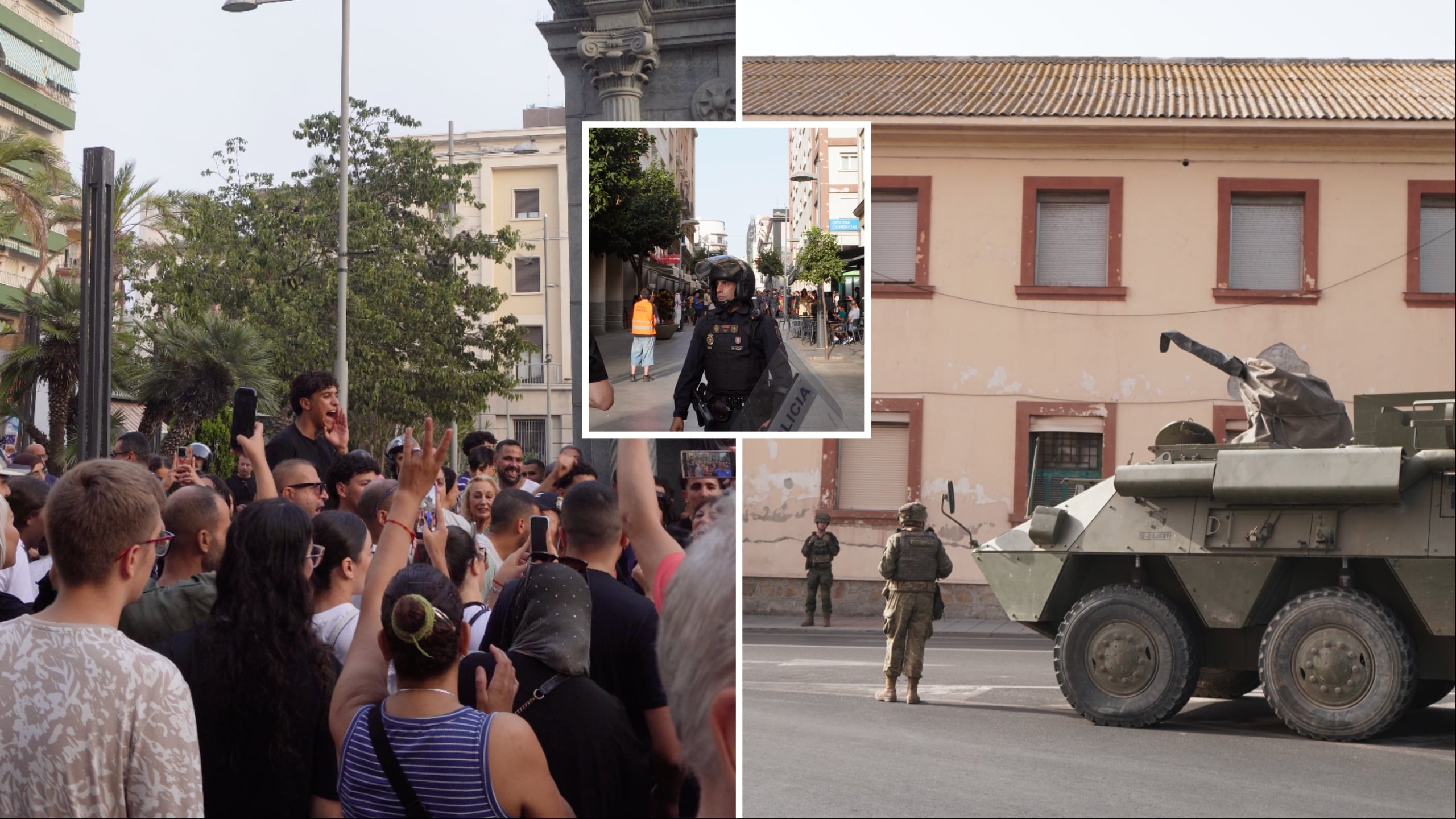
The Olive Press sent Kirana Luna to Ceuta to test the temperature and understand just what has happened in the Spanish enclave – and what exactly are the implications
I HAD watched the videos on Friday just across the water in Marbella, and, like most people on the Costa del Sol, had gulped in amazement and, yes, for sure, a fair bit of fear.
So it was with some trepidation that I headed down to Algeciras to take a ferry over to the four-centuries-old Spanish territory of Ceuta on Saturday morning.
What had become of the 60,000 immigrants who had crossed the border on Friday. Was it still chaos and mayhem? Was there still much looting going on? The smashing of cars? The fighting in the streets. Was the army taking back control?
I was not sure what exactly to expect, but I knew it wasn’t going to be a peaceful visit.
After disembarking the ferry in the enclave, which became Spanish in 1580, it was clear the atmosphere was little-changed overnight.
Indeed, just five minutes after arrival I got caught up with a group of Ceuta locals, many of them Muslims, who had come out to scream at hard right Madrid MP, Alvise Perez, who had just got off the ferry with me.
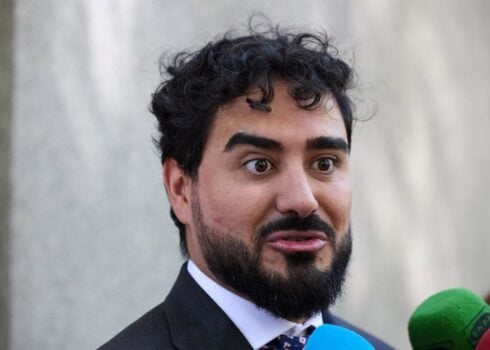
He had obviously come to stir up the situation, not calm things down: Perez is known for his calls for mass deportations of undocumented migrants and claims that mainstream media and the political system are ‘corrupt’ and ‘hiding information’.
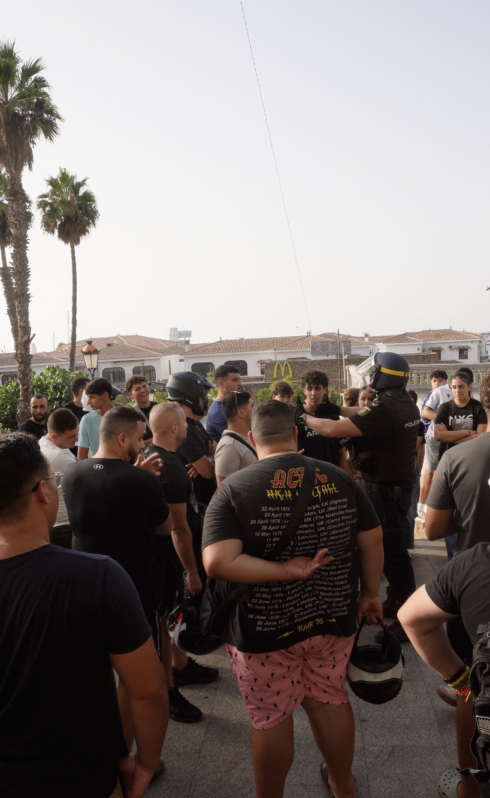
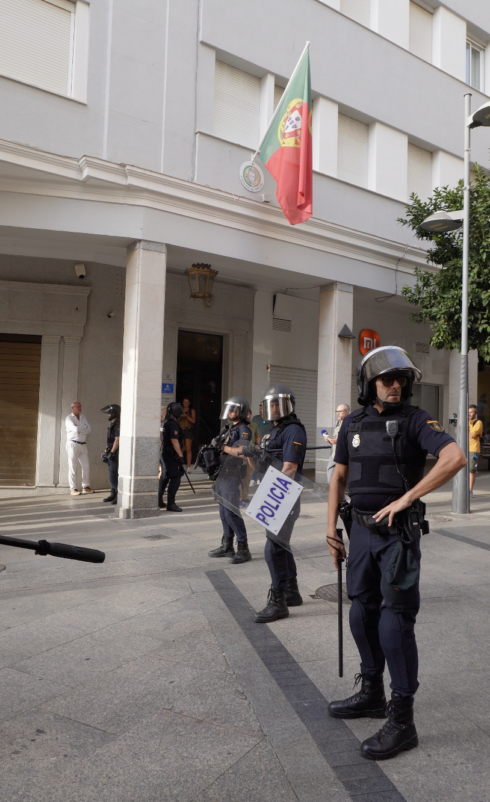
Around him police officers equipped in riot gear – body armour, batons and helmets – tried to guard him from the angry crowd.
“Get out!” the protestors chant in unison, while holding up their middle fingers and pushing themselves onto the police, trying to swing at Perez.
“We are Spanish, as well as Muslims!” one man yelled furiously. “We defend our land with blood and guts. Stop the lies about us not being Spanish just because we are Muslim.”
I went over and asked to interview him, but just as I started to take a video, someone smacked my phone out of my hands.
I somehow managed to grab it in the melee, as the police and demonstrators started to clash violently. Quite frankly, it was terrifying.
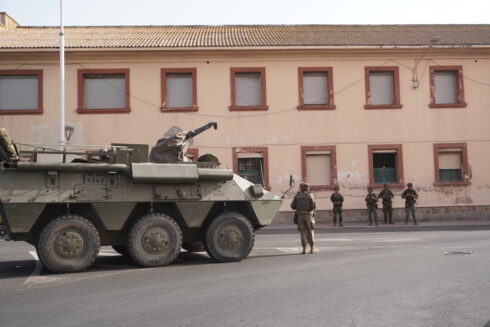
The African enclave feels like it is ready for war. Like a scene out of Northern Ireland in the Troubles, tanks prowl the streets while military checkpoints have been set up at random points throughout the place.
The soldiers’ faces were stern; their presence ominous.
While by Saturday afternoon, the vast majority of immigrants had now gone back, it is clear few locals are prepared to venture out and they could be seen peeping out of windows or standing on balconies.
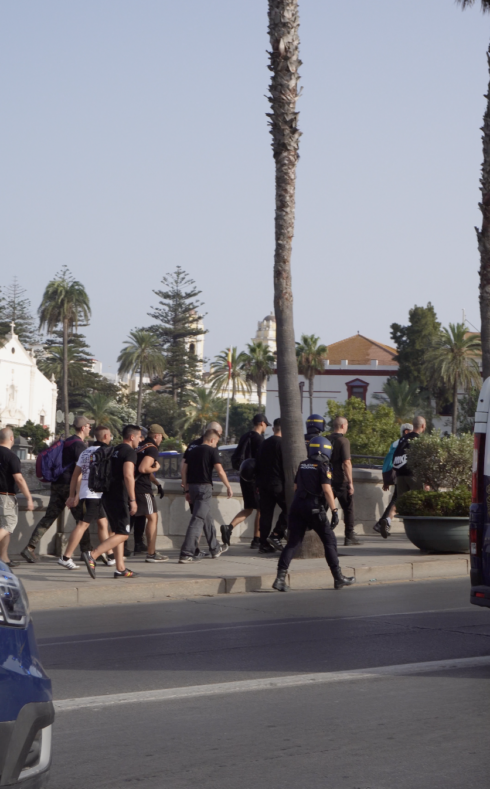
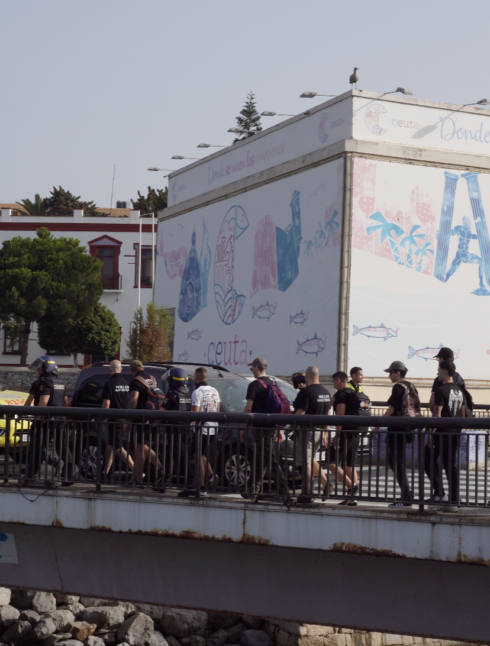
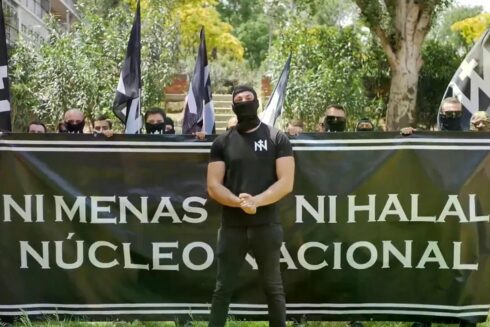
Just half an hour later, while walking from the port to the city centre, we heard more screams and around a corner we were confronted by a line of riot police escorting a group of men, dressed top to toe in black.
The group is known as Nucleo Nacional, an ultranationalist neo-Nazi extremist group.
They had arrived in Ceuta that morning to ‘protect it’ from immigrants and Muslims.
I spoke to a couple of them, who explained they had organised themselves through Telegram groups.
There, they shared coordinates where immigrants were located – I could only imagine what they were planning on doing once they found them. I decided to follow cautiously.
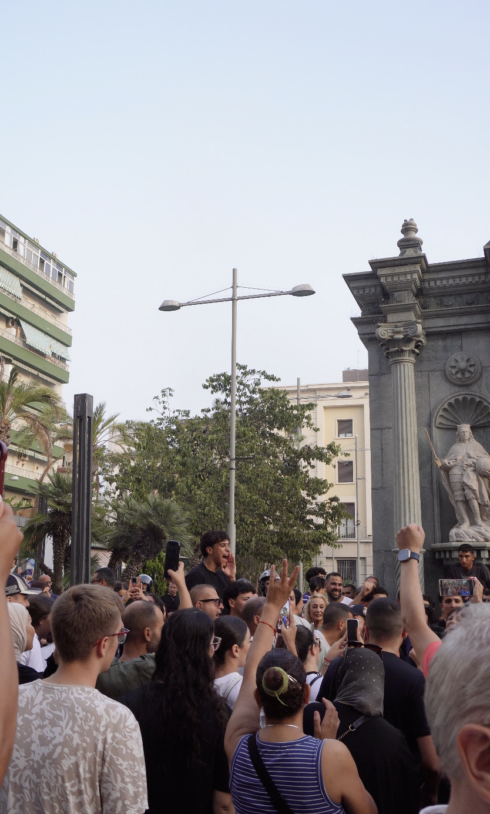
It is soon clear that another larger group of anti-fascist protesters were following the group, shadowing their every move. It was all very edgy.
One of the far right gang told me they were meeting other members at the city centre square where another far-right influencer, Vito Quiles, was waiting.
“Chase the weak,” protesters screamed as the crowd grew. It was clear they were not happy with their presence here.
Once both groups reached an intersection, the neo-Nazi group was suddenly cornered by the locals.
It was a heated standoff and, luckily for them, the Nucelo Nacional thugs were eventually escorted back to the port by the police.
“They just want to cause chaos,” local resident, Samuel Perez, 34, explained.
“Ceuta is very divided. More than 50% is Muslim and from Moroccan descent, but they are still from Ceuta and still feel Spanish.”
The civil servant explained that the local Muslims are also not happy with the sudden influx.
“They are getting attacked even though the Muslim population has been living here for a long time,” he tells me. “They are not happy with the immigrants either.”
And no wonder, pulling out his phone to show me a video that appeared to show an illegal immigrant stabbing a local Muslim.
It was hard to verify, but it was gruesome for sure and the man was clearly bleeding from his neck, while other stabbings were also said to have taken place.
READ MORE: The history behind Ceuta and Melilla – how Spain came to own two cities on mainland Africa
One thing is for sure; you could really feel the fear in the city.
Nobody wanted to be on camera nor provide me with their real names.
Whenever I got my camera out to film, people got angry: “Don’t film my face,” a woman yelled at me, demanding I delete the video.
Another group of men looked at me menacingly while signalling I had to put my camera away.
“People are scared to have other people find out about what they think,” Perez explained later.
I eventually found Vito Quiles sheltering in a café, by the Portuguese consulate, while riot police, equipped with riot shields and helmets, were forming a wall between him and an angry crowd outside.

Quiles is known for his confrontational social media posts, and provocative questions, specifically targeting leftwing politicians.
I try to talk to him but the cafe is cornered. On both sides of the street protestors have formed a wall. “I am Spanish” they screamed, and “Ceuta, Ceuta, Ceuta” while waving the Spanish flag.
It is an intimidating sight, the police with their riot shields, and the furious protestors, mostly made up by angry men.
“If the police put down their face shield, we need to run,” Pedro Palenzuela warned me. He is a local Ceuta resident who joined the protest with his friends.
“They [Quiles and Perez] want Spain to move forward, so to speak,” his friend Angel Gomez tells me.
“But we’ve already had this kind of national movement and struggle before. It didn’t work.”
The police eventually decided to escort Quiles from the cafe, while the protestors ran after him, trying to chase him out of the city.
At the city centre plaza, the police also decide to evacuate Alvise Perez and his crew out of the chaos as an angry crowd surrounds them. The protestors fill up the square. It is clear they don’t like the far right here. The sound of shrill whistles, and angry chants echo.
“Nobody wants illegal immigration here, it serves no purpose,” Gomez says. “But I think it would be better if we came together and somehow avoided conflict.”
By now it is late-afternoon and, having realised there is literally nowhere to stay here (Booking.com only lists hostels on the other side of the border), I decide it is time to head home.
I’ve taken the temperature and had a feel of what can happen in the tinderbox on the frontline of Fortress Europe.
Click here to read more Spain News from The Olive Press.


Thank you Olive Press for hiring another silly naive Marxist. Ms. Mostert is hardly a neutral journalist.
She would certainly disagree with that…
The stirring up of racial hatred was real for sure.