
IT had to happen.
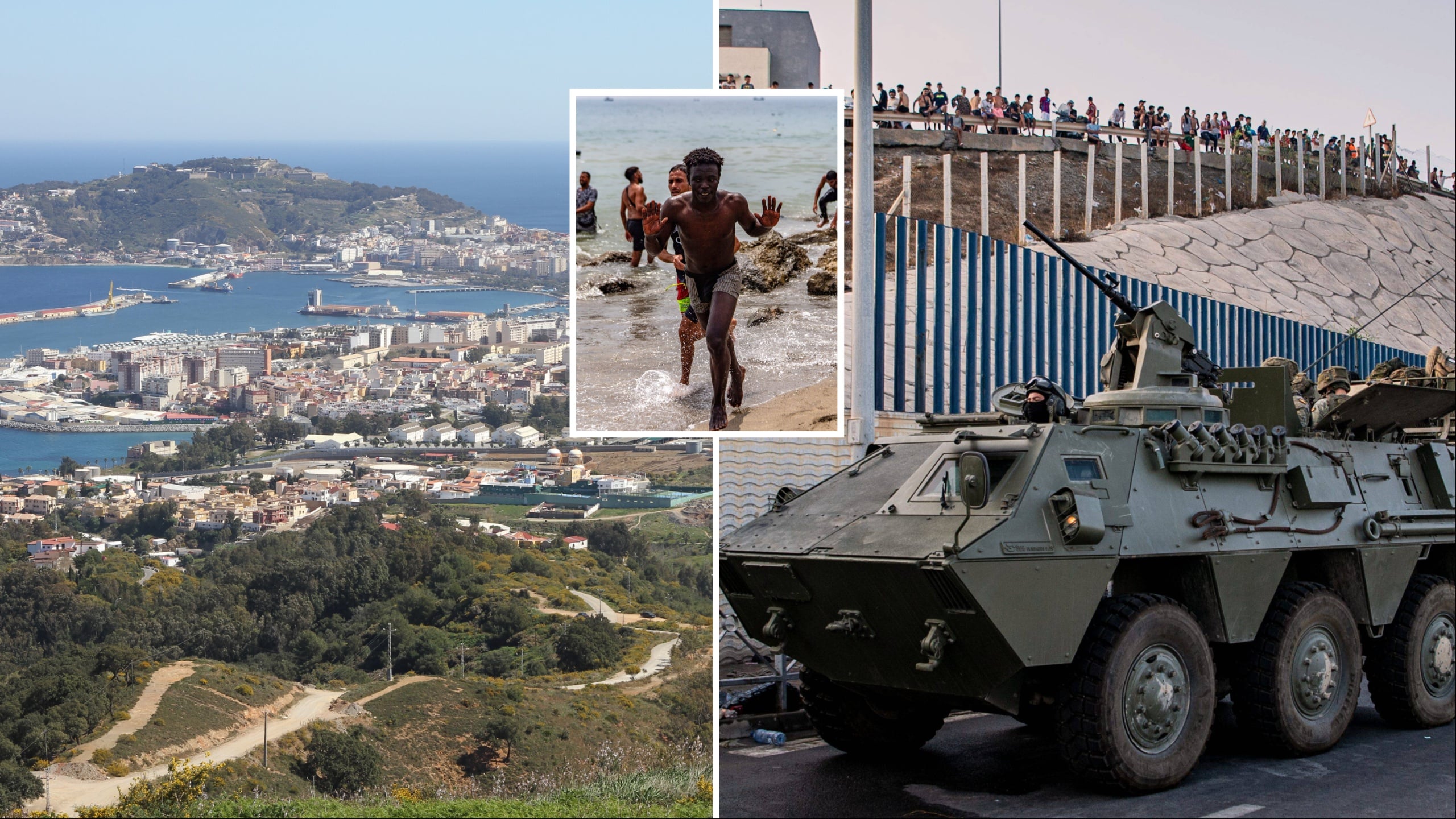
As Pedro Sanchez landed in Ceuta on Friday morning to inspect a border his own government has just sent the army to hold, the confirmed death toll for the past two days stood at 18 — men and women who drowned or were crushed trying to swim, wade or scale their way onto Spanish, and therefore European, soil.
That figure will almost certainly be out of date by the time you read this.
It was nine the day before. It will likely be higher again by tonight.
“It’s different.” That is what Spanish people always say, and hope you will leave it there.
Live here long enough and, sooner or later, some Spaniard will tell you that Gibraltar is ‘obviously’ Spanish, and that its continued loyalty to Britain ‘makes no sense.’
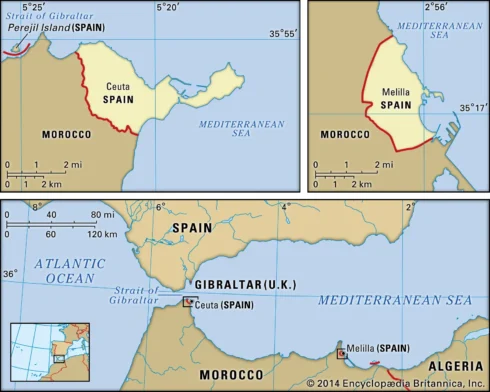
Point out that Spain itself holds two exclaves on Moroccan soil — Ceuta and Melilla — and ask why Madrid does not hand them back, and the reply comes fast: ‘it’s different.’
Whatever has been building for decades broke properly this week, and Spain is standing at the centre of it.
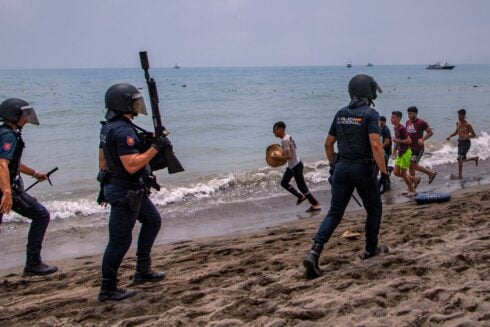
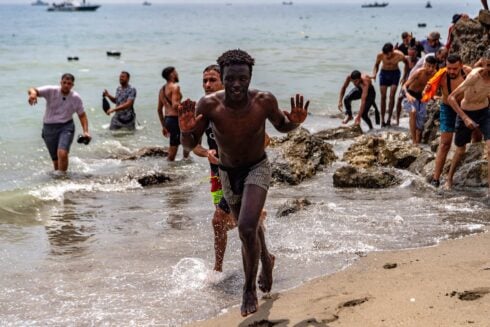
Ceuta’s own government says between 1,500 and 2,000 people crossed the border in the ten days to Thursday; around 50,000 poured through a collapsed border on Thursday alone, in scenes the head of the Civil Guard officers’ association, Rachid Sbihi, called a ‘serious humanitarian crisis.’
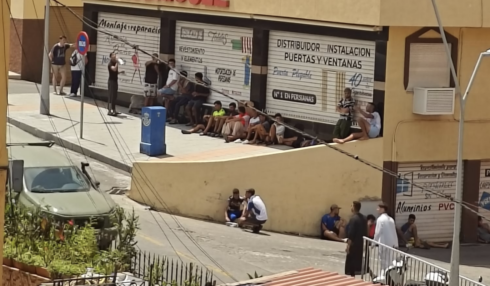
He told the Associated Press that migrants, including unaccompanied children, were sleeping in parks and roaming the streets.
READ MORE: The history behind Ceuta and Melilla – how Spain came to own two cities on mainland Africa
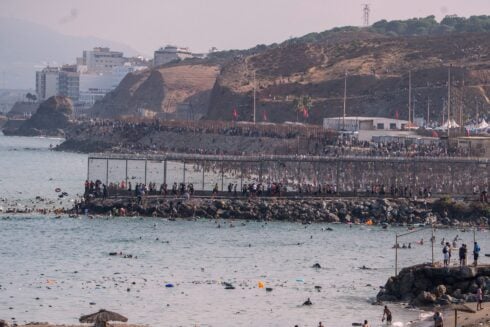
“It’s chaotic,” he said. Many of the dead drowned attempting the final stretch from Fnideq, a Moroccan town about 5km from the border fence; others were crushed in a stampede near the breakwater at Tarajal beach, the urban strip that doubles as Ceuta’s main crossing point.
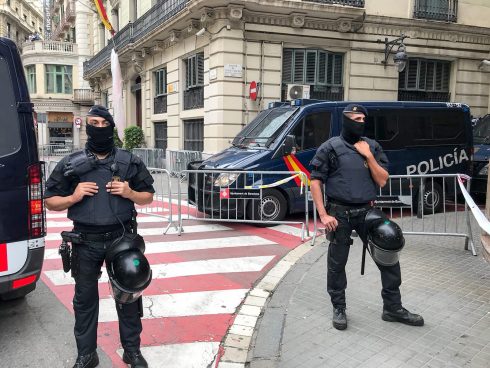
Madrid has now sent army units to reinforce the Guardia Civil, Melilla has seen crossing attempts of its own, and Italy’s Giorgia Meloni has threatened to suspend the Schengen open-borders agreement with Spain altogether.
It is all, at root, about economic gravity.
Strip away the politics and this is what remains: Europeans live better than most Africans do, and that is simply a fact.
Better wages. Better unemployment and pension provision. Free healthcare.
Access to education. In the age of Empire, that gap could be hidden from a teenager in Fez.
In the age of the smartphone, it cannot be. Europe — visible, reachable, just there — is a demonstrably better place to live, work and raise a family, and no length of fencing changes that calculation for someone with nothing left to lose.
Spend time in Ceuta or Melilla and the strangeness of the place hits you fast.
You are technically in Spain — the police are Guardia Civil, the phone boxes are Spanish, the currency is the euro — but a large share of the population is Muslim and North African by culture, language and family ties that run across a border which has divided the same communities for generations.
None of this should be surprising, given how the two cities came to exist.
Ceuta has been Spanish since 1580; Melilla since 1497, when a fleet sent by the Duke of Medina Sidonia took the city on behalf of the Catholic Monarchs, five years after Columbus’s ships first reached the Caribbean.
Both predate the colonial carve-up of the rest of the continent by centuries — the so-called Scramble for Africa ran from roughly 1881 to the outbreak of the First World War in 1914, when Britain, France, Germany, Italy, Portugal and Belgium divided the map between them with barely a nod to the people already living on it.
Today, Ceuta and Melilla are among the last pieces of the African mainland still flying a European flag.
Rabat has never formally accepted Spanish sovereignty over either, and many Moroccans simply regard both cities as occupied territory.
When Spain joined the European Economic Community in 1986, nobody in Brussels seriously asked what should happen to two isolated Spanish outposts in Africa.
Nine years later, in 1995, Madrid went the other way entirely, granting Ceuta and Melilla their own Statutes of Autonomy — broadly the same legal standing enjoyed by Andalucia or the Balearics on the mainland.
Prestige, more than logic, kept them Spanish. It still does.
What that prestige has never solved is how to police the join between two continents living at wildly different income levels.
Both cities sit behind serious fortifications — multiple rows of fencing topped with anti-climb wire and cameras, patrolled around the clock — and Melilla’s runs to six metres high.
None of it has stopped people trying, and dying trying: 18 confirmed dead this week alone, and dozens more in a single 2022 rush at Melilla’s fence.
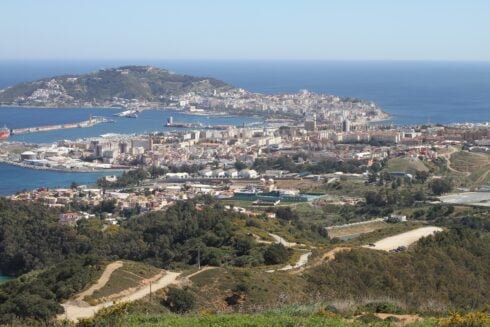
What the fences have done is turn a short swim or climb into a genuine gamble with your life, which is precisely the scale of what people are now prepared to risk to get across.
Imagine being a young North African. Like teenagers everywhere, you would rather be Taylor Swift, or Erling Haaland, than anyone else.
Your phone tells you, accurately, that life is easier over there — over THERE, visibly close.
Cross into Ceuta or Melilla and you have effectively cracked it: both count as Europe, and the mainland is only a ferry ride away.
Race complicates the picture further, and this writer will not pretend otherwise. A Spanish teenager visiting Ceuta from Madrid who lost his passport would, in all likelihood, be treated with courtesy and put in touch with his family within the hour.
An unaccompanied African minor with no papers is far more likely to end up in a Centro de Estancia Temporal de Inmigrantes (CETI) — a state-run holding centre for new arrivals, chronically overcrowded in both cities for years — with no such guarantee of speed or sympathy.
Whether that amounts to differential treatment on grounds of nationality, or something close to it, is a judgement this writer is comfortable making and happy to defend, even if plenty of readers will not agree with it.
Spain’s answer, across successive governments, has been more fencing and more holding centres, built in enclaves too small to have ever really coped with either. The pressure has been building for two decades.
This week, the container simply blew.
It is not just Madrid’s problem. It is ours.
Click here to read more Spain News from The Olive Press.