TENS of thousands rallied in solidarity with Ceuta across Spain as the government faces growing pressure over its handling of the migrant crisis in the enclave.
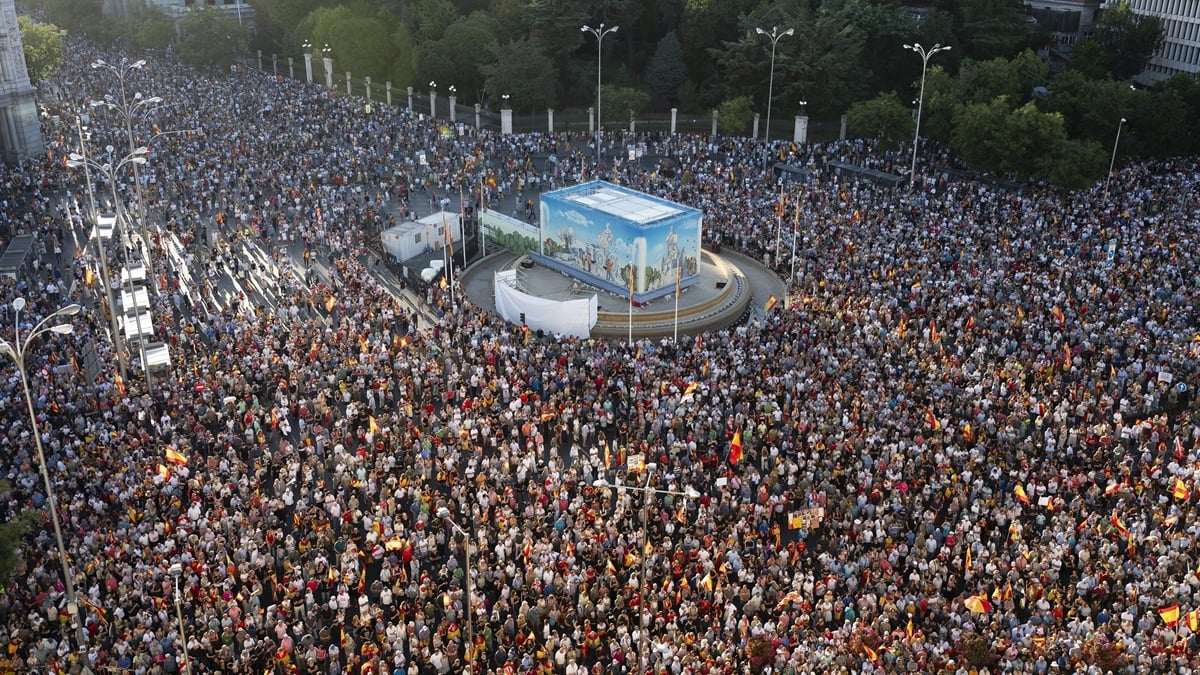
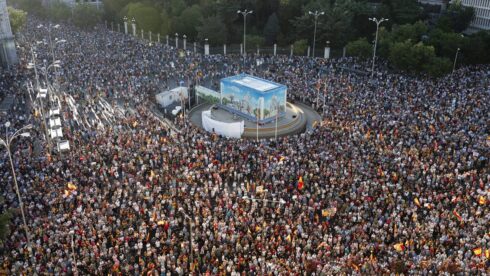
Around 50,000 people gathered in Madrid on Wednesday evening, alongside 25,000 in Valencia, 20,000 in Ceuta, and thousands more across dozens of Spanish cities, according to government figures.
Protesters waved Spanish flags as they swarmed across the cities, with many calling on prime minister Pedro Sanchez to resign over what they say is a failure to protect Spain’s borders.
The demonstrations come as Ceuta, a Spanish enclave in North Africa, faces a growing humanitarian crisis following the mass influx of 72,000 migrants from Morocco on July 30 and 31.
Around 90% of those migrants crossed back into Morocco shortly afterwards, the government said, but some 5,000 remain in the tiny enclave — including more than 1,000 children.
The situation has stoked security concerns among local residents, with Wednesday’s protests taking place on the Day of Ceuta as pressure mounts on the government to speed up the return of those still in the enclave.
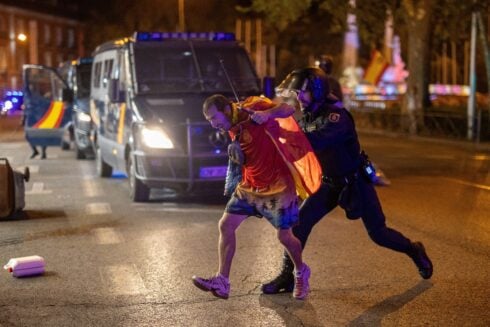
Tensions boiled over in Madrid when a group of around 100 demonstrators attempted to march towards the Spanish parliament, chanting ‘Long live Spain’ and ‘Ceuta is not for sale!’.
Anti-riot police fired tear gas and rubber bullets at the group in a bid to stop them, with the clashes leaving four officers injured and resulting in four arrests among the demonstrators, including two minors.
In Valencia, protesters burned effigies of Sanchez and Moroccan king Mohammed VI, while chanting: “Spain is Christian, not Muslim.”
The leader of far-right opposition group Vox, Santiago Abascal, was also seen marching alongside protesters in Madrid.
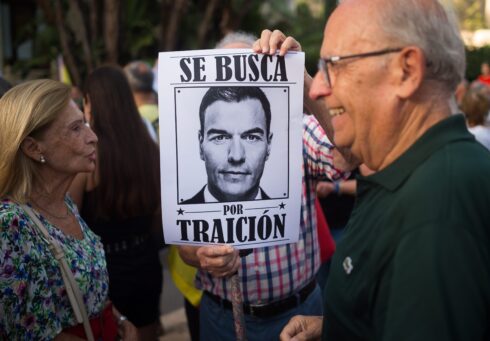
Speaking to reporters, Abascal said Sanchez should be ‘tried for treason’ after a police intelligence report surfaced on Wednesday accusing Moroccan officers of helping orchestrate the unprecedented migrant surge in July.
The report was made public by investigative outlet El Español just two days after Sanchez cleared Morocco of any involvement in the crisis, fuelling a political firestorm within the Spanish government.
“We are in the hands of a lackey government that acts in the service of a foreign government,” Abascal said at the rally.
“We are in the hands of a traitor who has served the interests of Spain’s enemies from the very moment he was elected,” he insisted.
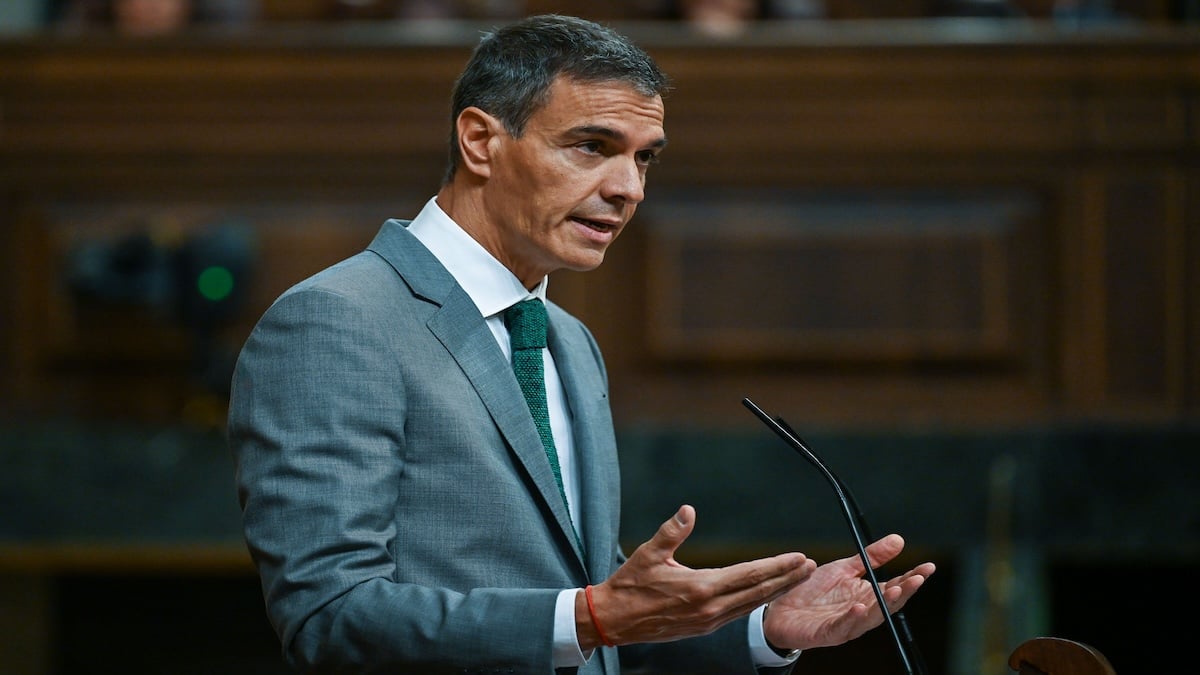
Addressing the contents of the report, Sanchez said they did not constitute ‘proof’ that Rabat had planned or coordinated the influx.
The PM also hit back at critics pointing the finger at Morocco, saying that if there were evidence of Rabat’s involvement in the surge, Spain would act accordingly.
“This government is not afraid to confront foreign powers,” Sanchez said. “But we are going to proceed on the basis of established facts.
“Others would drag us into a war based on false evidence,” he added.
The explosive report, which police submitted to a National Court judge but initially did not share with the government, claimed that Moroccan uniformed officers could be seen giving migrants instructions on how to cross the border during the July influx.
According to El Español, the report also concluded that Rabat had ‘planned and orchestrated’ the surge in a bid to overwhelm Spain’s capacity to respond to border crossings.
Spanish police chief Francisco Pardo has since clarified that the report does not accuse Rabat of direct involvement.
Rather, it reconstructed through footage and image analysis how Moroccan agents directed migrants towards the border during the July onslaught, concluding only that the Moroccan Gendarmerie may have been involved.
But the report still sparked outrage within the Spanish government, with right-wing Partido Popular leader Alberto Nuñez Feijoo openly pointing the finger at Rabat on Thursday morning.
“The operation originated in Morocco, was authorised by Morocco, and there are indications that Morocco coordinated it – and that the government knew about it because it had been warned,” Feijoo told parliament.
“They knew about it and covered it up,” he added.
However, police chief Pardo confirmed on Wednesday that the government was unaware of the report, explaining that National Court judge María Tardon had instructed officers not to share the document.
Click here to read more International Affairs News from The Olive Press.