SPAIN has approved a sweeping overhaul of its national traffic regulations coming into force on October 1, introducing strict new rules for drivers, motorcyclists and electric scooter riders.
The updates follow a package of reforms approved by the Spanish Cabinet on June 24 to better protect vulnerable road users.
Here is a breakdown of everything changing on the roads from next month.
E-scooters
Riders using personal mobility vehicles (VMP), which mainly means electric scooters (electric bikes come under a different category), will face tighter restrictions on who can ride and what safety gear is required.
The legal minimum age to ride an e-scooter across Spain has now been set at 15, so in theory no more bracing yourself as a horde of 12-year-olds go careening past you.
Protective crash helmets will now be strictly mandatory for all riders, and anyone riding at night or in conditions of reduced visibility must wear a high-visibility reflective vest.
For commercial couriers and delivery workers using e-scooters, wearing a reflective vest is now mandatory at all times.
Motorbikes and mopeds
Motorcyclists and moped riders face strict new clothing requirements alongside changes designed to ease congestion.
Drivers and passengers on both motorbikes and mopeds must now wear protective gloves whenever travelling on country roads and motorways outside built-up areas.
Closed footwear is also now compulsory on all types of roads, putting an end to casually riding in flip-flops or even open sandals.
Delivery riders working professionally on motorbikes must wear a reflective vest at all times while on the job.
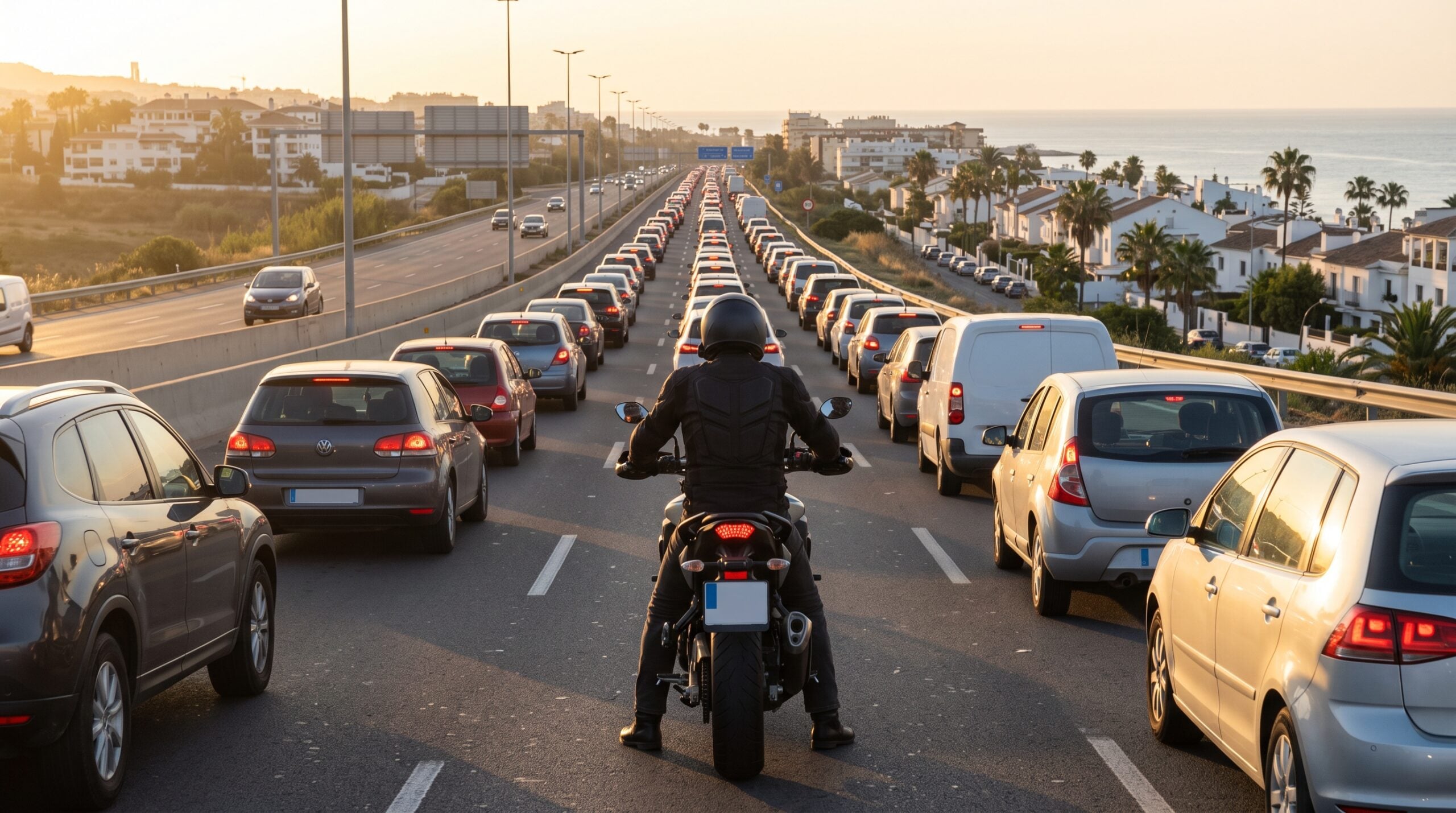
In heavy congestion, motorcyclists will be allowed to filter down the right-hand hard shoulder at speeds of up to 30kph, provided the stretch of road is appropriately signposted.
Helmets worn by moped riders must also meet official approved certification standards.
Car drivers
Motorists behind the wheel of cars and vans must adapt to two major changes regarding emergency vehicles and cyclists.
The reform introduces the ’emergency lane’ (carril de emergencia), an emergency corridor system common in northern Europe.
When traffic slows to walking pace or comes to a complete standstill in a jam, drivers must pull over to the far sides of their lanes to leave a clear central corridor for police, fire engines and ambulances.
Protection for cyclists has also been significantly upgraded.
Drivers travelling behind a cyclist in the same lane must now maintain a minimum following distance of five metres at all times.
What is delayed until 2027?
While the bulk of the decree takes effect from October 1, transport authorities have delayed a handful of technical requirements to give riders time to adapt.
Specific regulations governing mandatory lighting systems on e-scooters and the new certification criteria for moped helmets will not come into force until October 1, 2027.
Click here to read more Other News from The Olive Press.