
POLICE have dismantled a cocaine trafficking network that used the Costa del Sol as a base to move drugs across Spain to Barcelona in high-speed convoys.
Officers raided properties in Marbella and Estepona on April 10, along with addresses in Malaga city and Churriana, a district near Malaga’s airport.
During these Costa del Sol raids they seized 1,434 kilograms of cocaine and 800 grams of ‘tusi’, a synthetic drug cocktail sold as pink cocaine that typically contains ketamine and MDMA rather than any actual cocaine.
Simultaneously, officers searched a chalet in Sant Just Desvern, a town on Barcelona’s western edge, finding a further 1,351 kilograms of cocaine hidden inside the garage, taking the operation’s haul past 2,700 kilograms in total.
Police have arrested 15 people in total, with 12 now in pretrial custody accused of drug trafficking and belonging to a criminal organisation.
Three suspects were arrested days after April raids in Pilar de la Horadada, a coastal town in Alicante province near the Murcia border, over their role in transporting the drug hauls.
Three further arrests followed on June 10 at properties the group used in Marbella and Estepona, before two more suspects were held in Malaga and Barcelona accused of supplying homes, premises and vehicles to the network without formal contracts, in some cases using front people to hide who really owned the properties.
READ MORE: Police raid Estepona drug den selling cocaine near popular Orchidarium botanical park
Investigators had tracked one convoy of five vehicles as it covered an unbelievable 2,000 kilometres in a single day, racing from Huelva, on Spain’s Atlantic coast near the Portuguese border, to a town near Barcelona’s western fringes at speeds above 200kmh.
The convoy unloaded heavy bundles once it reached its destination, before doubling back towards the Costa del Sol almost immediately.

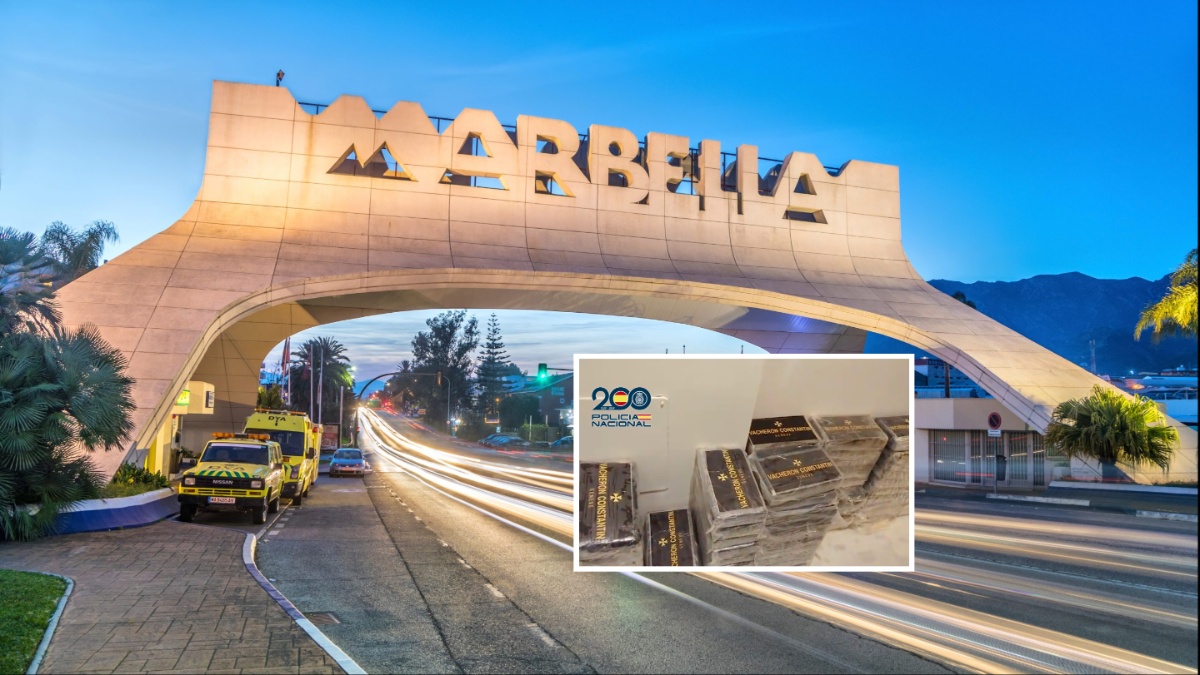
Police video from the operation shows SUV-type vehicles loaded to the brim with packages that were later revealed to contain bricks of cocaine with the curious branding of Vacheron Constantin – a luxury Swiss watchmaker.
There is no suggestion that Vacheron Constantin is involved in drug trafficking or distribution.
Investigators describe the group as a logistics operation that received, stored and transported cocaine across Europe on behalf of other criminal organisations, rather than running its own supply chain.
The network was built around close family ties, which reinforced trust between members and made it harder for outsiders to infiltrate the group.
A car dealership run by the organisation supplied members with jobs and high-end vehicles registered to front people, disguising who really owned them and letting the cars double as counter-surveillance for the convoys.
Officers seized 29 of these powerful cars, two firearms and more than €13,800 in cash, while a further eight vehicles, along with cryptoassets and real estate linked to the group, were frozen or embargoed pending the case.
The investigation began in 2025, prompted by international police intelligence pointing to a group importing large quantities of cocaine into Spain for distribution onward across the European Union.
READ MORE: Estepona ‘cocaine lord’ laundered millions in Rotterdam drug profits through Costa del Sol property
Several more members were arrested over the summer under European arrest warrants, having fled Spain or gone into hiding to evade police.
It makes it at least the fifth cocaine trafficking network dismantled in and around the Costa del Sol over just this summer alone.
Previously, the UDYCO broke up an arms-and-drugs ring in July; a 21-tonne network moving cocaine through Malaga, Algeciras and Valencia ports was uncovered in August, a separate Marbella-based cannabis-and-cocaine ring busted the same month, and a 3.3-tonne seizure between Torremolinos and Marbella on August 19.
Click here to read more Costa Del Sol News from The Olive Press.