
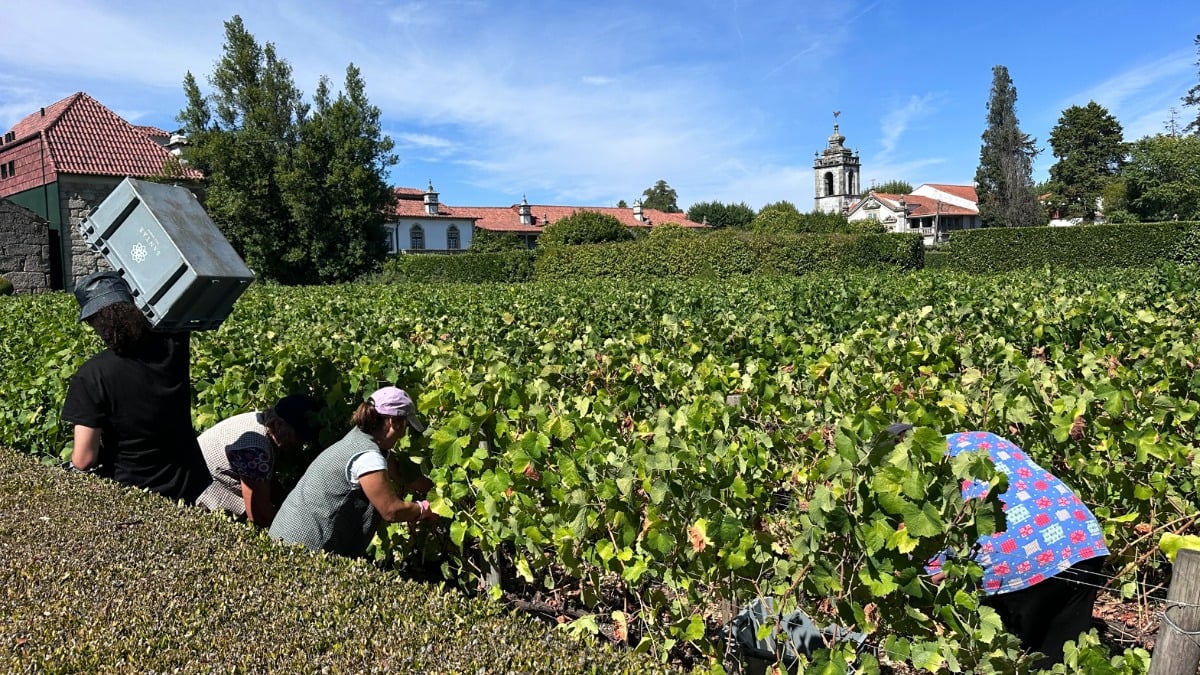
IT used to take three days to get to Santar by horse and carriage from Lisbon, depending on the weather and number of stops.
These days you can bowl up in the historic Portuguese village in just three hours – and considerably less from parts of western Spain.
But don’t expect to arrive in this inland gem to find hordes of noisy Castillians on tour – it is almost entirely off the tourist track.
Santar is one of the key wine-producing villages of Portugal’s little-known Dão region.
And while it has sometimes been described as the ‘Burgundy of the South’, few people outside Portugal have tried the wine, and even fewer have visited.
READ MORE: Boutique hotel in Portugal that’s perfect for those who love nature, good food and an impeccable spa
Despite being just an hour north, six times as many tourists visit the world-famous Douro region – around 1.5 million a year compared to just over 200,000 in the Dão.
So what a joy it is to arrive in Santar, even in early September, with fewer than a dozen people wandering its charming, narrow streets.
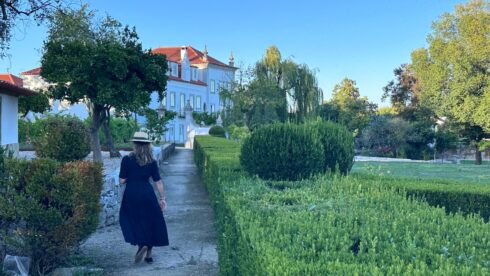
Beautifully kept – but far from polished – the ancient settlement grew up around a series of grand manor houses, each with extraordinary gardens and vineyards dropping down towards the nearby Mondego and Dão rivers.
One of them turns out to be owned by the Portuguese royal family – not that the country has a monarchy.
And even better, the 14th-century Casa das Fidalgas has recently become an extraordinary five-star hotel, with a fabulous spa and grounds to match.
Owned by would-be king Dom Duarte Pio, the Duke of Braganza, his brother Miguel, the Duke of Viseu, lived here for 40 years until it became part of the prestigious Relais & Chateaux stable.
Dom Duarte himself still comes to stay most months – probably part of a deal – and his photo, alongside his wife and three children, takes pride of place on a table in the main sitting room.
The Valverde de Santar hotel is a great example of a working farm doubling as a luxury hotel.
I loved taking tea on the veranda at 5pm, designed for the English and coming with a trio of mini sandwiches, scones, homemade jams and jazz.
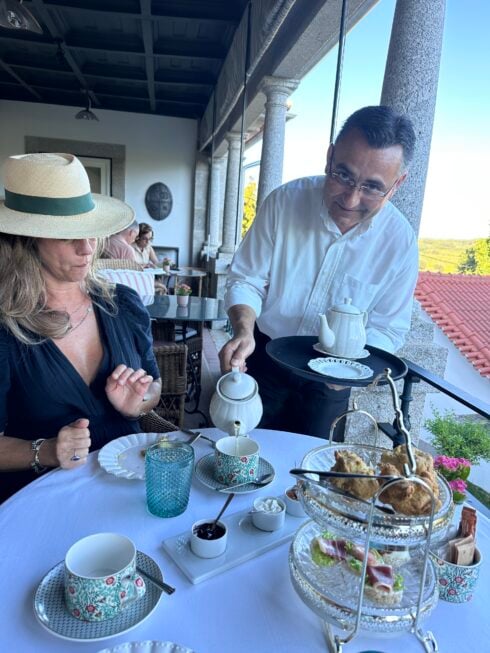
What a spot, sitting on Dom Miguel’s original rattan furniture with a view stretching for miles across a series of vineyards, one of them the hotel’s own.
You won’t feel more privileged watching the swallows swoop over the camellia tree and lily pond, while the distant squeals of children echo from the pool area.
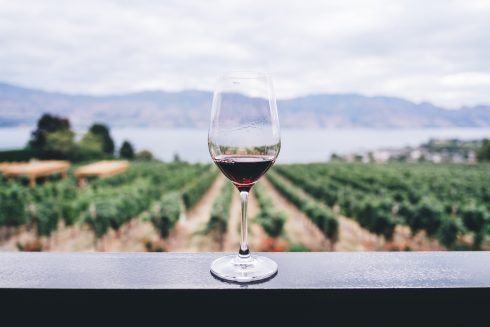
Most guests take the hotel’s wine tour and tasting from vines, some of which are more than 100 years old.
Its excellent white Encruzado – indigenous to the region and grown here for centuries – is almost as good as its fabulous Memorias de Santar red, made from Touriga and Alfrocheira grapes.
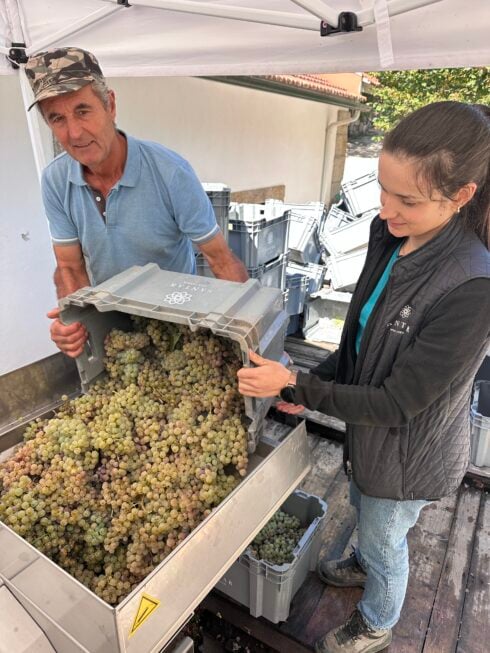
“All of our guests note the smoothness of the wine,” insists Ines Beja, 34, who has just opened an exciting new restaurant, Sitio, next door.
One of Portugal’s top female cooks, Beja is a big fan of the region, having trained at a nearby cookery school in the Serra da Estrela before becoming sous chef with Michelin-starred Diogo Rocha at Mesa de Lemos, a short drive away.
Sitio means ‘place’, and there is a real sense of it with her menu, which is very local, with ingredients mostly coming from just five of Portugal’s 18 provinces.
She makes a point of listing where her ingredients come from, such as vegetables from Quinta d’Azenha, rice from Figueira da Foz and ham from Arronches.
I loved her bread made from grape skin dried in the sun, as well as a special cornbread her grandmother taught her to make.
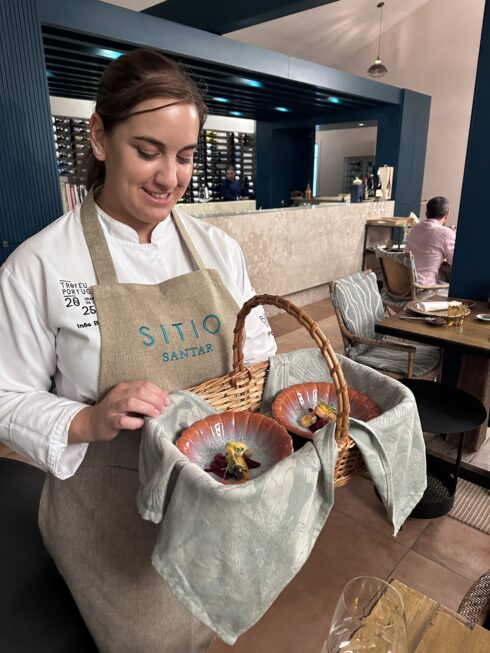
The starters are served ‘picnic style’ in small baskets and include fabulous octopus fritters, trout in escabeche with beetroot slices and a potato fritter with chives.
A meat pie ‘from Nazaré’ was as crashingly good as its famous waves, but the dish of the day was a mini pastry of rabbit stew with red wine.
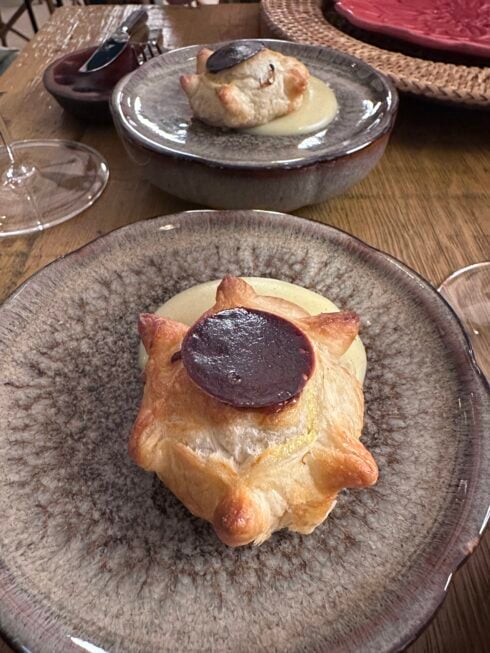
Her colleague Anthony is the sommelier, a ‘mountain man’ from the nearby sierra, but he also inspired some dishes such as the ‘caroles’ – duck with rice marinated overnight in wine with rosemary, paprika, mustard and more.
I also loved her ‘Sponge egg cake’, with olive oil and salt. Cooked in its own-brand greaseproof paper with creamy locally frozen milk and olive oil powder, it is a massive signature dish.
My question for Ines is a simple one: can such a sleepy backwater support such fine fare?
“Actually, Santar is something of a ‘mini-Sintra’, with lots of money around,” she explains. “More and more people are moving here from the cities and doing up homes, which is not surprising given the lifestyle you can have.”
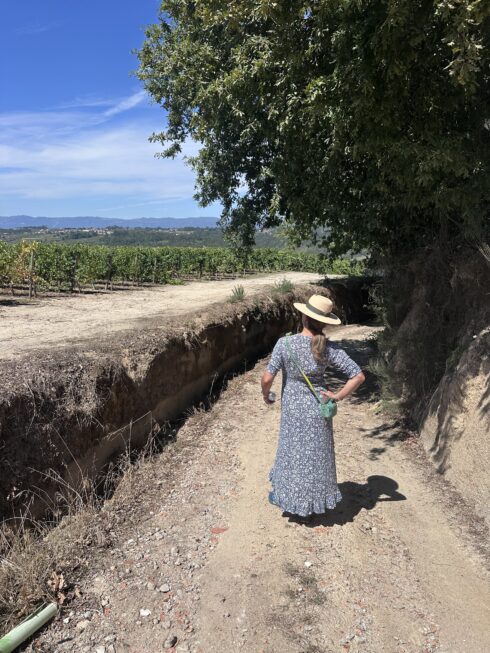
The proof comes while taking a fabulous garden tour around the village the following day.
Our knowledgeable guide Ana Constantino explained how every villager is given an allotment to use, free of charge, with water – and sun – included.
Each is neatly maintained in a classic commons arrangement, with many bearing the names of their owners.
The Santar Vila Jardim project was spearheaded by landscape gardener Fernando Caruncho, who fell in love with the village two decades ago.
Caruncho, whose name means ‘termite’, sadly died this year, but he has left a wonderful legacy, having helped unite five ancient gardens under one roof, as it were.
The idea was hatched in 2013 by two brothers from the aristocratic Vasconcellos e Sousa family, who own one of the manor houses.
What makes it so clever is that it is not really a single garden at all, but a network of historic spaces belonging to different families and properties. Walls have been opened up and paths created so visitors can move through the village via gardens, vineyards, vegetable plots and hidden corners that were once largely private.
Caruncho’s design deliberately works, creating a green thread through Santar, linking its grand houses with the locals and everyday life of the village.
“Our village now has 1000 people and is actually growing due to the project,” explains our guide Ana. “Now we have around 40 kids in the village and more and more digital nomads coming in all the time.”
Cross country
It was time to take a drive to the other side of the Dão region, heading towards Gouveia, another noted wine village.
Heading out across lovely rolling countryside, we made sure to stop in the main market town of Viseu for a wander en route.
Viseu is a handsome, granite-built city with a wonderfully preserved medieval heart, and its narrow streets make a welcome change from the polished tourist centres of the coast.
The historic centre rises from the Rossio towards the cathedral square, with traditional shops and old houses tucked into the lanes.
At the top, the imposing cathedral stands opposite the rococo Misericordia church, while next door the Grao Vasco Museum houses works by one of Portugal’s great Renaissance painters.
It is also a good place to taste the wonderful Dão wines and a reminder that the region is about considerably more than its vineyards.
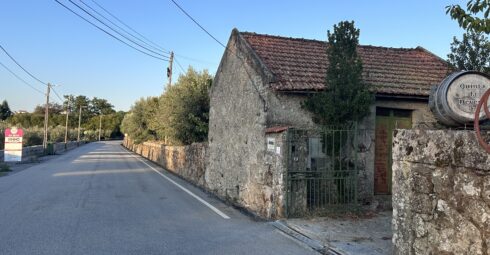
We arrived in the sleepy spot of Gouveia by late afternoon, staying in another hotel surrounded by vines.
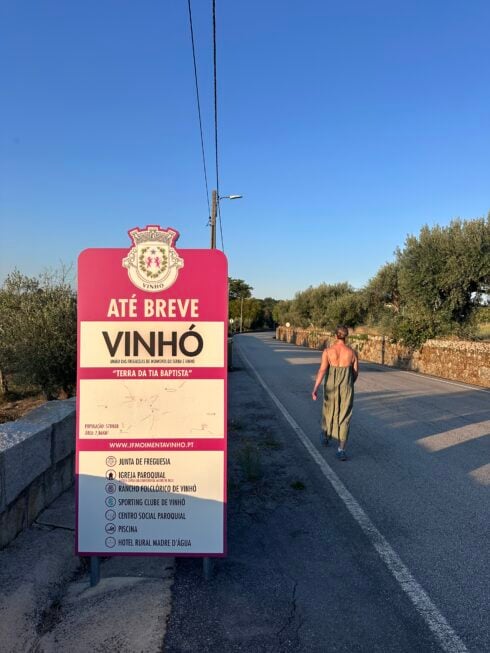
The Madre de Agua project – appropriately in the hamlet of Vinho (Wine) – is about as close as you’ll get anywhere in Europe to staying on a working farm.
A genuine agriturismo, it was set up by a Frenchwoman, Lourdes, who had made her money in cleaning companies in Bordeaux, where she had naturally taken an interest in wine.

Buying up and uniting a series of plots, she has ended up with a 40-hectare estate that doubles as a vineyard, orchard and equestrian centre.
It also has a low-key 10-room hotel with comfortable rooms, a pool and, best of all, its own restaurant serving half a dozen of its own wines, from 80-year-old vines planted at 650 metres of altitude, which are surprisingly good.
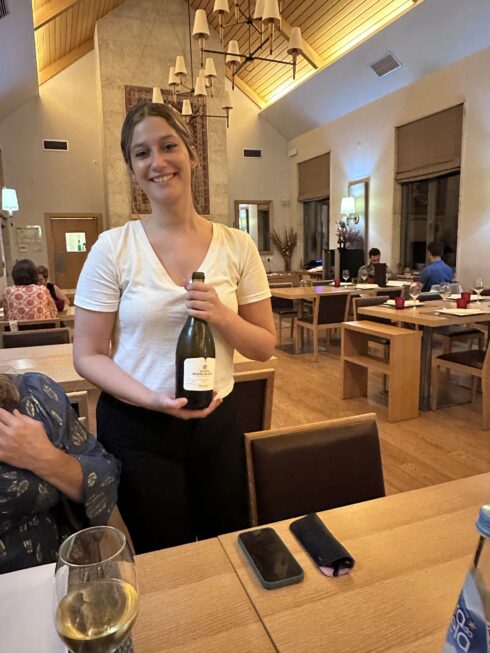
While only 12 hectares are under vine, bodega boss Paolo Nunez, 44, from Viseu, won Portugal’s best winemaker in 2018, 2020 and 2026.
He produces 80,000 bottles a year, many of which are exported to Canada, Holland and the US.
His Encruzado and ‘vieilles vignes’ blend was so good I could happily have eaten (and imbibed) at the hotel every night, but we headed into town to try La em Casa, run by an American restaurateur and his Brazilian wife from New Jersey.
They told me how they had moved to the Dão to get away from somewhere ‘with far too much supply to somewhere with too much demand’.
“As my roots were from Portugal, we thought we’d give it a try here after COVID, given there were almost no restaurants and a growing number of tourists,” he explains.
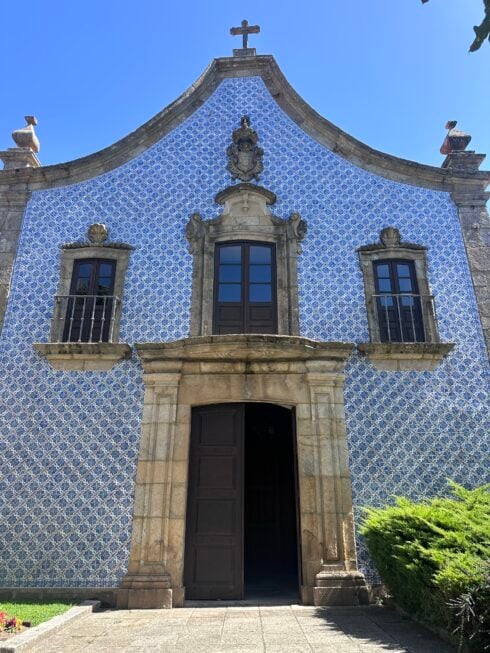
He had a point. Almost nowhere jumped out as a place to eat in the town or came by recommendation.
In fact, most of what we heard was negative, but I enjoyed his simple, if rather too brightly lit, meson, where we ate steak and a fabulous crepe of rice and parsley with zucchini mash.
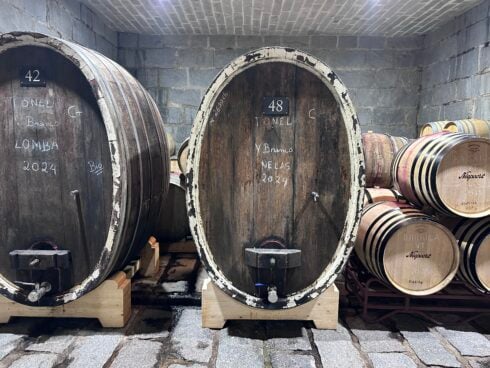
Ostensibly, I had been steered towards Gouveia and the Dão region by the marketing boss at Portugal’s leading quality winery, Niepoort, based in Porto, some two hours away.
Few come more knowledgeable than the gregarious Beatriz Machado, who oversees around 80 brands with some 1,500 different references.
Working for the influential firm for many years, she has got to know the wines of Portugal via the back of her throat, having first studied oenology in California.
It was last year, on a visit to Porto, that she first told me about the Dão, a ‘classic region with a new soul’ which was producing ‘high quality wines with a sense of place’.
She insisted I needed to visit for its wonderful mix of countryside, history and quality wine.
“People often describe the Dão as Portugal’s Burgundy, but I also see it as something of a St-Emilion.
READ MORE: As it reaches its tenth birthday, Jon Clarke runs a rule over the Six Senses Douro spa hotel
“The Dão is all about elegance and freshness – those are the two adjectives I’d use to best describe its wines,” she explains.
“It’s cold in winter, hot in summer and the mostly granite soils give the wines a distinct character and an ability to develop with age.
“In particular, the whites made with Encruzado grapes age well like the Chardonnays of Burgundy, hence the comparison.”
Sixth generation winemaker
While there are lots of winemakers with centuries of experience here, we end up meeting one of a very new breed.
Daniel Niepoort is the son of the owner of the celebrated firm set up in Porto in 1842.
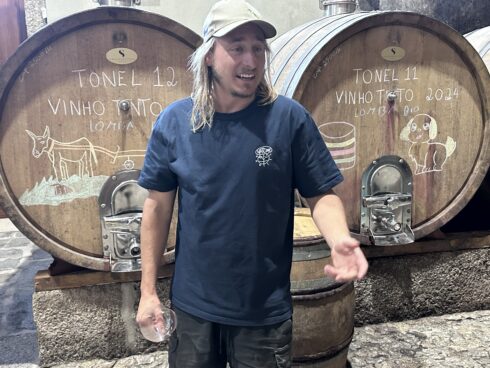
The sixth generation of the clan, turning 35 this month, he is now the head winemaker and happens to be in the town for a couple of days, it being harvest time.
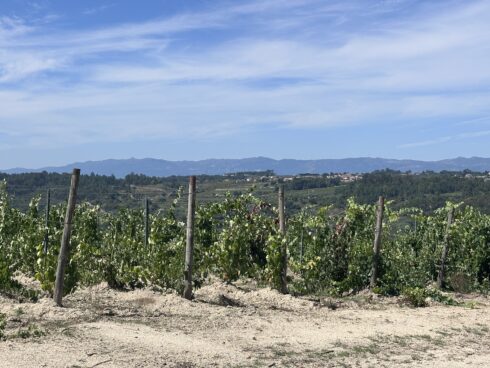
Quinta da Lomba is one of his ‘favourite projects’ and he has spent the last year planting new vines, interspersed with trees.
“I believe in keeping the natural mix of an area and not over-cultivating,” he tells me on a tour of the 25-hectare vineyard, alongside wife Kalina. “I like the harmony of trees and vines and I am only working with local and mostly ancient varieties.”
Very much in keeping with the low-intervention, ‘terroir-driven’ artisan style of the company, he picked up skills while working in France, Argentina and South Africa.
Over lunch, the father-of-one explains how he’s modernising the company in line with changing drinking habits and looking to ‘exciting’ new areas like here and Bairrada.
“There is something so special about places like the Dão and it’s remarkable how little-known and visited it is when it is really so beautiful,” he says, excited about the changes ahead.
Scouring the landscape, pushed up against the verdant Serra da Estrela, gives us the urge to head on a hike for our last day.
Armed with the excellent Wikiloc app, we find the perfect circular walk, mostly on the well-signposted PR-2/GVA footpath, which takes you through half a dozen villages and many more vineyards.
We timed it right to have lunch at a place called A Sandra in the hamlet of Aldeias, where former MasterChef winner Sandra Pimenta has her home-grown joint.
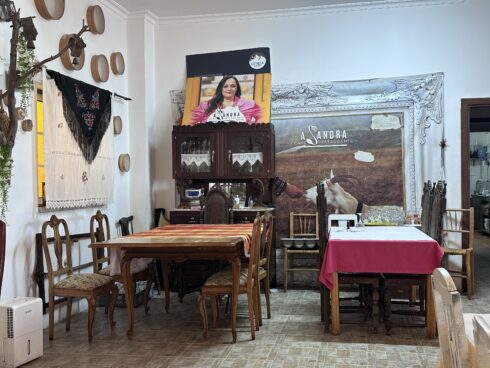
We had no idea and literally stumbled across the place, which is basically Sandra’s home.
You’ll eat what you’re given and it will be meaty and likely a stew with rice and amazing homemade chips. The baked egg custard is possibly the best I’ve eaten.
By the time we had stocked up on a bag of goodies at the end, including her homemade cheeses, chorizos and homemade pumpkin jam, the bill came to €40, and I think that was rounded up.
It summed up this wonderful rustic region perfectly: one of Europe’s least-known wine corners, yet an easy and rewarding drive from Spain.
And if the Dão really is Portugal’s Burgundy, perhaps it is fitting that the country’s would-be king still chooses to spend time here.
Forget the crown – in Santar, Dom Duarte Pio has already found his kingdom.
Click here to read more Spain News from The Olive Press.