
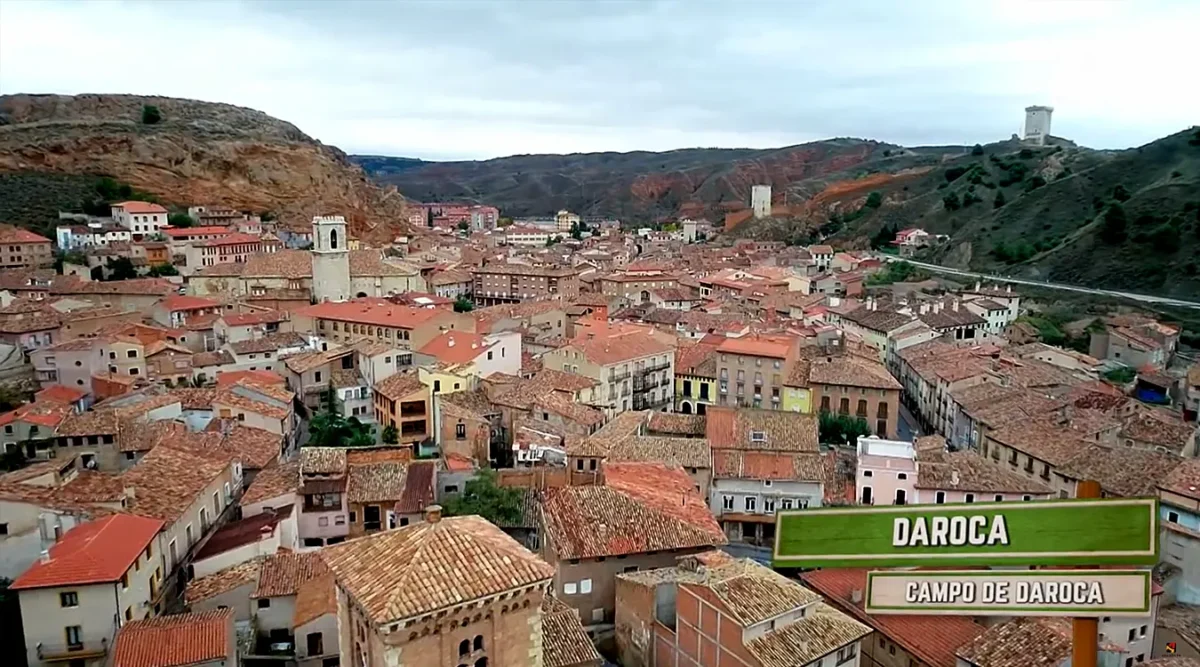
THIS medieval town in northern Spain has preserved an obsession with the number seven behind one of the country’s longest defensive walls – and it’s perfect for a weekend getaway.
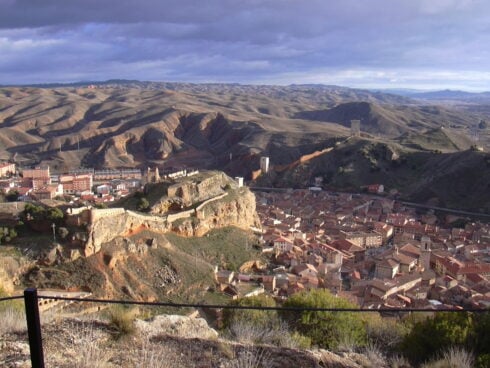
The picturesque settlement of Daroca, home to fewer than 2,000 residents in the Aragon region, will enchant weekend trippers as it is completely enclosed by a four-kilometre stone perimeter.
But where does the obsession with the number seven come frrm?
The fortifications feature 114 watchtowers and successfully held off the Castilian troops of Pedro the Cruel between 1361 and 1363.
READ MORE: These are the scenic spots in Spain where your money goes furthest, according to The Telegraph
The siege was part of the ‘War of the Two Peters’, a bitter decade-long conflict fought between King Pedro I of Castile and his Aragonese rival, King Pedro IV.
The two monarchs battled fiercely over border territories and regional dominance while Castile was simultaneously torn apart by a brutal civil war.
But it was that fierce and long defence which earned Daroca the official title of ‘city’ from King Pedro IV.
Today, visitors passing through its preserved gates will discover a place locals call the ‘city of the seven sevens’.
The nickname stems from an unusual architectural tally that defines the historic centre.
Daroca contains exactly seven churches, seven convents, seven hermitages, seven fountains, seven squares, seven gates, and seven windmills.
The town also claims exactly seven locations designated as official Sites of Cultural Interest to keep the ratio intact.

Walking the length of the walls begins at the monumental Puerta Baja gate.
Inside the historic centre, the Romanesque-Mudejar churches of Santo Domingo de Silos and San Juan de la Cuesta dominate the skyline.
The basilica of Santa Maria de los Sagrados Corporales holds a darker piece of local history.
Its chapel guards sacred cloths which, according to local tradition, absorbed communion hosts that miraculously turned to blood during a medieval Muslim attack.
The relics are paraded through the streets once a year on the feast of Corpus Christi.
Beyond the religious sites, a former Jewish quarter marks where 40 families lived alongside a now-lost synagogue during the Middle Ages.
Visitors looking for a break from historical stones can explore the town’s Pastry Museum.
The three-storey centre displays classic machinery once used to manufacture regional nougats, marzipans, and roasted cocoa.
A weekend trip concludes with a climb up to the ruined Morica Encantada castle overlooking the Jiloca valley.
Local legend dictates that the ghost of a young woman, sacrificed out of jealousy, still wanders the free-to-access ruins at night.
Click here to read more Olive Press Travel News from The Olive Press.