
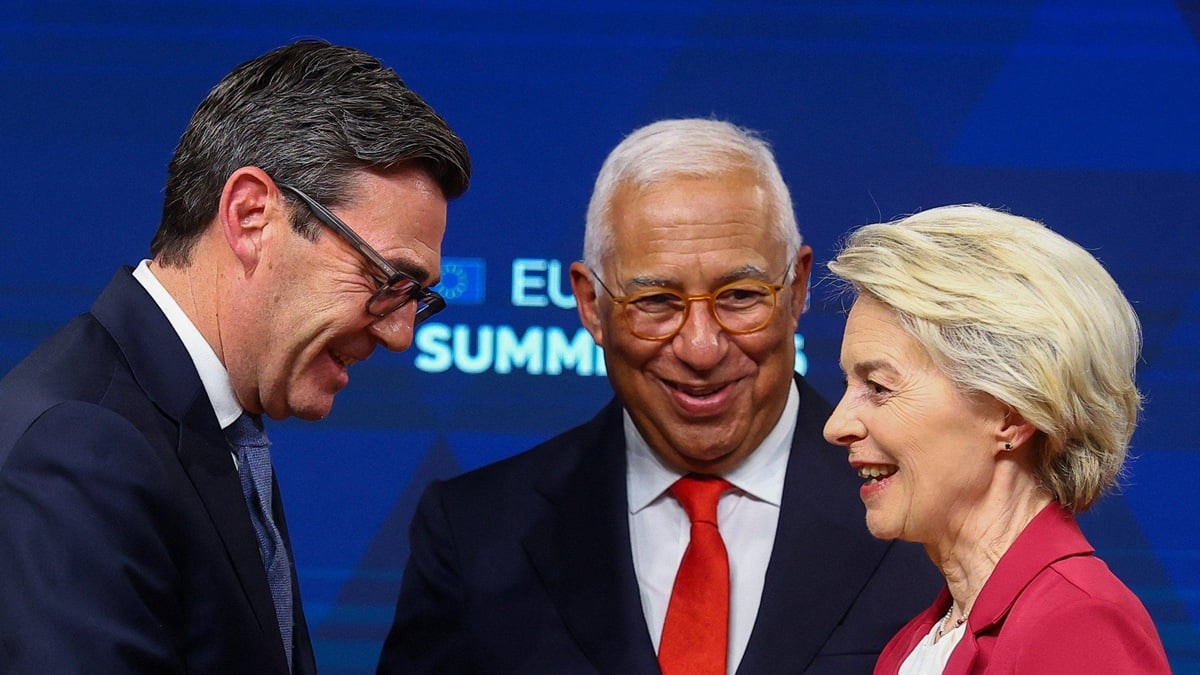
BRITAIN and the EU have struck a Brexit reset deal in what leaders are hailing as a ‘historic’ moment for both sides.
The agreement, announced on Friday during a UK-EU summit in Brussels, effectively lifts some of the barriers created by Brexit in the fields of youth mobility, food exports and carbon emissions.
Talks on university tuition fees, however, are set to continue, and the other three measures will not come into force until the issue is fully settled.
Though the deal does not bring Britain back into the EU or restore full freedom of movement, it marks a step towards rebuilding Britain’s ties with Europe after years of strained relations.
READ MORE: Brussels ‘closes the door on piecemeal Brexit reversal talks’ ahead of crucial EU-UK summit tomorrow
UK prime minister Andy Burnham said this was a ‘historic moment’ and that the deal was a ‘win-win’ for Britain and Europe.
Taking the stand in an emotionally charged moment during the summit, he said: “We’re 10 years on from Brexit, but I think we can all confidently say this is a good day for Britain. This is a good day for Europe.
“The agreement we have reached together is a win-win.”
“Today we do draw a line on a decade of drift and division by reconnecting with old friends,” he added. “I think people across Britain can look forward to a better, more hopeful decade ahead of us.”
Burnham estimated the deal would give the UK a 0.5% GDP boost, while EU Commission chief Ursula von der Leyen welcomed it as a ‘big success’ for both Britain and the bloc.
Under the new agreement, young people aged between 18 and 31 will be able to live, work, study or travel in the other territory for up to three years.
The scheme will be capped at 100,000 people from each side, opening up opportunities for a new generation of British and European youngsters who lost their automatic right to move freely after Brexit.
Britain and the EU will also be able to trade in animals, plants and related products – such as meat and seeds – without many of the checks and reams of paperwork introduced after Brexit.
The deal will require Britain to follow EU food safety and animal health rules, but is expected to make exporting goods across the Channel quicker and cheaper.
According to UK government estimates, the agreement could add €6.1 billion a year to the British economy.
British and EU goods, including steel and aluminium, will also be exempt from each other’s carbon border levies under a new agreement linking their emissions trading systems.
In practice, this means exporters should avoid additional charges on goods made using carbon-intensive processes, helping British manufacturers compete in European markets while reducing costs and paperwork.
READ MORE: Moroccan political activist is rushed to hospital after being stabbed ‘several times’ in Fuengirola
The sticking point that remains, however, is university tuition fees.
Since Brexit, EU students studying at British universities have generally been charged international tuition fees, which can be up to four times the rates paid by UK students.
Brussels wants European students to regain access to the same tuition rates as British students, while the UK is proposing only significantly reduced fees.
The two sides have agreed to continue negotiations and aim to reach an agreement within six months of Friday’s summit.
Click here to read more International Affairs News from The Olive Press.