
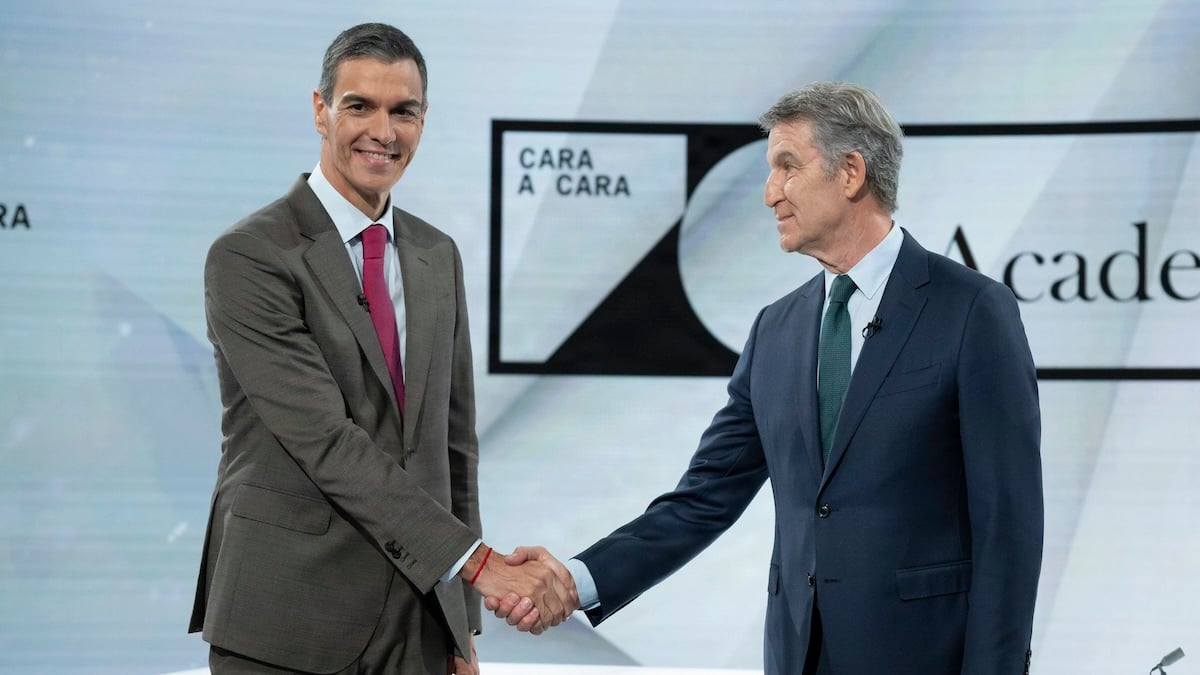
WHILE most of the election campaign has been focused on domestic issues, Pedro Sanchez’s successes on the international stage have earned little attention.
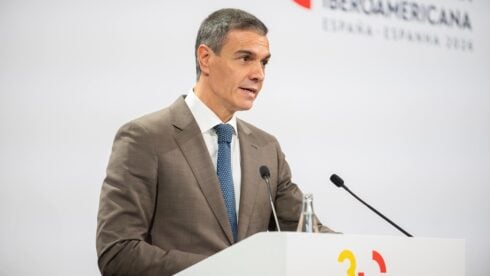
For while much of his later tenure has been characterised by clashes with a Trump White House and right-wing elements in the European Parliament, it’s undeniable that Sanchez has repeatedly put Spain in the spotlight.
Part of this is thanks to his excellent command of the English language, allowing him to converse directly with Trump and engage in classic ‘side-pulls’ with other leaders in Brussels.
Under a government headed up by a leader who boasts that he made no effort to learn English, however, Spain risks sliding from key European powerbroker to an ‘invisible’ backbencher.
READ MORE: PP election manifesto: Mandatory Spanish tests to renew residency and 48-hour squatter evictions
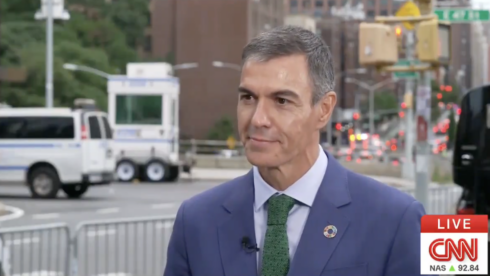
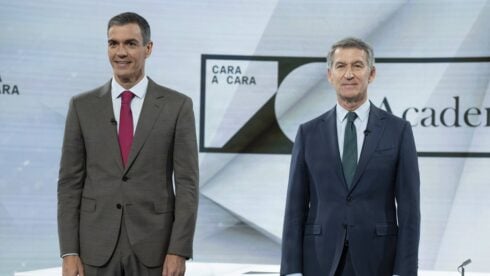
Alberto Nuñez Feijoo, head of the centre-right People’s Party (PP) and frontrunner ahead of the November 29 snap election, sparked a political storm after admitting in a podcast interview that he does not speak the language of international diplomacy.
While prime ministers can rely on booths of simultaneous translators inside formal European Union summits, diplomatic insiders and Brussels analysts warn that real political horse-trading happens in unscripted hallway chats and elevators where interpreters are banned.
A prime minister sidelined in informal EU rooms could weaken Madrid’s hand on cross-border issues ranging from trade and energy to defence spending and foreign policy.
The podcast boast that triggered a campaign storm
Feijoo made the candid admission during an appearance on The Wild Project, a popular Spanish YouTube podcast hosted by influencer Jordi Wild.
He said: “I don’t know English, but I know how to govern.”
The Galician politician, who speaks Spanish and Galician, even conceded that English is a skill a prime minister ought to possess.
Instead, he joked that he does not swear in ‘any language’ and boasted he had made ‘no effort’ to learn the language of international diplomacy and business.
Official translations are necessary whenever important matters are discussed, he argued, brushing off criticism that a modern European head of government needs to converse directly with counterparts.
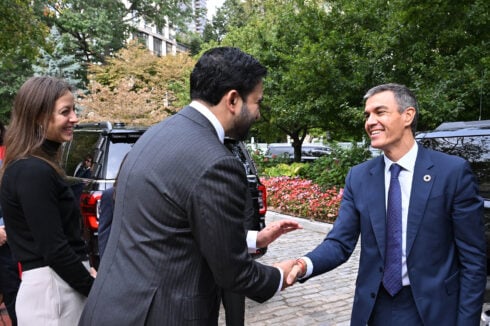
Prime Minister Pedro Sanchez seized on the remarks at a packed socialist campaign rally in Palma, Mallorca, mocking his rival before 5,000 supporters at the Son Fusteret pavilion on November 14.
Sanchez accused Feijoo of wasting four years in opposition without preparing a serious governing alternative or learning English, adding that his opponent also confuses hydrogen with nitrogen and gets tangled up over interest rates.
To sharpen the contrast, the socialist leader pointed to his own Economy Minister and Vice President, Carlos Cuerpo, noting that Cuerpo speaks fluent English alongside deep economic expertise, whereas Feijoo would govern alongside far-right Vox chief Santiago Abascal.
READ MORE: Spain’s rental market hits crisis point as a dozen cities list just 30 or fewer available homes
Why interpreters cannot save a leader in Brussels
Inside formal European Council summits, where the 27 EU national leaders set the bloc’s political direction, every head of government is entitled to speak their native language through official interpretation services.
Outside the main chamber, however, the rules change sharply.
According to diplomatic reporting by Catalan daily Ara, interpreters are excluded from corridor conversations, walks to group photos, informal meals and unscheduled ‘pull-aside’ meetings on the sidelines of official sessions.

It is precisely in those unscripted moments that allied nations strike compromises, coordinate voting blocs and build personal trust before formal debates begin.
NATO summits present an even tighter squeeze, as English and French are the alliance’s only two official languages.
Any Spanish prime minister wishing to speak or follow proceedings in Spanish must bring their own foreign ministry interpreters, a choice that eats directly into the strict limit on policy advisors allowed inside the room.
From EU heavyweight to ‘backbench PM’
Feijoo would hardly be the first Spanish leader to struggle with English, following in the footsteps of former prime ministers Jose Maria Aznar, Jose Luis Rodriguez Zapatero and Mariano Rajoy.
Yet Brussels journalist Dave Keating, writing in his Gulf Stream Blues newsletter, warned that the diplomatic landscape in 2026 leaves little room for leaders who cannot speak the bloc’s working tongue.
Keating wrote: “In 2026, the people who hold power in the European Council speak English.”
Leaders who do not speak it are ‘an increasingly rare phenomenon’ and risk becoming ‘invisible’ at top-table gatherings, he added.
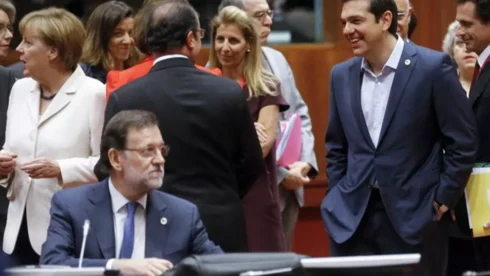
Keating pointed to Italian Prime Minister Giorgia Meloni as the most influential figure in the European Council today, crediting not only her political instincts at home but also her command of English.
By contrast, Keating recalled how conservative predecessor Mariano Rajoy became a forgotten ‘backbench PM’ between 2011 and 2018, acting as a quiet rubber stamp for the centre-right European People’s Party majority rather than driving policy.
A sharp pivot toward Washington and Brussels orthodoxy
Despite frequent clashes with European Commission President Ursula von der Leyen and conservative leaders in Germany and Italy, Sanchez has used his fluent English to punch above Spain’s weight in Brussels corridors.
In 2022, his persistence secured the ‘Iberian exception’, allowing Spain and Portugal to cap gas prices for electricity generation under a model later proposed for the wider bloc.
A right-wing coalition of the PP and Vox, currently favoured by most published polls ahead of the November 29 vote, would mark a dramatic foreign policy U-turn.

Feijoo has already pledged to mend relations with the White House after Sanchez drew fury from Donald Trump over trade and Middle East policy, telling Politico he respects the US president and wants good ties whoever sits in the Oval Office.
Under a PP-led administration, Spain is expected to fall back into line with the EU’s conservative majority, sign up to NATO’s 5% of GDP defence spending target and reopen Spanish bases to US operations in the Iran conflict.
Whether Feijoo can defend Spain’s specific interests in Washington and Brussels without a translator standing beside him remains an open question, though Keating predicts the conservative leader would simply become ‘an invisible man from a forgotten country, but a reliable vote for the EU’s right-wing governing majority’.
Click here to read more Politics News from The Olive Press.