CALDERÓN
PEDRO Calderón de la Barca was born in Madrid on 17 January, 1600.
He died in the same city in 1681, having dominated the Spanish theatre throughout its golden age.
He first tried his hand at writing for the stage as a tribute to the royal English heir. Charles (fated soon to become Charles I, and to have his head cut off, 26 years later) was in Madrid, looking for a princess to marry.
Though he is sometimes thought of as a ‘heavy’ author, Calderón also turned out zany comedies, such as “You Can’t Guard a House if it’s Got Two Doors”.
The ‘Spanish Shakespeare’, as he is often known, wrote religious plays, too. Well, after all, he was a Catholic priest!
JULIO IGLESIAS (senior)
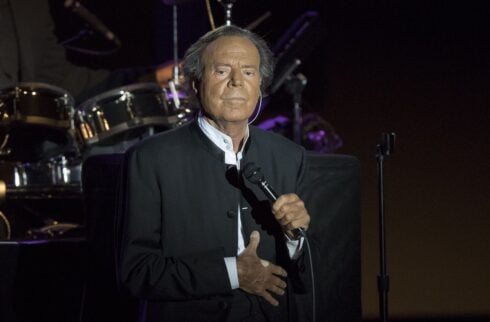
Julio Iglesias Puga was the father of the internationally-admired – until this week – singer of the same name.
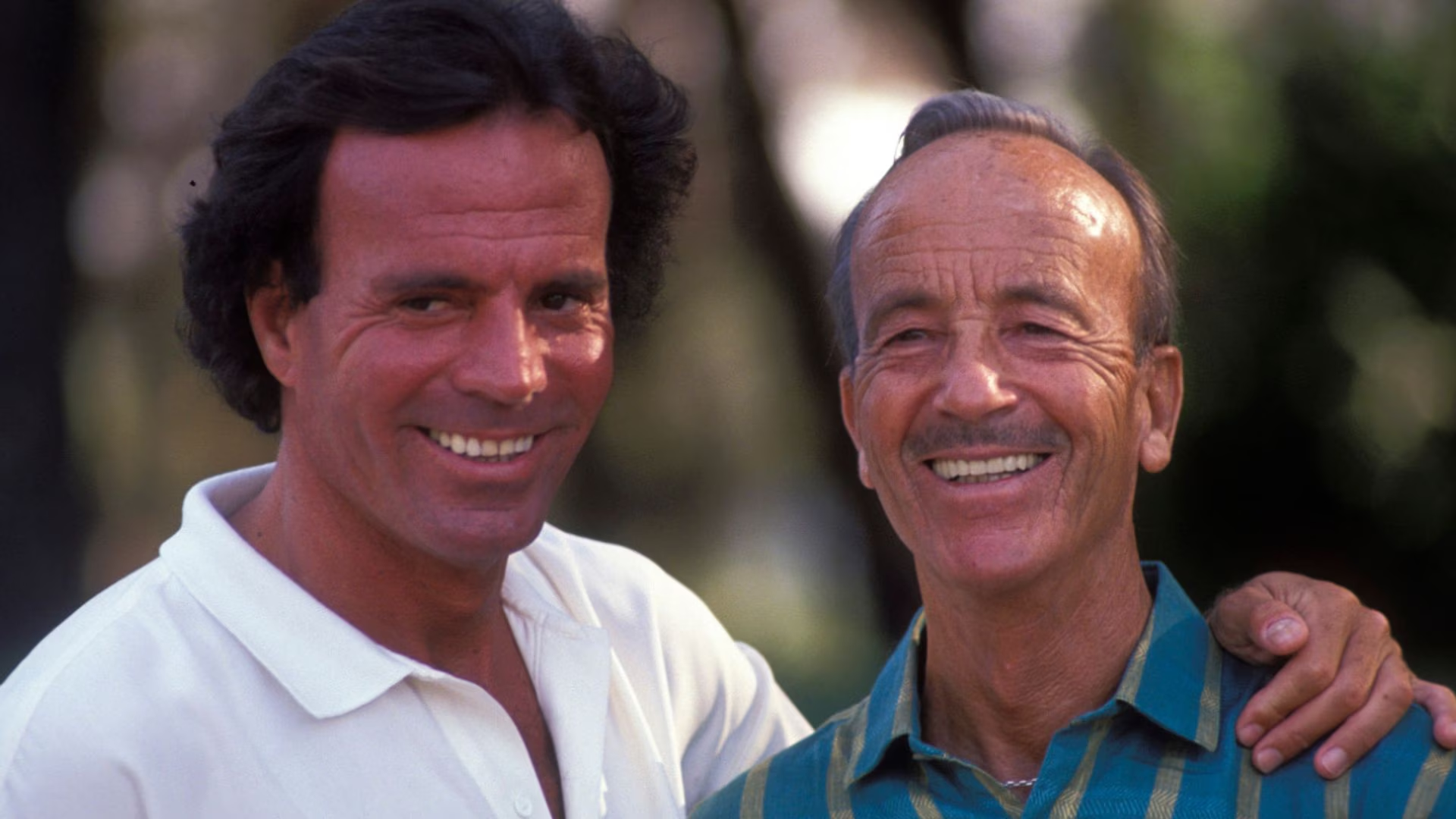
Iglesias Senior has several claims to fame in his own right. Not only did he live into his nineties, dying as recently as 2005, but he was one of Spain’s most accomplished gynaecologists.
“Papuchi” (‘daddikins’) followed his son around, well into his 80s, apparently picking up girls at Julio’s concerts. He fathered a child by one such ‘conquest’ when he was 88 years old.
On 17 January, 1982, he was rescued from ETA by Spain’s Special Forces. The terrorists had held him for two weeks, and had sworn to murder him.
Papuchi was, to use his own catchphrase, “Raro, raro, raro!”
CAMILO CELA
A native of A Coruña, in Galicia, Camilo Cela was one of the few Spanish novelists to be awarded the Nobel Prize for Literature (1989).
As a young man, he fought in the Civil War, even though he was still recovering from TB. He was wounded and hospitalised.

His best-known book is “The Family of Pascual Duarte”, published in 1942.
Franco raised him to the Spanish nobility, as the Marquess of Iria Flavia.
Cela died on 17 January, 1982, aged 85.
CANDO
Cando is a tiny hamlet in Galicia, about 40 miles from Pontevedra. Something happened there on 18 January, 1994, that still hasn’t been explained.
Witnesses have described a loud bang, and a “ball of fire”, hovering in the air. No-one was hurt.
The Space Observatory in Santiago de Compostela, being the only “appropriate” body in the thinly-populated north-west corner of Spain, was asked to investigate. Four months later, the scientists published their findings.
They said they’d found a crater in the woods. It was 80 feet across, and five feet deep. Mature pine trees had been uprooted, and thrown as far as 200 feet from the blast zone.
And that’s all we know.
One theory is that a meteorite fell to earth. But if that were so, why didn’t the space experts dig it out of the ground?
The other hypothesis is that someone had buried a gas cylinder there, and it detonated. But why would it detonate? And who buried it? Why haven’t they come forward?
It’s a mystery that will probably never be solved.
PEP GUARDIOLA
Sunday, 18 January 2026, is Pep Guardiola’s 55th birthday.
Pep is no stranger to controversy. You either think “Given the leg-up he’s had, even my Aunt Mary could be a world-famous football manager,” or you respect him as one of the outstanding talents in today’s game.
As a player, he was a Barcelona star (Pep is a passionate Catalán separatist), winning the European Cup as a member of Johan Cruyff’s “dream team”. He was also capped 47 times for Spain.
When he moved into management, in 2008, he took his beloved Barça to glory in his first season, winning the Spanish League, the “Copa del Rey” and the Champions League, all in the same year. That was the unforgettable side which contained Puyol, Xavi, Iniesta and a host of others.
He then had enormous success with Bayern Munich (2013-16), before landing at Manchester City.
In his decade at the British club he has achieved no fewer than six Premiership titles, and also won the Champions’ League.
Guardiola has also been hit with massive fines for a ‘political gesture’ – wearing a ribbon on his lapel in support of the Catalán cause.
Somehow, we don’t think he’ll get the sack!
Click here to read more La Cultura News from The Olive Press.