
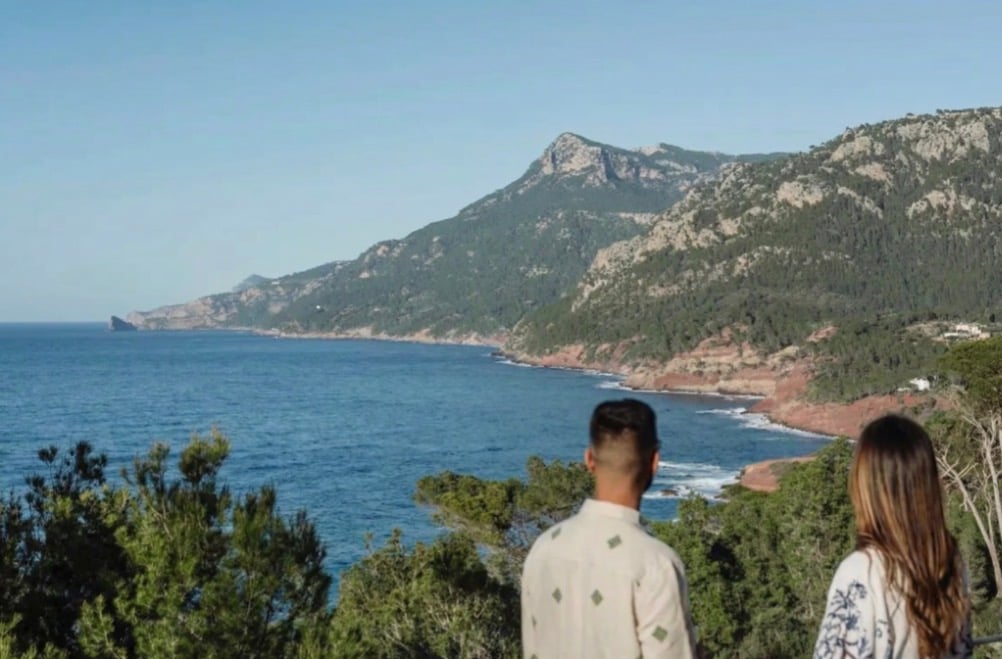
MALLORCA’S luxury travel market is having a record year — and the numbers behind it are hard to ignore.
Visitor volumes remain high, spending keeps rising, and private accommodation (especially villas and holiday homes) continues to shape how the island absorbs demand.
At the same time, residents and local authorities are confronting the pressure points: housing availability, infrastructure capacity, and the environmental cost of peak-season intensity.
What follows is a data-led snapshot of what’s changing — and why the Balearics’ growing push for ‘quality tourism’ is less about attracting more visitors, and more about managing how tourism works.
The key stats in plain English
Recent official figures point to a clear trend: tourists are arriving in strong numbers and spending more per trip. In September 2025, the Balearic Islands welcomed 2.55 million visitors (up year-on-year), with total expenditure reaching €3.13 billion for the same month (also up year-on-year).
Average spending per international visitor has climbed above €1,150, with daily spending around €173 — putting the Balearics among Spain’s highest-value destinations on a per-traveller basis.
Tourism’s macro impact is just as striking. The sector accounts for over 41% of regional GDP, according to Exceltur’s Impactur Illes Balears research — one of the highest tourism dependencies in Europe.
That economic weight extends far beyond hotels and airlines into restaurants, trades, property services, cultural industries, and local suppliers.
Luxury travel plays a unique role in that ecosystem. It represents a smaller share of total visitor volume, but it tends to deliver a disproportionately large contribution per guest: longer stays, higher on-island spend, and demand for services that often route directly through local businesses.
The accommodation shift: why private stays matter more than ever
Mallorca’s accommodation landscape has changed sharply in recent years, largely driven by demand for privacy, space, and ‘live like a local’ experiences.
The island is now home to roughly 25,000 licensed tourist-use homes, generating about 9.6 million overnight stays annually.
This is one of the core reasons luxury villas have become central to the island’s tourism model — not just as an alternative to hotels, but as a major pillar of the visitor economy.
For travellers planning a high-end stay, a practical starting point is this guide to renting private villas.
But the same trend creates an obvious tension: every home converted to holiday use is a home no longer available to residents. Even when licensing is tight, demand pressure often pushes prices upward across the wider market.
Housing pressure: the ‘local squeeze’ that’s driving the debate
Housing has become the most visible fault line in Mallorca’s tourism conversation. In some areas, visitor density in peak season can outnumber residents, which highlights a structural imbalance: limited residential stock is being absorbed by the tourism economy.
This is not a simple ‘tourism bad’ story. Tourism drives employment, sustains businesses year-round, and supports significant public and private investment.
But the housing impact is real — and it’s the reason many locals now talk less about tourism in general and more about limits, balance, and enforcement.
The policy direction across the Balearics reflects that shift: fewer incentives for uncontrolled expansion, tighter rules around vacation rentals, and a growing emphasis on managing capacity rather than celebrating record arrivals.
Environmental strain: the costs behind the glamour
The Balearics’ natural appeal is the foundation of the luxury product — beaches, coves, landscapes, and a climate that sells itself. That’s precisely why sustainability is moving from ‘nice-to-have’ to ‘non-negotiable’.
The Sustainable Tourism Observatory of Mallorca (part of the UNWTO network) tracks indicators like water use, waste generation, and land consumption, repeatedly pointing to a straightforward relationship: higher visitor density correlates with higher environmental stress, especially in coastal zones that already operate near capacity during peak months.
Academic research on overtourism reinforces the same pattern: seasonal demand can temporarily exceed infrastructure limits — not only in transport and roads, but in water, waste management, and local services.

The push for ‘quality tourism’: what it actually means
In practice, ‘quality tourism’ is a pivot from volume to value. The goal isn’t necessarily to reduce tourism, but to reduce the negative externalities of tourism — especially those driven by short, high-intensity stays — while preserving economic contribution.
That shift shows up in investment priorities. Initiatives such as AETIB’s destination-quality programmes channel funding into infrastructure and sustainability projects designed to protect long-term value, rather than chase short-term growth.
The direction is clear: maintain Mallorca’s premium positioning, but do it in a way that’s resilient.
Luxury travel can either worsen these pressures or help relieve them — depending on how it’s managed. High-value visitors often stay longer, travel outside peak weeks, and are more receptive to experiences rooted in place: gastronomy, culture, conservation, and slower rhythms that distribute demand more evenly.
A local perspective: when luxury becomes part of the solution
As Island Homes Mallorca director Jaime Martorell has argued, the conversation is shifting from whether luxury belongs in Mallorca to whether it can be shaped into a model that supports preservation rather than pressure.
The simplest version of that idea is this: fewer guests, higher value, better behaviour, and stronger reinvestment in the island’s long-term health.
Where this leaves Mallorca next
Mallorca’s challenge is not a lack of demand — it’s managing success without eroding the very qualities that make the island desirable. The path forward looks less like expansion and more like precision: smarter visitor flow, stronger infrastructure, clearer enforcement, and an economy that protects community stability alongside prosperity.
For residents, property owners, and travellers alike, the takeaway is the same: Mallorca is entering an era where tourism is judged less by record numbers and more by how intelligently those numbers are handled.
Click here to read more Sponsored Article News from The Olive Press.