
I remember my confusion around the time I began writing for The Olive Press back in 2019.
It was a story how Spain’s government passed a law allowing Sephardic Jews to apply for citizenship, centuries after their ancestors were forcibly removed. By the time the deadline closed, a staggering 127,000 people had applied.
Were there really Jews in Spain? I thought to myself.
I had recently moved to Spain from North London, where daily I used to pass through the Stamford Hill Jewish community. My landlord was Jewish. I had Jewish classmates at university.
But I’d been in Spain nine months and hadn’t seen a trace of Jewish culture.
Where are they?
The story was one of those eye-opening moments.
Suddenly you start spotting threads you’d missed before, like the recent claims and debate around whether Christopher Columbus may have had Sephardic Jewish origins. Or how a dish as comfortingly “traditional” as cocido – eaten religiously every Sunday in winter at my Spanish in-laws – has a Jewish origin.
And then I wrote a long feature piece about Thomas of Torquemada and his ruthless drive to torture, burn, and expell Jews and Jewish converts from Spain back in the 15th century.
Bit by bit, if you look a little closer, Spain’s enormous Jewish history starts to come alive.
What are the best Jewish historical sites in Spain?
Which brings me to this interview with Asaf Peled, the CEO and founder of Shin Tours – one of the world’s leading private tour operators for Jewish heritage tours in Spain and across Europe, North Africa and Israel.
But Asaf’s story has an incredible connection to Spain.
He told me it was while travelling in his early 20s in Spain that he had something of an epiphany. One Friday evening in Toledo, he heard faint singing drifting through the old streets.
He followed it and found himself outside a small synagogue, where fewer than ten people were gathered singing “Lecha Dodi”. It’s a traditional hymn sung on Friday nights to welcome the Sabbath.
“I broke down, and felt this strong connection to my own Judaism in a way I hadn’t felt in years,” he told the Olive Press.
“It lit this fire in me to reclaim my Jewish heritage in a way that was personal and meaningful. From that came the decision to set up my own private tour company, Shin Tours, and give these same experiences to Jewish and mixed-family travellers from across the world.”
So today, I’m excited to pick Asaf’s brains on the best Jewish sites in Spain.
Below are his top 10 must-see Jewish quarters, museums and buildings in Spain – they’re the same landmarks and neighbourhoods he prioritises when designing a Jewish tour in Spain through Shin Tours.

The top 10 Jewish sites to visit in Spain
1) El Tránsito Synagogue & Sephardic Museum (Toledo)
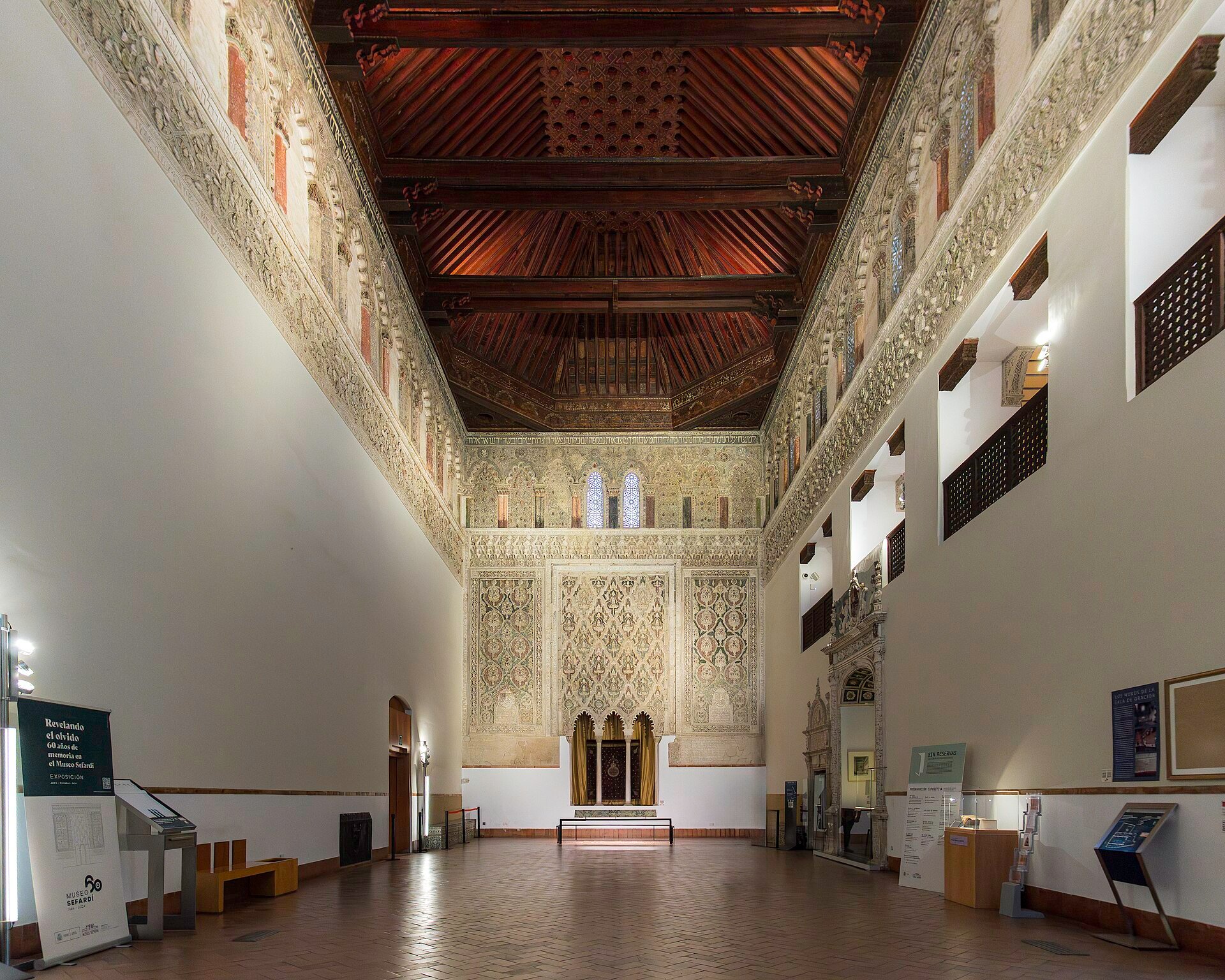
Asaf tells me that “Toledo is the obvious starting point” for a Jewish tour in Spain. The single best “gateway” site is the Museo Sefardí, which is housed inside the Sinagoga del Tránsito – also known as the Synagogue of Samuel ha-Leví.
The building itself is a 14th-century synagogue commissioned by Samuel ha-Leví (treasurer to King Pedro I) and famous for its dramatic prayer hall and ornate decoration. Inside, the museum gives you a clear narrative of Jewish life in Spain, from early presence and the medieval “golden age” through 1492 and the Sephardic diaspora.
2) Casa del Judío (Toledo)
After the big headline sites in Toledo, Asaf says he likes to bring people somewhere more intimate. The Casa del Judío, tucked right in the heart of the old Judería (Jewish quarter), is exactly that.
The property is an ancient mansion which has a possible mikveh or “ritual bath” dating back to the 14th century in its basement. The property has recent history too, as it was restored following the death of its last owner – a French Jewish businessman called Elie Nahmias, who was an Auschwitz survivor and later in life fell in love with Toledo.
3) Córdoba Synagogue
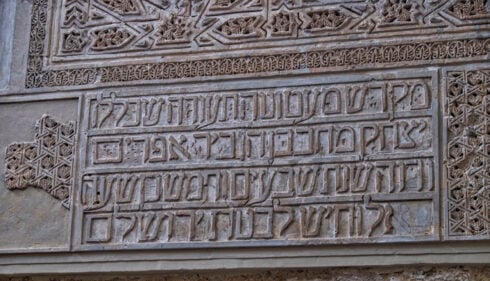
Asaf calls Córdoba “a city where Jewish Spain doesn’t feel like a footnote” as it’s still very visible in the Jewish quarter (Judería). At the heart of this neighbourhood is the Córdoba Synagogue. It’s the only medieval synagogue preserved in Córdoba and one of the best-preserved in Spain.
What makes it so striking is its scale and detail. Inscriptions inside the building place its construction between 1314 and 1315, and today you can still see the refined Mudéjar plasterwork, traces of Hebrew inscriptions, and the intimate layout that suggests a space designed for a close-knit community rather than grand spectacle.
4) Judería of Córdoba Walk
Asaf then recommends treating Córdoba as a walking chapter of the story – because there’s just “so much to see”.
The Judería is part of the city’s historic centre (a UNESCO World Heritage area), and its narrow lanes make history feel close. Within that walk, he recommends travellers make at least two meaningful stops:
- The statue of Maimonides (Rabbi Moshe ben Maimon): The Córdoba-born rabbi, philosopher and court physician (born 1138) whose legacy still resonates far beyond Spain.
- The Casa de Sefarad: a small museum space dedicated to Sephardic culture that brings Jewish history to life with everyday objects and artefacts.
5) Girona El Call
Girona’s “El Call” neighbourhood is one of the most impressive Jewish quarters in Spain. The Jewish presence in Girona dates back to 890 CE, and the quarter flourished until the 1492 expulsion of the Jews and Moors.
Today, Girona’s Call remains one of the best-preserved Jewish quarters in Spain and Portugal. The Museum of Jewish History, located at the heart of the old quarter, offers visitors an incredible collection of artefacts and exhibitions – from medieval manuscripts to architectural remnants.
6) Mikveh of Besalú
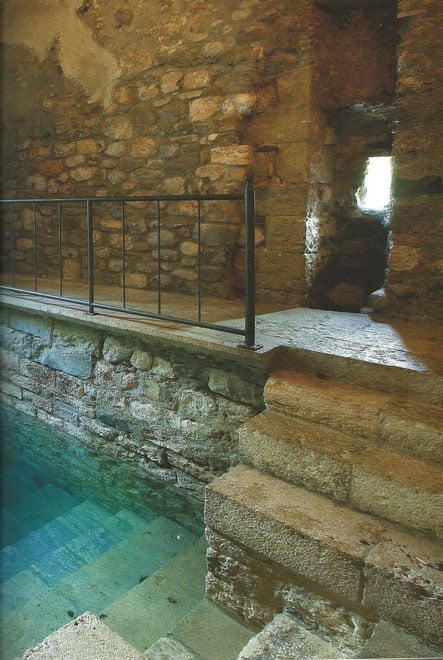
Just outside Girona, Asaf points travellers to Besalú for one of the most distinctive Jewish heritage stops in Spain: its medieval mikveh (ritual bath).
Set below street level and reached by stone steps, it’s a rare, tangible link to everyday Jewish life. Asaf tells me it’s considered “one of only a handful of medieval mikva’ot in Europe”.
7) Barcelona El Call
Barcelona is a top destination on any trip to Spain, and many travellers on a Jewish tour understandably want time for Gaudí’s masterpieces too. The great news is that you can pair that headline Barcelona experience with something far older: a walk through El Call, the city’s historic Jewish quarter.
Asaf recommends stops at the Sinagoga Major and MUHBA’s El Call interpretation space, which helps you place the quarter’s story in context as you explore.
He builds in flavour too and tells me there’s a “discreet café” he brings every group to, where you can try Jewish delicacies and sweets inspired by recipes passed down through generations.
8) Realejo (Granada)
Granada is one of those “must-do” stops on any Spain trip because travellers naturally want to see the Alhambra. And that’s exactly why a trip to Granada’s medieval Jewish neighbourhood (Realejo) works so well.
Realejo was known in the Arab period as Garnata al-Yahud (“Granada of the Jews”). Unlike some quarters that are easier to “read” as a single preserved street plan, Asaf likes Realejo because it still feels like a lived neighbourhood. It’s a mesmerising labyrinth of lanes where you’re essentially walking through a community that once sat close to the city’s power centre.
9) Sinagoga Beth Yaacov (Madrid)
As Madrid is often a logistical city due to its international airport, Asaf likes finishing (or beginning) in Madrid with something that makes Jewish heritage feel present tense: the Sinagoga Beth Yaacov.
It’s not a particularly old or well-known building – it was only inaugurated in 2007, and visits must be pre-booked. But inside there is a carefully curated collection of photographs, documents and materials that trace the modern rebuilding of Jewish life in Spain from Jewish descendents who returned after nearly five centuries of exile.
10) Seville’s Jewish Quarter (Barrio Santa Cruz)
Seville is hugely popular for its headline sights: the Cathedral, the Royal Alcázar and the Archivo de Indias (a UNESCO-listed trio). The Cathedral in particular is all the more intriguing right now as it’s the resting place of Christopher Columbus, who is now considered to have been of Jewish heritage.
The good news is that Seville’s most tourist-friendly area, Barrio Santa Cruz, is also the city’s historic Jewish quarter. It’s a fascinating maze of lanes and small plazas where you can build an easy walking loop. As part of that walk, Asaf recommends adding at least one “memory marker” site, such as Church of Santa María la Blanca – a former synagogue site later converted into a church.
Want to book a Jewish tour to Spain?
If you’re interested in a Jewish heritage tour to Spain, this could be for you.
Asaf Peled wants to offer Olive Press readers the opportunity to get a tailor-made itinerary from his team at Shin Tours. You just provide some details about your group and interests, and he’ll create a customised plan for you – at no cost.
It’s a way for you to get an expertly curated tour itinerary of the best sites in Spain.
Interested?
You can get in touch with the Shin Tours team on their website here: https://shin-tours.com/
Click here to read more Travel News from The Olive Press.