
By Michael Coy
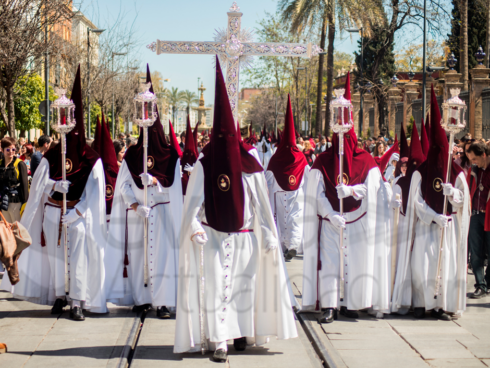
SPRING in Spain usually brings to mind orange blossoms, warmer days, and the spectacle of Semana Santa.
But leaf through the history books, and the end of March reveals a remarkably dark streak of tragedies, disasters, and royal scandals.
From a beloved composer dragged to the depths by his own gold, to the deadliest aviation accident in human history, here are the grim anniversaries that shaped late March.
THE COMPOSER TORPEDOED IN THE CHANNEL (March 24, 1916)
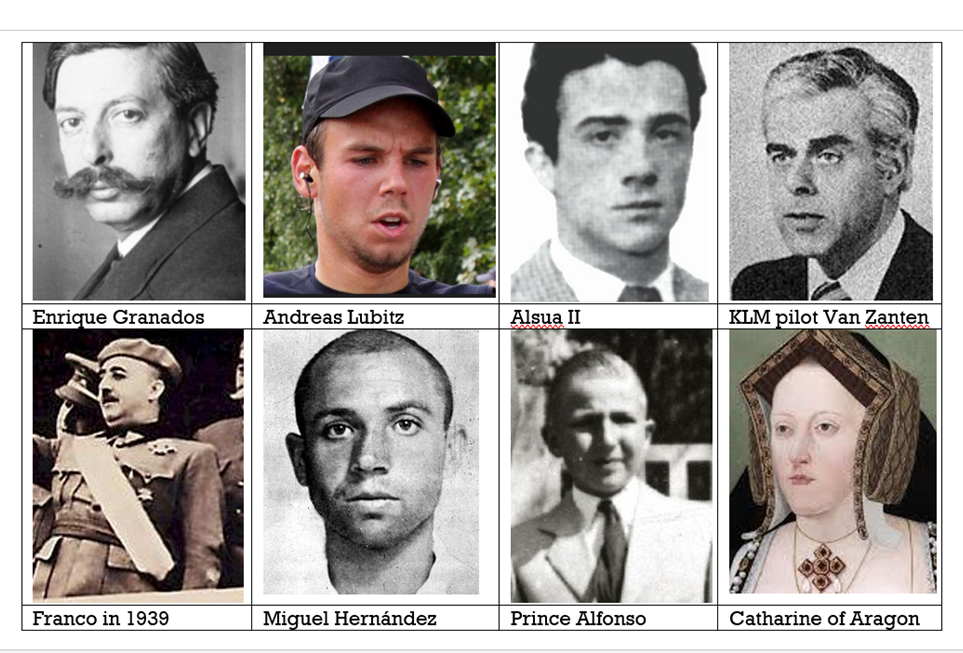
The classical music composer Enrique Granados was aboard the SS Sussex when it was attacked by a German U-boat at the height of World War I.
Tragically, the torpedo itself didn’t harm him.
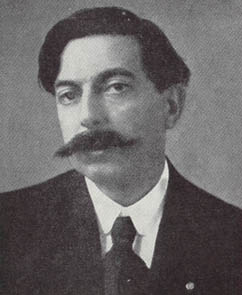
According to one eyewitness, he managed to get into the water but drowned because his money-belt, heavy with his life savings in gold, caused him to sink to the bottom of the English Channel.
THE GERMANWINGS CRASH (March 24, 2015)
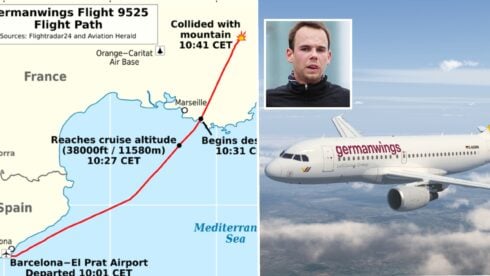
The ‘no-frills’ airline Germanwings suffered a devastating tragedy in 2015 when a flight from Barcelona to Dusseldorf came down in the French Alps. All 150 people on board died.
In a chilling twist, investigators quickly realised the crash was deliberate.

Co-pilot Andreas Lubitz, 27, who was secretly suffering from severe depression, locked his captain out of the flight deck and intentionally flew the aircraft into the mountain.
KILLED PLAYING PELOTA (March 27, 1959)
The traditional Basque sport of pelota (sometimes called fronton) involves hurling a ball against a wall at blistering speeds.
The introduction of the ‘atomic paddle’ (a dense type of racquet) in the 1950s made the sport faster and more dangerous than ever.
Luis Zenoz, a 27-year-old star player from a famous pelota dynasty, was killed instantly when the ball struck him in the head.
Alsua II, as he was known, died on the Recoletas court, and his tragic demise led to the immediate banning of the atomic paddle.
THE TENERIFE DISASTER (March 27, 1977)
In what remains the most lethal aviation accident in history, a KLM passenger jet crashed into a PanAm plane on the runway at what is now Tenerife North.
A staggering 583 people died. Both aircraft—along with many others—had been diverted to the small island airport after a bomb alert at their original destination in Gran Canaria.

Blanket fog had descended, and it appears the Dutch captain of the KLM jet, Jacob Veldhuyzen van Zanten, lost patience and attempted to take off while the runway was still blocked by the taxiing PanAm flight.
MADRID SURRENDERS TO FRANCO (March 28, 1939)
Between the summer of 1936 and the spring of 1939, the city of Madrid stood not only as the emblem of a ‘free’ Spain fighting against General Franco, but as a global symbol of resistance against fascism.
It couldn’t last.
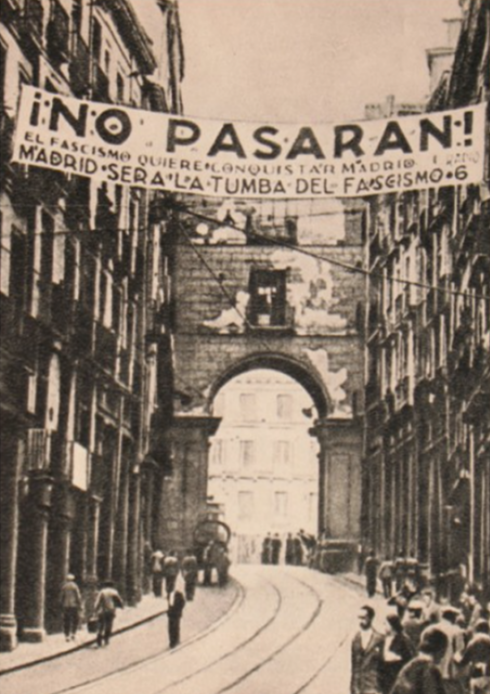
While Hitler and Mussolini supplied Franco with limitless men and weapons, Madrid relied on the USSR, which cynically provided just enough aid to prolong the conflict and blunt Hitler’s war machine.
Starving and exhausted, Madrid finally surrendered in late March. Franco declared the Civil War over just days later.
MIGUEL HERNANDEZ DIES IN PRISON (March 28, 1942)
That the world has even heard of Miguel Hernandez is a minor miracle.
The Alicante-born poet led a wretchedly unlucky life. Born into poverty, he was frequently beaten by his father for his love of reading before being pulled out of primary school and sent to work.
As a young adult, Miguel was fiercely anti-Franco, and at the close of the Civil War, he was thrown into prison.
He died of tuberculosis and neglect behind bars at the age of just 31.
PRINCE JUAN CARLOS KILLS HIS BROTHER (March 29, 1956)
While the Spanish royals were living in exile in Portugal during the early phase of Franco’s dictatorship, a tragedy occurred that has never been satisfactorily explained.
Juan Carlos, the future King of Spain, was playing with a revolver when it discharged, shooting his younger brother, Prince Alfonso, in the head.
Accounts vary wildly: one version claims someone opened a door and jolted Juan Carlos’s arm, while another darker rumour suggests he jokingly aimed the gun at his brother and pulled the trigger, unaware it was loaded.
HENRY VIII AND CATHERINE OF ARAGON (March 30, 1534)
King Henry VIII signed the Act of Succession on this day, officially rendering his 25-year marriage to the Spanish princess Catherine of Aragon null and void.
The brutal law also made their 18-year-old daughter, Mary Tudor, officially illegitimate.
Defiant to the end, Catherine chose to remain in England rather than return to her native Spain.
She died near Cambridge two years later of natural causes.
Click here to read more La Cultura News from The Olive Press.