
AS the cruise ship hit by a hantavirus outbreak heads for port in Tenerife, officials are in a race against time.
Attempts are underway to trace the whereabouts of dozens of passengers who got off the MV Hondius before the outbreak became known – and the people they may have come into contact with.
With the involvement of the World Health Organisation (WHO), various national governments and intense media scrutiny, the events of the past 72 hours have had all the eerie and unwelcome hallmarks of those early days in 2020 at the onset of the Covid outbreak in the West.
The hantavirus has a fatality rate that dwarfs that of the corona virus, raising the spectre of yet another global pandemic.
Yet, despite the grim prognostications, virologists and epidemiologists have remained largely serene.
Hantaviruses are typically transmitted to humans through inhalation or contact with rodent faeces, urine, or saliva.
The strain found on the Hondius has been identified as the Andes variant, the only one known to allow human-to-human transmission via close contact.
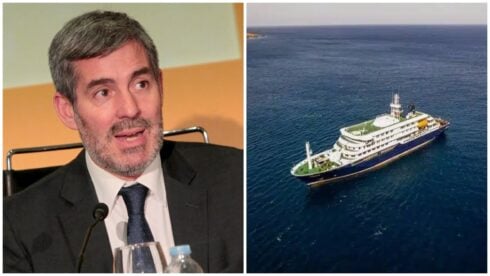
This is why concerns have been growing over how the situation is being handled, with Canary Islands president Fernando Clavijo even seeking to block the Hondius from docking in Tenerife due to safety fears.
WHO officials, however, say the risk of global spread remains ‘low.’
Maria Van Kerkhove, WHO Director of Epidemic and Pandemic Management, told Reuters on Wednesday that ‘close contact’ typically refers to situations such as sharing a cabin or bunk room on board the ship.
This means that, in practice, transmission generally requires the exchange of bodily fluids.
On a cruise ship or airplane, infection is possible because people are in confined spaces – but outside of such environments, sustained spread is considered difficult, virologists say.
And while enough cases have been detected aboard the Hondius to justify a coordinated international response, the transmission rate is significantly lower than that of COVID.
On average, hantaviruses are fatal in about 38% of patients, with the Andes strain closer to 40%. This variant can cause fluid to build up in the lungs, resulting in death in severe cases.
There are no specific antiviral treatments, though supportive care is possible, including oxygen therapy, fluid management, blood pressure support, and ventilation.
While that may sound scary, it is also part of the reason why a global pandemic is highly unlikely.
Virology offers a reassuring rule of thumb: the deadlier a disease is, the harder it tends to spread.
With COVID, symptoms were often mild or absent early on, meaning that infected individuals were able to transmit the virus widely before even realising they were sick.
However, hantavirus typically causes severe illness quickly, often leaving patients bedridden or resulting in death.
This is alarming, but it also limits opportunities for further transmission: when the host dies, the virus dies with it.
Of course, precautions are still essential – hence the WHO’s urgent efforts to trace potentially exposed passengers, and Spain’s careful handling of the situation.
But for now, experts stress that we can remain relatively reassured: a new COVID-like global pandemic is not considered likely in this case.
Click here to read more Health News from The Olive Press.