

PATIENTS walk into doctors’ surgeries across the country reporting constant fatigue.
This persistent fatigue is one of the most prevalent – and overlooked – symptoms in the general population.
It can, in many cases, mask undiagnosed anaemia, a common condition that is still underdiagnosed in clinical practice.
Tiredness, specialists at Quirónsalud say, should not be ignored or dismissed as normal, as anaemia is often the underlying cause.
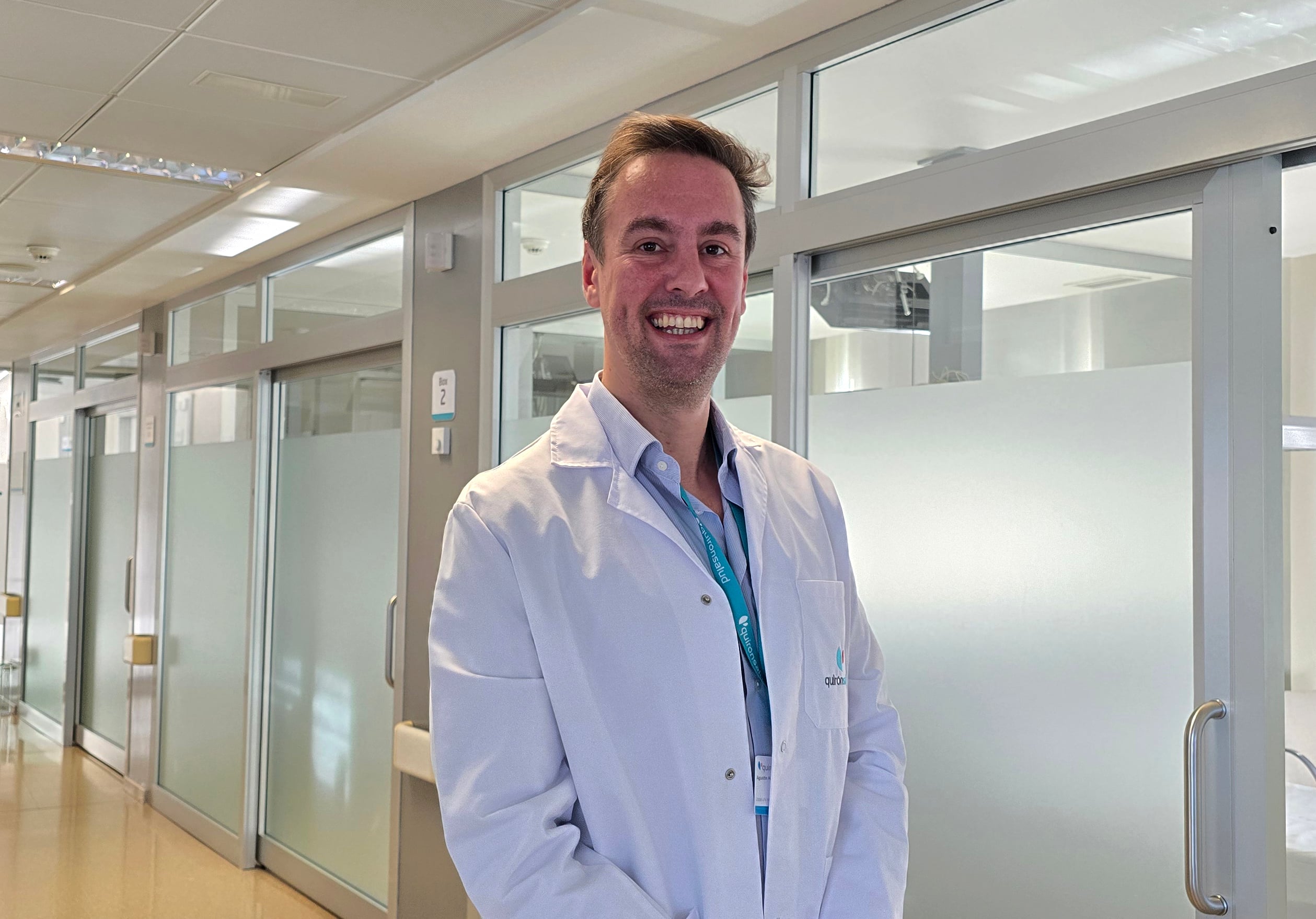
Dr Agustín Hernández, head of the Haematology Department at Quirónsalud Marbella Hospital, explains that anaemia occurs when the blood loses its ability to carry oxygen.
“Anaemia is a condition in which the blood loses its ability to carry oxygen to the tissues, either because there are fewer red blood cells or because haemoglobin levels are below the required levels”, he explains.
It is one of the most common haematological conditions, particularly in women of reproductive age and during pregnancy, making it a major public health issue.
Symptoms that are often dismissed as normal
Because anaemia develops gradually, many patients become accustomed to its symptoms. “The main problem is that it progresses slowly and the body adapts, so patients often assume this fatigue is normal”, says Dr Hernández.
Common symptoms include persistent tiredness, shortness of breath during everyday activities, dizziness, paleness and hair loss.
He also highlights an important distinction: “Iron deficiency can exist without anaemia, and patients may already experience symptoms such as fatigue or difficulty concentrating”.
The importance of identifying the underlying cause
Treatment should not only correct the deficiency but also determine its origin.
“There are three main mechanisms: reduced production, increased destruction, or blood loss”, the specialist explains.
The most frequent causes include heavy menstrual bleeding, gastrointestinal bleeding, absorption disorders, or increased demand during periods such as pregnancy.
Treatments: Advances in the management of anaemia
The management of iron-deficiency anaemia has changed significantly in recent years, with a shift towards more tailored approaches.
Dr Hernández notes that new evidence has reshaped how oral iron tablets are prescribed. “Higher doses do not always improve absorption. In many cases, they do not result in more iron being absorbed – sometimes the opposite happens”, he explains.
As a result, treatment strategies now favour longer intervals between doses, improving effectiveness.
When oral iron is not sufficient, intravenous iron has become a highly effective alternative. New treatments allow for high doses to be administered in a single session, leading to rapid recovery.
“In a matter of days, patients often notice the difference – they regain energy and their quality of life improves”, he adds.
A common condition that should not be overlooked
Through specialised units, Quirónsalud’s current approach to anaemia focuses not only on correcting blood levels but also on restoring patients’ overall wellbeing.
Dr Hernández emphasises the importance of taking the condition seriously: “When something is so common, there is a risk of trivialising it. But anaemia is not trivial”.
He concludes: “Behind every case of iron deficiency there is a cause that needs to be investigated – and a patient who deserves to recover their energy and quality of life”.
Quirónsalud in Andalucia
The Quirónsalud Group currently operates eight hospitals in Andalusia, located in Málaga, Marbella, Los Barrios (Cádiz), three in Sevilla (Sagrado Corazón, Infanta Luisa, and Materno-Infantil), as well as Córdoba and Huelva. The group also manages two outpatient surgical day hospitals in Seville and Málaga and 22 specialty and diagnostic medical centers, positioning it as the leading private hospital network in the region.
About Quirónsalud
Quirónsalud is the leading healthcare group in Spain and, together with its parent company Fresenius-Helios, one of the largest in Europe. In addition to its operations in Spain, the group is also present in Latin America. It employs more than 50,000 professionals across more than 180 healthcare centers, including 57 hospitals with more than 8,000 beds.
Its network includes prominent institutions such as Fundación Jiménez Díaz University Hospital, Teknon Medical Center, Ruber Internacional, Quirónsalud Madrid University Hospital, Quirónsalud Barcelona Hospital, Dexeus University Hospital, Policlínica Gipuzkoa, General University Hospital of Catalonia, and Quirónsalud Sagrado Corazón Hospital, among others.
The group is deeply committed to teaching – its network includes 11 university hospitals – and to medical and scientific research, supported by the FJD Health Research Institute, accredited by Spain’s Ministry of Science and Innovation.
Quirónsalud structures its healthcare services into transversal units and networks, allowing the organization to share clinical expertise across centers and apply research findings efficiently. The group is currently developing numerous research projects across Spain, with many centers recognized as leaders in specialties such as oncology, cardiology, endocrinology, gynecology, neurology, and more.For more information, please visit https://www.quironsalud.com/marbella or call
+34 952 774 200
Click here to read more Sponsored News from The Olive Press.