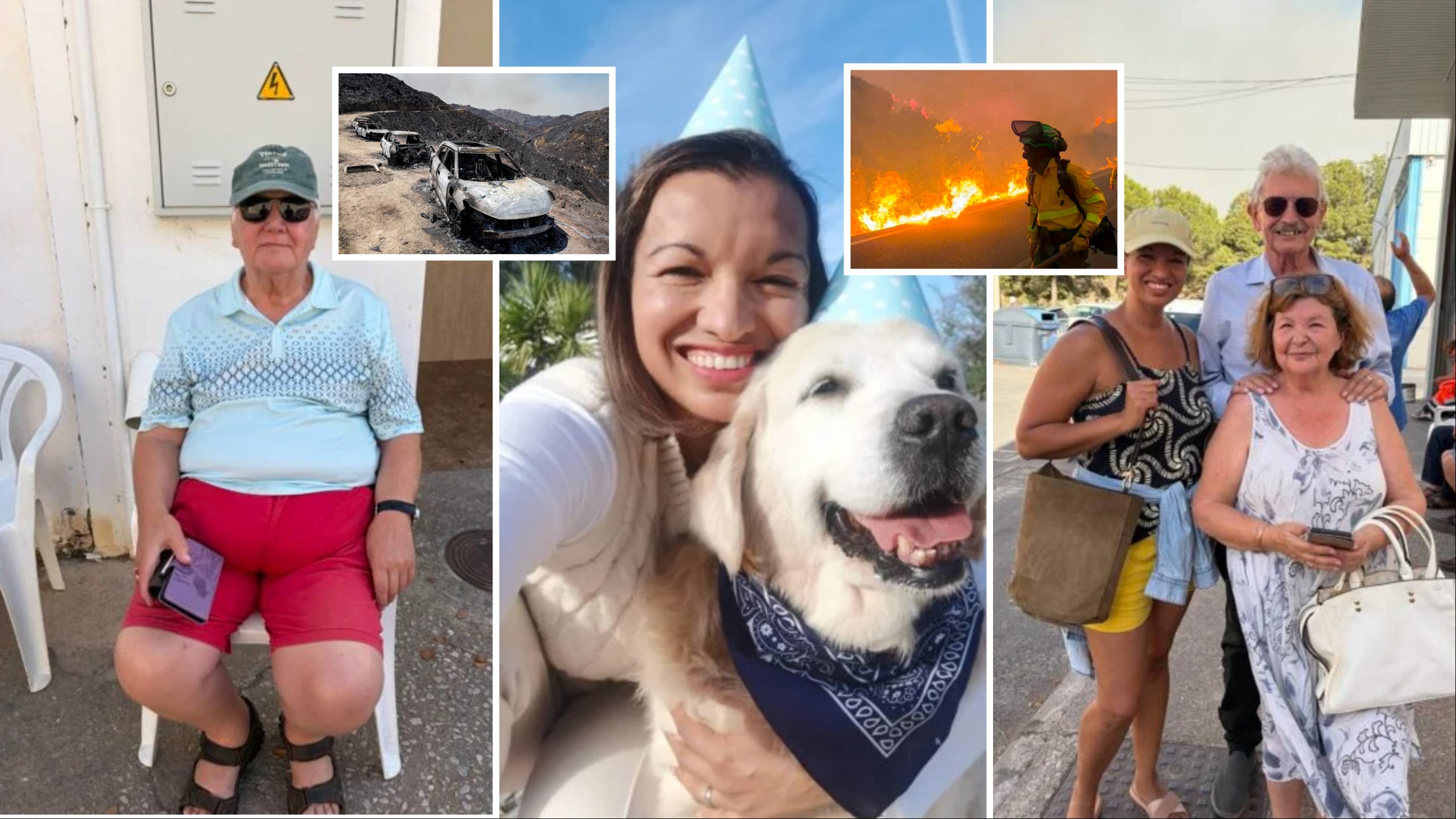
By Alessio Ghirlanda in Mojacar, Almeria
WHEN Lenox Napier learnt that a devastating wildfire was tearing through Andalucia, he picked up his phone and contacted friends he feared might have found themselves in the path of the blaze.
His heart sank when he got a message back from a couple living in Bedar, in Almeria province.
“I think we left too late. We are surrounded by fire,” the text read.
Napier has not heard from them since.
“I hope they made it out,” he told The Olive Press. “Phones aren’t working properly, so maybe they’re just incommunicado.”
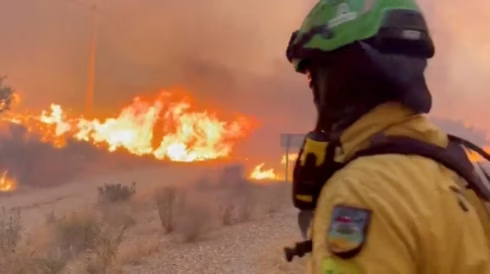
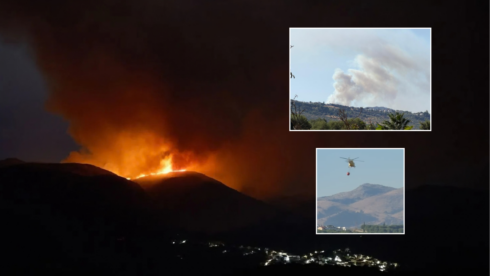
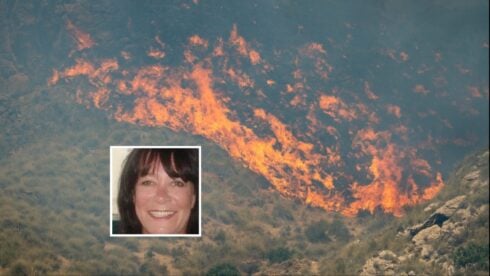
The Almeria wildfire, which broke out near the town of Los Gallardos on Thursday evening, has become the deadliest in Andalucia since records began.
It has already killed 12 people, four of them believed to be Brits, while another 23 remain missing. Panic has gripped the region as flames approached homes, forcing around 1,500 people to evacuate in just two days.
With the victims yet to be formally identified, Napier does not know whether his two friends – whom he asked not to be named – are among the dead or the missing.
But he still hopes they managed to escape.
“Hope is all I can do now, isn’t it?” he said.
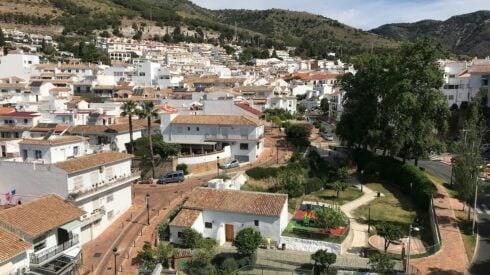
The 72-year-old retiree lives in Mojacar, a mountaintop village that has so far been spared the destruction seen elsewhere in Almeria province.
But late on Friday evening, an observation deck off the town’s main square offered a stark view of the still-raging blaze several miles away.
A huge plume of black smoke billowed into the orange-tinted sky at sunset, while the wind carried the acrid smell of charred vegetation.
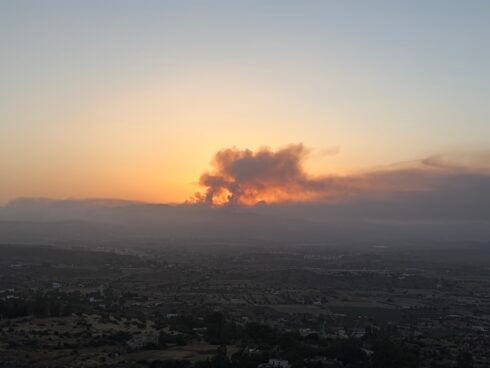
The scene seemed eerily distant, but locals were acutely aware of the devastation unfolding around them.
Marta, a 26-year-old bartender in Mojacar, said she had driven to an emergency shelter earlier on Friday with bottled water and a handful of phone chargers.
“It wasn’t about the supplies themselves,” she told The Olive Press. “It was about evacuees feeling the community huddling around them.”
And in an emergency shelter in Lubrin, around 20 miles from Mojacar, refugees from neighbouring towns said they certainly did not feel alone.

South African Carlynne Rau, who lives in Jauro near Bedar, said responders went door to door through her hamlet on Friday, urging residents to flee.
“They came round, knocked on my door, and said, ‘Out, quick!’” she told The Olive Press.
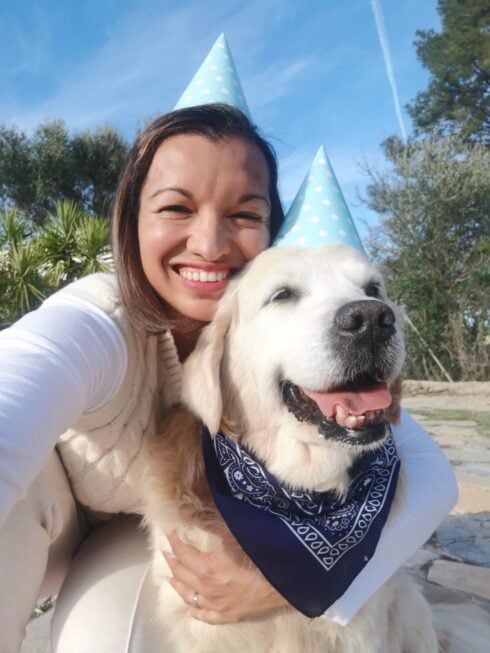
“I barely had any time to pack. It was really scary. I just got my dog, stuffed some things in a bag, and left.”
The evacuation effort has sparked criticism in parts of Andalucia, with several residents accusing authorities of failing to send emergency phone alerts.
But one of Rau’s neighbours, Brit Tim Allen, said he wanted ‘none of that.’
“Firefighters here have been working non-stop for two days. There are planes circling overhead, dumping water on the flames before heading back out to sea to scoop up more,” Allen told The Olive Press.
“They have saved us. Why criticise them at a time like this?”

Allen, a 72-year-old retiree living in Jauro with his wife Carol, said smoke had already begun filling the air around their home when officials arrived to evacuate them.
“You could smell burning everywhere, and smoke was creeping up from below the hills,” he said.
“And emergency services were still going around doing their jobs. We are all very grateful.”
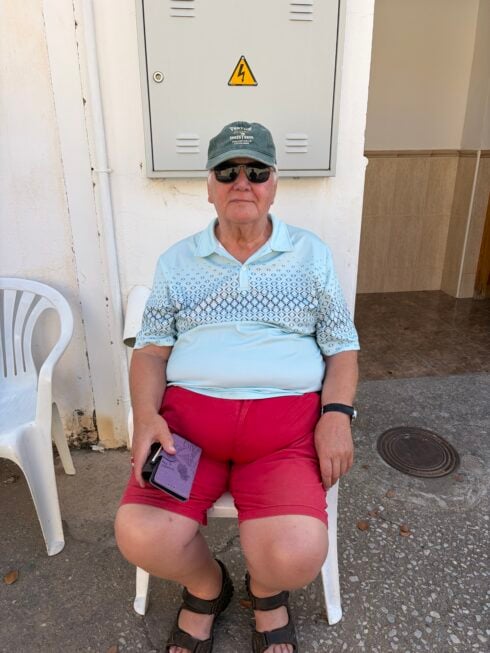
Bernard Copley, a 79-year-old British retiree from nearby El Campico, said he drove to the coast early on Friday morning to ‘get away from the smoke.’
“It was getting hard to breathe in El Campico,” he said.
He tried returning home several hours later, but the Guardia Civil would not let him through.
“So I came to Lubrin, and here I am.
“Responders have been wonderful. You could see flames approaching from El Campico, and yet there they were doing their jobs, warning everyone to leave.
“And now they’re looking after us here,” he added.
But alongside the gratitude and bravery, fear and uncertainty linger among the evacuees.
A British resident of El Marchal, near Bedar, said this was the second time in 11 months she had been forced to flee her home because of wildfires.
“This is starting to get very unsettling,” she said.
“What if this is the new normal? What if, come summer every year, we have to live in fear of having to flee our homes in the middle of the night?”
The woman, who asked to remain anonymous, said she had lived in El Marchal for more than a decade, but the weather had become noticeably harsher over the past three years.
“It is certainly hotter than ever before, and there is a lot more dry grass around than ever before.”
According to authorities, that is part of the reason the Almeria wildfire has proved so difficult to contain.
Strong winds continue to fan the flames, while vast swathes of parched grassland across the province have turned the countryside into a tinderbox.
The fire keeps finding fresh fuel despite the relentless firefighting effort.
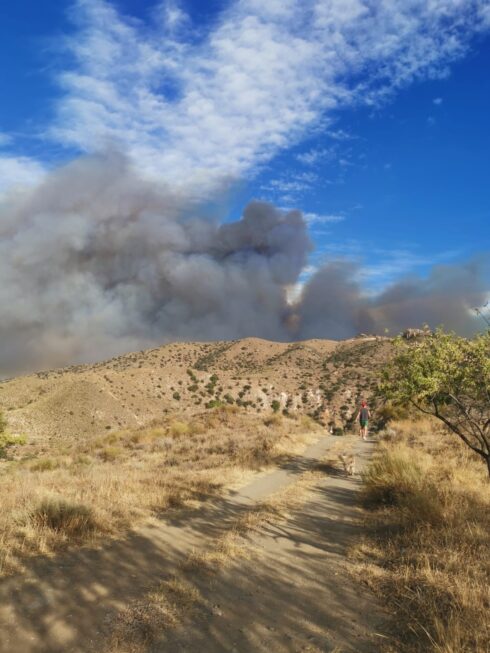
On Thursday, when Bedar mayor Angel Collado was ordered to evacuate his town, he said he looked out of the window to see flames ‘barrelling’ towards him.
The blaze has spread so rapidly that emergency crews have struggled to get ahead of it.
Early on Saturday, officials said they would attempt to attack it from both flanks.
“Soldiers have just arrived here in Lubrin,” Rau said. “We understand the fire is now just behind Bedar, close to the motorway.”
As firefighters, soldiers and aircraft continue their battle against the blaze, many families remain trapped in a different kind of limbo, waiting for news of loved ones and homes left behind.
For Napier, that wait has become painfully personal.
Days after receiving the final message from his friends – “I think we left too late. We are surrounded by fire” – all he can do is hope the silence is not the ending he fears.
Click here to read more Almeria News from The Olive Press.