
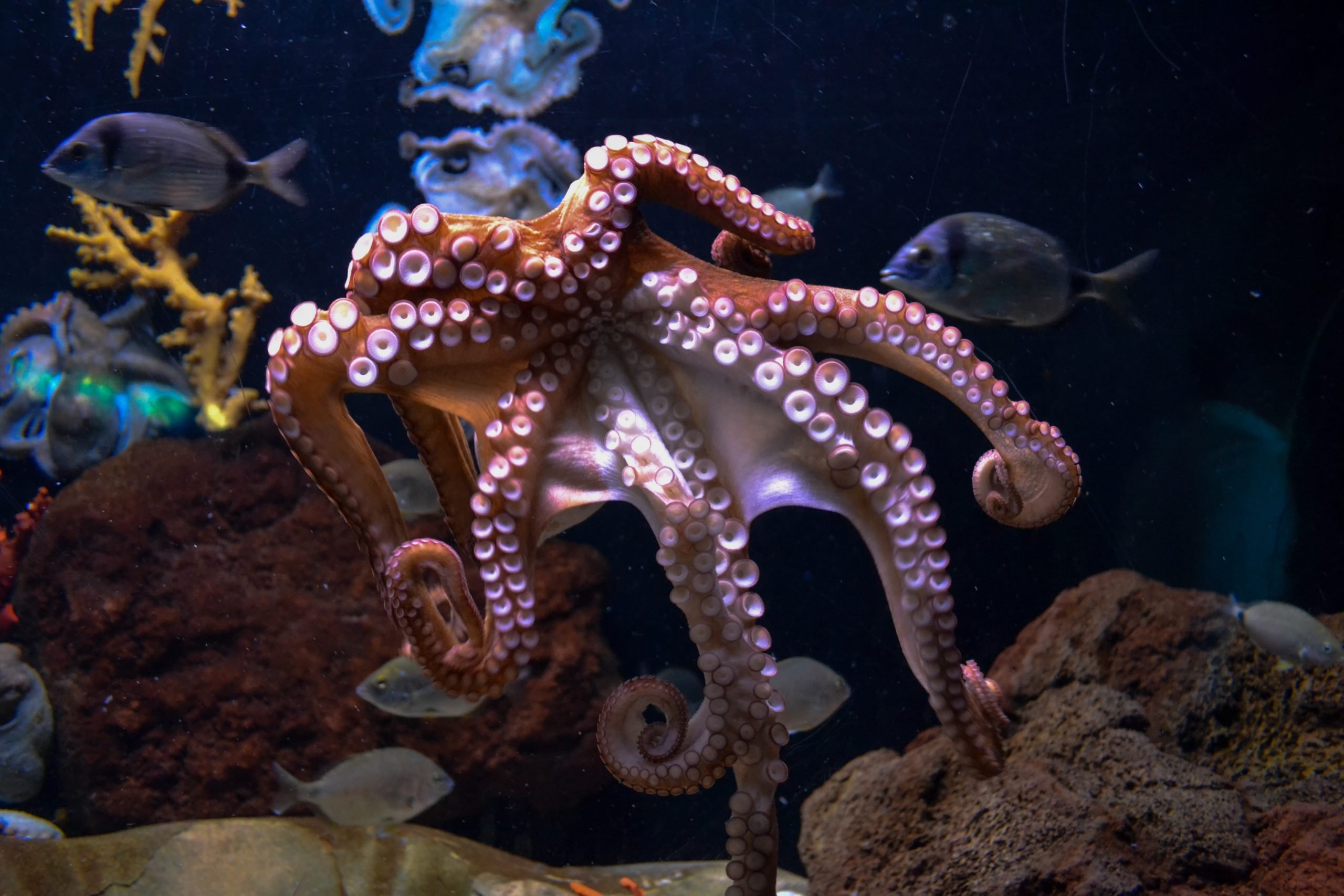
ANIMAL rights campaigners have hailed the collapse of Spain’s bid to build the world’s first commercial octopus farm as a landmark victory.
Nueva Pescanova, the Galician seafood group behind the plan, withdrew its application to the Gran Canaria’s main port authority on July 23, ending a five-year fight.
The farm was intended to produce 3,000 tonnes of octopus a year, equivalent to more than 10% of Spain’s entire national output and, according to blueprints for the project leaked to the BBC, around 1 million animals annually.
The celebrations were led by animal rights activists PETA, whose senior vice president Mimi Bekhechi said the decision proved octopuses are far too intelligent and sensitive an animal to be farmed.

“They do not deserve to be kept in an underwater prison and killed for someone’s tapas,” she said.
“This victory supports what PETA entities and compassionate people the world over have always said: there’s no place in modern society for an industry built on exploiting intelligent, sensitive octopuses,” she said.
Compassion in World Farming (CIWF) had campaigned against the project for just as long.
Elena Lara, the charity’s senior research and policy advisor, said the withdrawal was the reward for years of pressure.
“After years of pressure, this is a huge victory for octopuses, our oceans and everyone who joined us in campaigning to stop the world’s first octopus farm,” she said.
“Octopuses are intelligent, wild animals, not products to be caged in factory farms,” she said.
READ MORE: Claims octopuses are leaving Spanish waters for UK shores are a ‘snowball of misinformation’

Opposition to the farm had been building since Nueva Pescanova first unveiled the plan in 2021.
Scientists warned early on that octopuses are highly intelligent, solitary creatures, poorly suited to life in crowded tanks.
CIWF calculated in an October 2025 report that the farm would have needed up to 28,000 tonnes of wild-caught fish just to feed its octopuses in its first year alone.
That opposition eventually reached the desk of Beatriz Calzada, president of the Port Authority of Las Palmas.
More than 42,000 emails were sent to her demanding the project’s permit application be shut down for good.
The campaign was due to reach its peak this Saturday, July 25, with a protest at the port organised by the animal rights group AnimaNaturalis and CIWF.
READ MORE: ‘Octopus farming is the future’: Company behind controversial plans launches impassioned defence

WeMove Europe, Turcon and the Aquatic Animal Alliance were among the groups backing the demonstration.
Nueva Pescanova’s withdrawal, filed two days before campaigners were due to march, made the protest redundant.
The company itself tells a more measured story.
Nueva Pescanova said the decision reflected business and regulatory considerations only, after regulators found the site risked fouling a nearby passenger terminal with odours and degrading the port’s water quality.
It insisted the withdrawal was not a concession that the project was environmentally unviable, and left the door open to alternative sites or designs in future.
Campaigners are not taking that as a guarantee. Spain’s octopus farm is not an isolated case, they point out.
READ MORE: Activists battle to stop ‘cruelty’ of world’s first octopus farm in Spain’s Canary Islands
California and Washington have already banned octopus farming in the US.
Mexico has introduced a bill for a nationwide ban, and Chile drafted similar legislation in 2025.
The case file on the Gran Canaria farm, first opened in May 2021, will now be archived by the Port Authority for good. Any future octopus farm proposed for the same site would have to restart the entire permitting process from zero.
Saturday’s protest, once seen as essential, will no longer happen.
Click here to read more Canary Islands News from The Olive Press.