THE Costa del Sol’s West Nile virus alert zone has widened to cover Fuengirola and Mijas after mosquitoes trapped in the area tested positive for the virus.
The Junta Direccion General de Salud Publica y Ordenacion Farmaceutica (the regional government’s public health directorate) declared the new alert zone on Friday.
It covers the whole of Fuengirola and Las Lagunas, a large residential district of Mijas that sits just inland of Fuengirola.
Crucially, the alert does not mean anyone has caught the virus there.
It was triggered by a single positive result from a mosquito trap, part of the Junta’s region-wide surveillance network.
An ‘alert zone’ is a precautionary trigger, not proof of infection. It forces local authorities to step up testing of mosquitoes, animals and people in the area, without a single human case needing to exist first.
The measure stays in place for a minimum of four weeks, until at least August 21, and lifts only once the virus stops turning up in mosquitoes, birds or horses there.
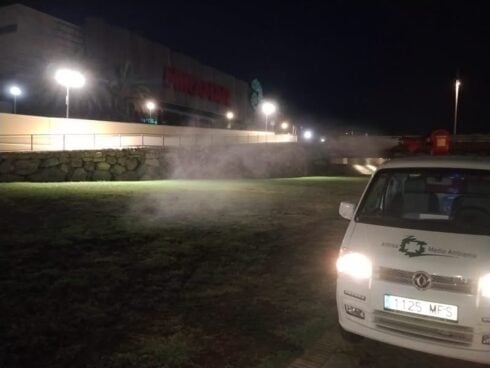
The positive mosquito sample came from the Miramar area, which straddles the boundary between Fuengirola and Mijas, according to Mijas town hall.
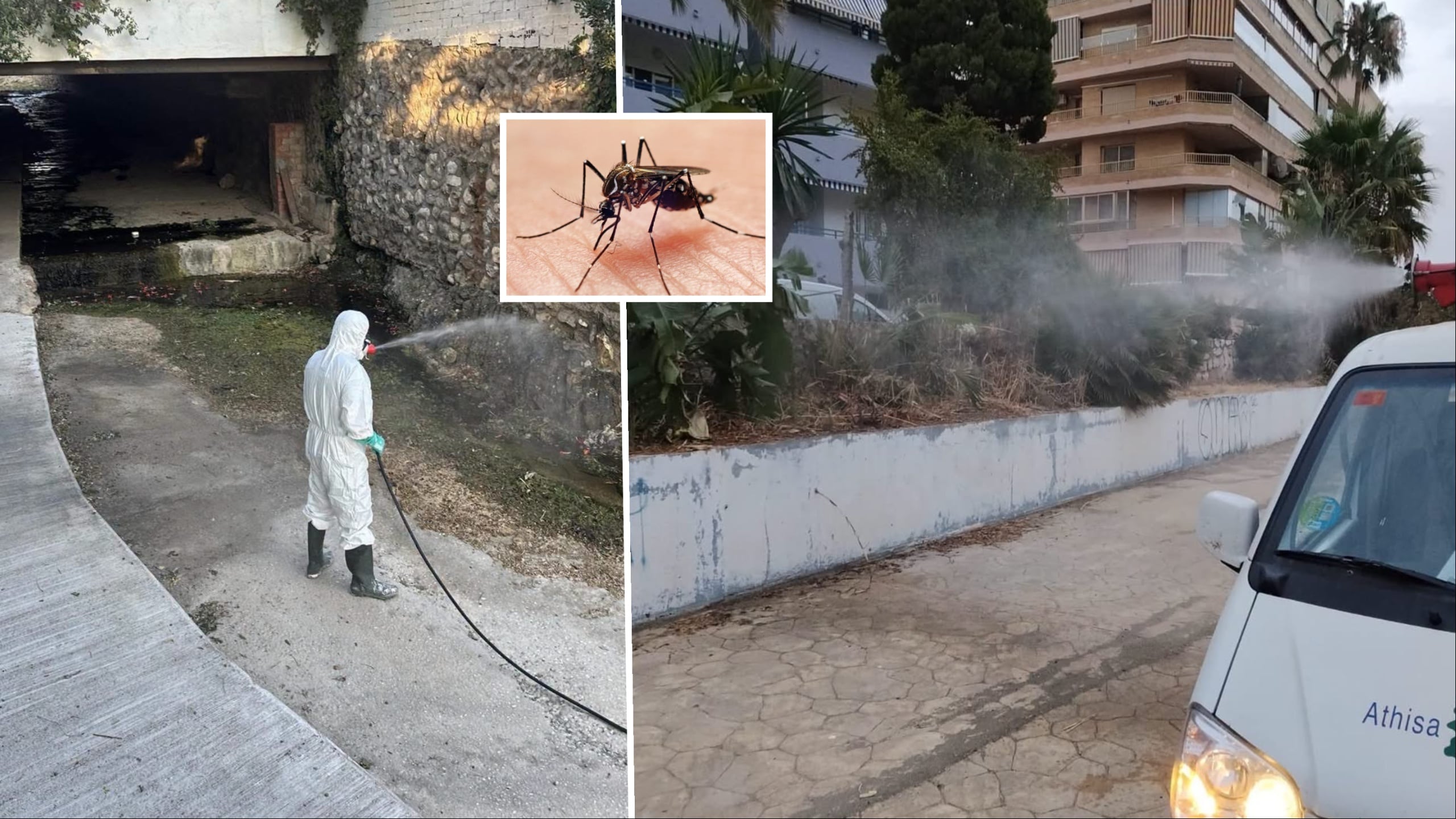
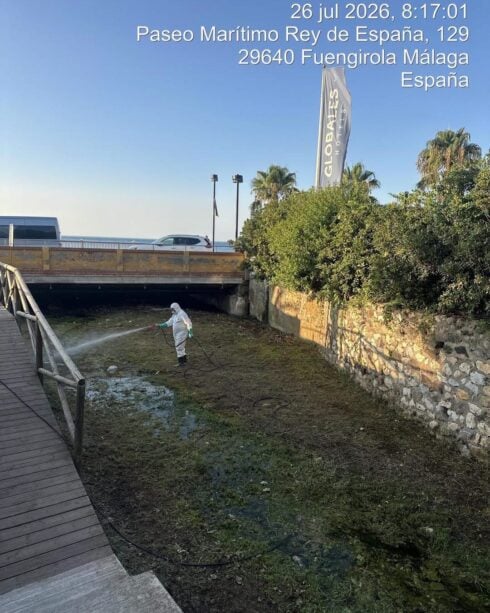
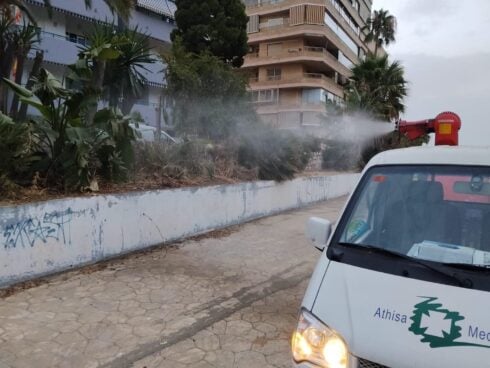
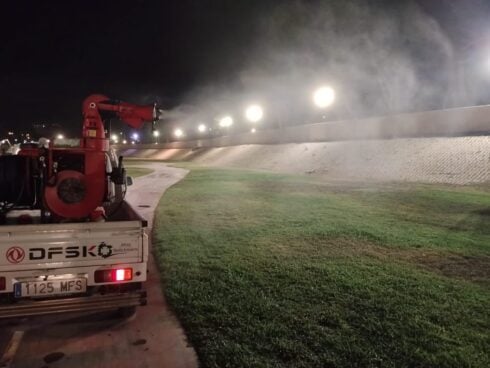
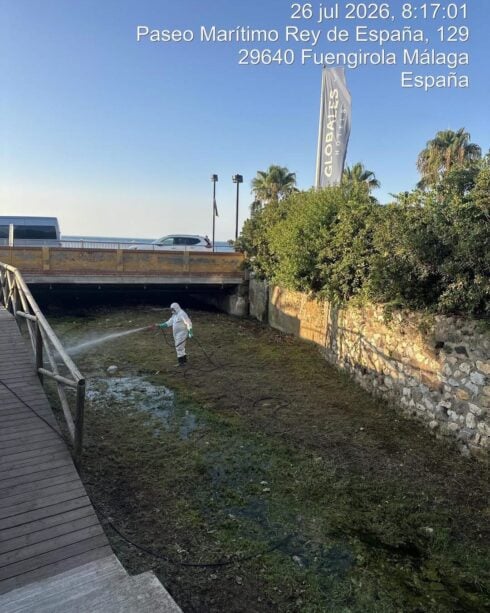
The council said that it has begun an ‘extraordinary’ round of fumigation targeting storm drains and mosquito breeding sites in response.
Under the alert, Mijas and Fuengirola councils must intensify their Municipal Plans for Surveillance and Control of Vectors — the term Spanish health authorities use for insects, like mosquitoes, that spread disease between animals and people.
That means targeting breeding sites and adult mosquito resting spots not just within the two towns, but in a radius of up to 1.5km beyond the built-up area.
Bollullos de la Mitacion, a town in Sevilla province, has been placed under the same alert measure.
Health chiefs have not recorded a single human case of West Nile fever in Malaga province this year.
Every confirmed case so far has come from Sevilla province, where the season’s tally reached five mild infections on Friday.
The latest is a man from Coria del Rio, who developed symptoms on July 17 and was confirmed positive by PCR — a genetic test that detects the virus’s own genetic material in a blood sample — at Hospital Universitario Virgen del Rocio.
That diagnosis has extended Coria del Rio’s own alert period to August 14.
The other cases this season have come from Palomares del Rio, Villamanrique de la Condesa and La Puebla del Rio, all in Sevilla province, and all classed as mild.
Andalucia now has 15 municipalities under formal alert, spread across five provinces: Almeria, Jaen, Granada, Sevilla and, as of this week, Malaga.
Malaga province already had nine towns rated high risk before this week’s detection, including Antequera and Malaga city itself.
Fuengirola and Mijas were rated only medium risk until the positive trap result changed that this week.
The Junta runs a network of around 215 mosquito traps across Andalucia, and has logged 3,310 test results from 213 of them so far this season.
Mijas was the only Malaga municipality among them to return a positive result; every other detection this year has been in Sevilla, Almeria, Granada or Cordoba.
Beyond the mosquito data, laboratories have tested 262 people for suspected infection this year, screened 101 patients with viral meningitis, and checked 688 blood donations for the virus — all of it negative.
No case has turned up in a horse, or in any of the 208 wild birds tested either.
READ MORE: Flying taxis to slash Malaga-Marbella journey to just 15 minutes under ambitious Costa del Sol plan
The mosquitoes involved are Culex mosquitoes, mainly Culex pipiens and Culex perexiguus — not the tiger mosquito more commonly linked to dengue.
Health authorities say most people who catch West Nile virus show no symptoms at all, a minority develop a mild fever, and in rare cases the infection can progress to more serious complications such as meningitis or encephalitis.
The Junta is urging residents, especially the elderly and other vulnerable groups, to use registered insect repellents and wear light clothing that covers the skin.
It also wants standing water cleared from pots, buckets, drains and pool areas, since that is where mosquitoes breed, and says strong perfumes and scented soaps should be avoided, as they attract mosquitoes rather than repel them.
The Olive Press reported the virus creeping toward the coast as far back as November, when it turned up in a dead bird near La Linea, in the Campo de Gibraltar, further west along the coast.
The alert on Fuengirola and Las Lagunas stays in force until at least August 21, and will only be lifted if the virus stops turning up in further rounds of testing.
Click here to read more Costa Del Sol News from The Olive Press.