

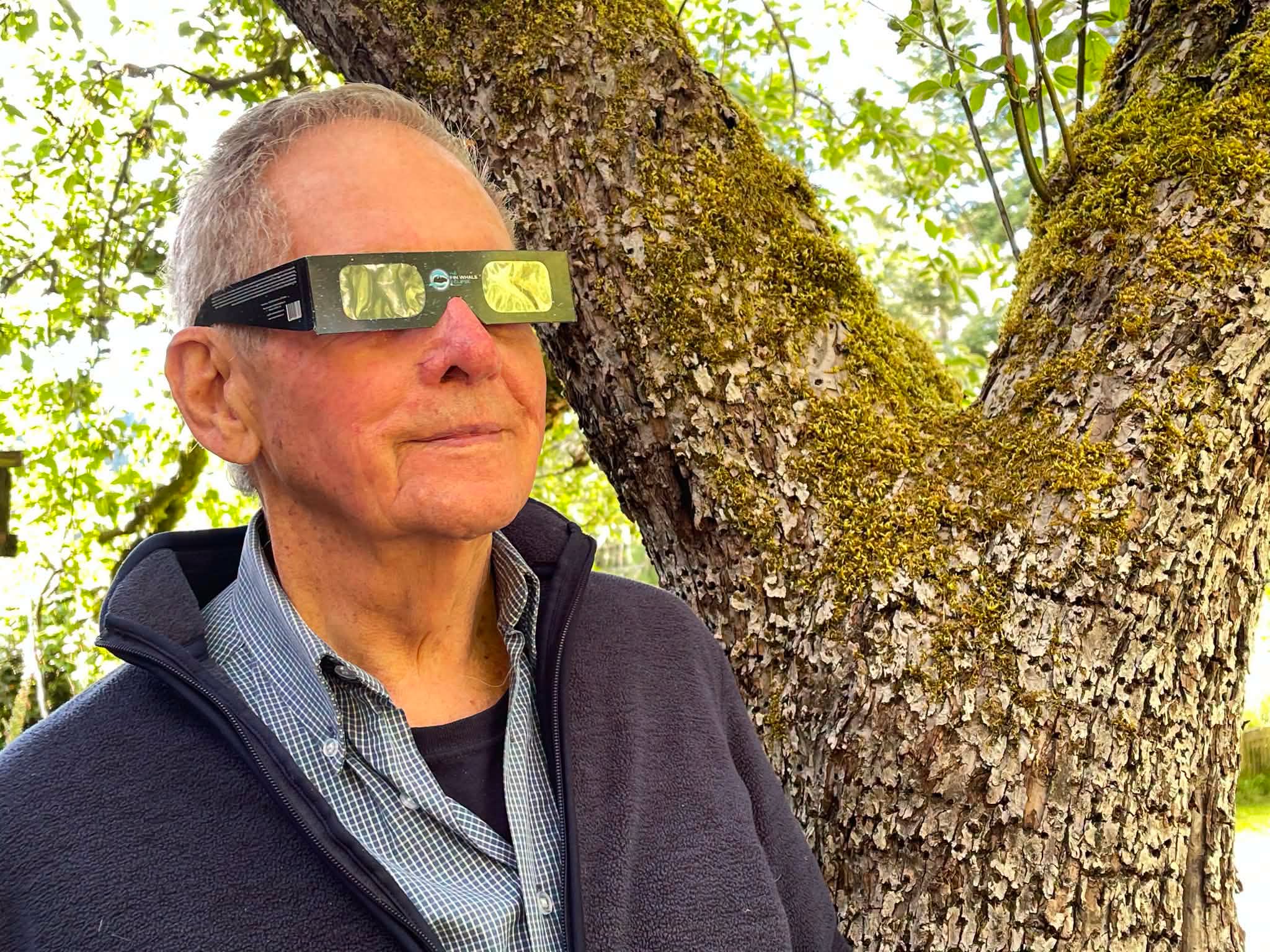
WITH just 12 days to go until Spain’s historic August 12 solar eclipse, five young Canadian women are helping families watch the event safely while raising international support for fin whale conservation.
It is very important for eclipse chasers and visitors across Spain to buy properly certified eclipse glasses now, rather than wait until the last few days before the August 12 solar eclipse.
The Fin Whale Eclipse Project was founded by five young women from Ontario, Canada. Their international initiative combines safe eclipse viewing with raising awareness of the North Atlantic fin whales that live in the waters around Spain and across Europe.
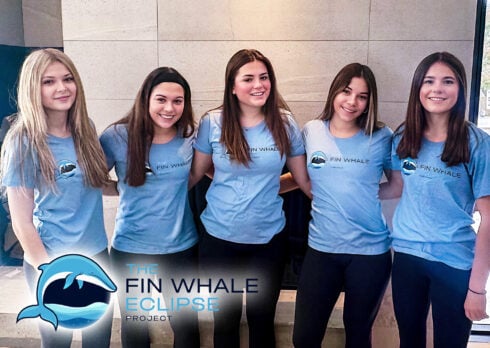
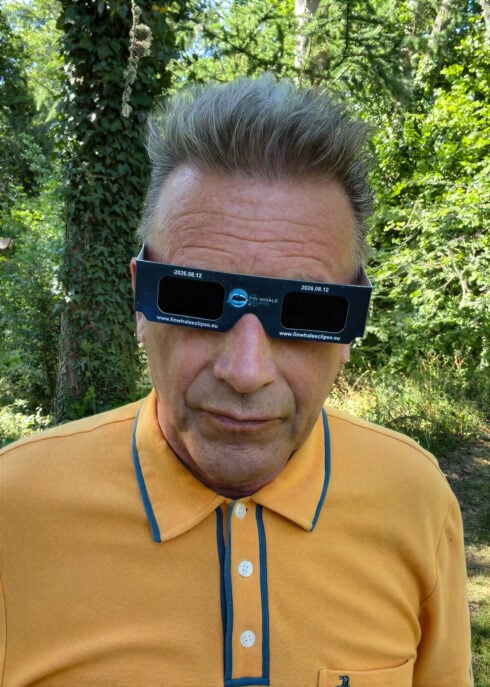
The project supplies CE-marked eclipse glasses certified to EN ISO 12312-2:2015, with printed safety instructions in English and Spanish. The glasses are dispatched from the project’s European warehouse in France, with free delivery throughout Spain.
Readers can learn more about the project and its certified glasses at www.finwhaleeclipse.eu.
“We want families to experience something extraordinary on August 12, but we also want everyone to enjoy it safely,” said Paige Denton, one of the project’s youth co-founders.
“We hope people will see that preparing for the eclipse can also support a youth-led environmental project and help protect whales and dolphins.”
A major eclipse throughout Spain
Spain is preparing for the first total solar eclipse visible from the Iberian Peninsula in more than a century.
Although the path of totality will cross northern and eastern Spain, the eclipse will still be a remarkable event throughout the country.
Around the Strait of Gibraltar, approximately 92% of the Sun will be obscured. Andalucía, the Costa del Sol, Gibraltar, Murcia and the Costa Blanca will therefore experience an exceptionally deep partial eclipse.
The Canary Islands will see approximately 66% to 74% of the Sun covered, depending on location, while many other areas will experience an even deeper eclipse or complete totality.
The eclipse will take place during the evening, with the Sun very low in the western sky. Viewers should identify a safe location with a clear, unobstructed view toward the western horizon and check the exact local timing before travelling.
Buildings, mountains and trees could block the view, particularly during the most important final stages of the eclipse.
Ordinary sunglasses are not safe
Ordinary sunglasses are not safe for observing an eclipse, regardless of how dark they appear.
Anyone looking directly toward the Sun should use glasses specifically manufactured for direct solar observation. The glasses should clearly display EN ISO 12312-2:2015, an authentic CE mark, the manufacturer’s identity and proper instructions for use.
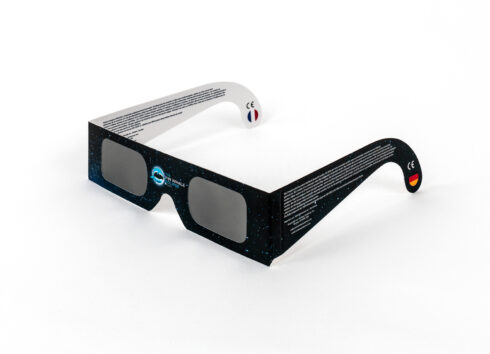
Glasses should be inspected before the eclipse and should not be used if the filters are scratched, punctured, loose, creased or otherwise damaged.
Viewers outside the path of totality, including those in Andalucia, Gibraltar and the Canary Islands, must keep their eclipse glasses on whenever looking toward the Sun.
Glasses may be removed only during complete totality, and only by viewers who are certain they are standing within the path of totality. They must be replaced immediately when any part of the bright Sun begins to reappear.
The Fin Whale Eclipse Project was recently included in Forbes eclipse journalist Jamie Carter’s article, “Where To Get Safe Eclipse Glasses For The Aug. 12 Solar Eclipse.”
The article notes that the projects supplier of eclipse glasses, appears on the American Astronomical Society Solar Eclipse Task Force’s list of safe solar viewers.
The project’s glasses include written instructions in Spanish, English, French and German.
With less than two weeks remaining, families, hotels, campsites, holiday-rental owners, tour operators and community organisations are being encouraged to check that they have enough certified glasses and avoid waiting until the final few days.
Looking up—and looking toward the ocean
The idea behind The Fin Whale Eclipse Project is to encourage people to look in two directions.
On August 12, millions of people will look up at the alignment of the Sun, Moon and Earth.
The five young women are also asking people to look toward the ocean and learn about the remarkable wildlife travelling through European waters.
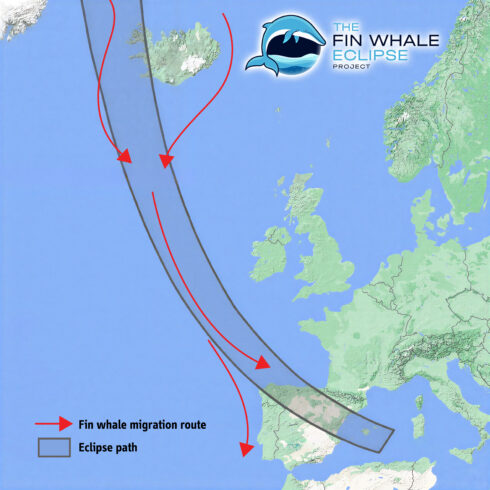
The route of the eclipse from Greenland and Iceland toward northern Spain closely mirrors important North Atlantic fin-whale waters and migration routes.
Fin whales are the second-largest animals on Earth. The Bay of Biscay, between Spain and France, is an important feeding area and migration corridor for whales and dolphins.
“The eclipse may last only a few minutes, but fin whales are an incredible natural wonder travelling through European waters every year,” Ellen Lentine said. “We hope the excitement around the eclipse gives people another reason to learn about them.”
ORCA is the project’s Official Whale Conservation Partner. The international whale and dolphin conservation charity gathers information about marine wildlife in areas including the English Channel and the Bay of Biscay.
ORCA uses this evidence to help improve understanding and protection of whales, dolphins and their habitats.
Fifteen percent of the net proceeds through The Fin Whale Eclipse Project supports ORCA’s conservation work.
British wildlife and conservation figures Chris Packham and Monty Halls have also publicly supported the young women’s campaign.
Connections across Spain
The project has developed relationships with independent Scout groups and Scout contacts across seven Spanish autonomous communities: Madrid, the Valencian Community, Asturias, Andalucia, Aragón, Castilla-La Mancha and Castilla y León.
Several groups are using the project’s eclipse activity booklet and certified glasses to help young people prepare for August 12. The project has also established a connection with the Municipality of Logroño.
“This has become a genuinely international project,” Emilie Leclercq said. “Young people, Scout groups, conservation organisations and communities in different countries are all preparing to share the same moment.”
A brief wildfire safety reminder
With wildfire risk affecting parts of Spain this summer, anyone travelling to a rural, mountain or forested viewing location should check official alerts, road closures and local access restrictions before leaving. Viewers should never enter closed areas or light fires or barbecues, and should call 112 if they see a new fire or column of smoke.
The eclipse will be visible throughout Spain, so no one should place themselves at risk trying to reach a particular viewing location.
Prepare safely and support something bigger
The Fin Whale Eclipse Project is encouraging people to prepare now rather than searching for glasses during the final days before the eclipse.
By obtaining their glasses through the project, readers can prepare for the eclipse with certified solar viewers, receive free delivery in Spain and support five young women building an international environmental initiative.
“We hope everyone looks up safely, enjoys this historic eclipse and remembers the extraordinary life travelling through the ocean below,” Paige Denton said.
Learn more about the youth-led project and obtain certified eclipse glasses with free delivery throughout Spain at www.finwhaleeclipse.eu.
Click here to read more Animals News from The Olive Press.