
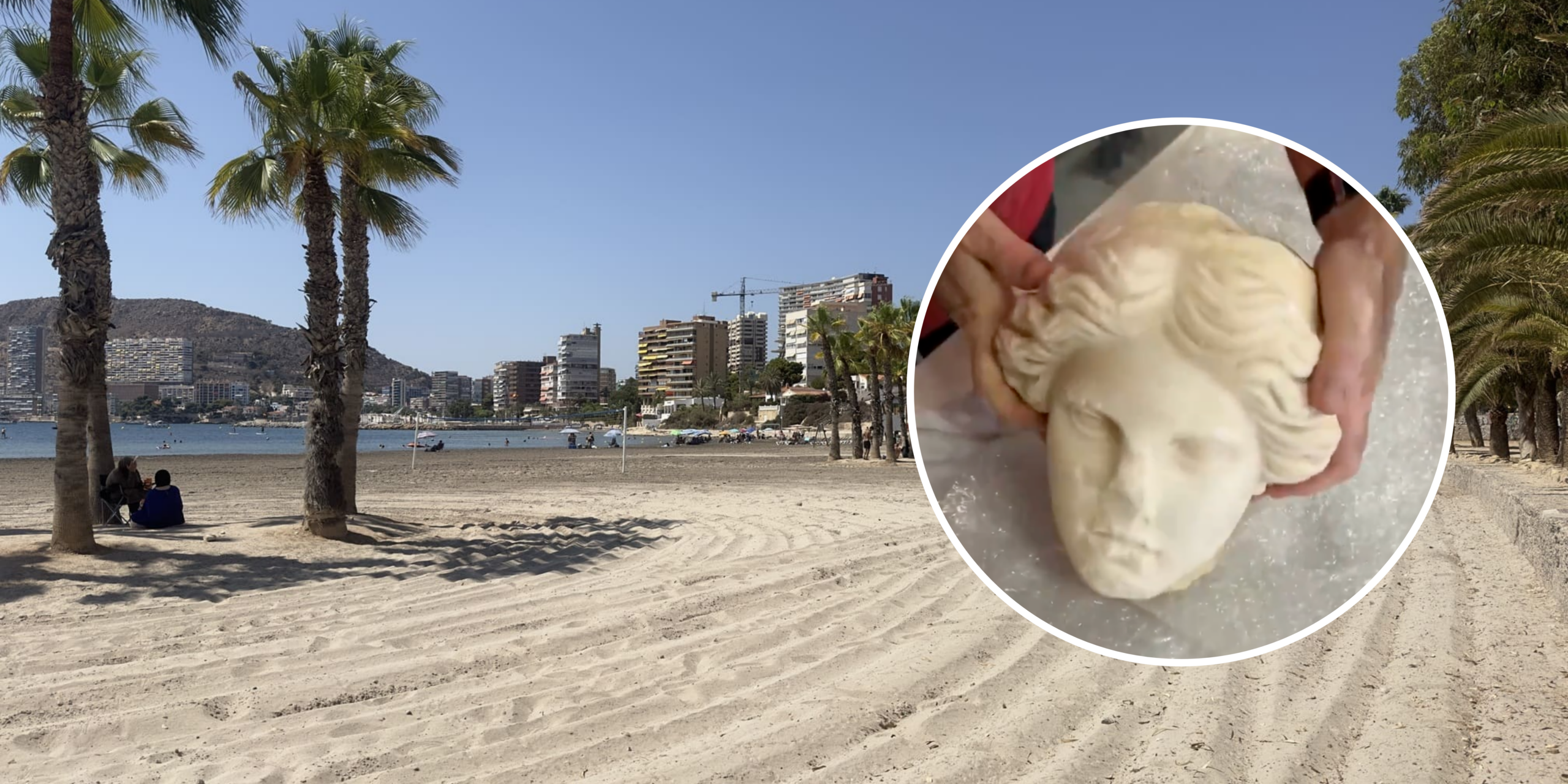
THE marble figure of a female head found in Alicante may have been part of a Roman Goddess ‘Venus’ figure, dating back to the second century AD.
Archeologists believe the head once belonged on a life-sized marble statue that may have been imported from either Italy or Greece at the height of the Roman Empire.
The bust was unearthed on Alicante’s Almadraba beach in May, where it was instantly recognised as being of ‘incalculable value’, according to Alicante’s culture councillor.
READ MORE: In the Footsteps of God’s Architect: A Journey Through Gaudi’s Masterpieces in Barcelona
Initial examinations have been carried out by Roman sculpture specialist Jose Miguel Noguera at the University of Murcia.
Noguera believes that based on the preserved neck of the figure, it was likely part of a larger statue rather than a decorative stand-alone bust.
The researcher also believes that the high quality marble shows the statue either came from a quarry on the Greek Island of Paros, or Carrara in Italy, both of which were renowned for luxury marble in the Roman Empire.
The 14kg Venus head, measuring 22.22 centimetres tall and 19.78 centimetres wide, is in excellent preservation and has enormous heritage value, according to specialists.
Some hypotheses suggest the statue may have once adorned the house of a wealthy Roman family in Lucentum, the ancient Roman town that is now Alicante.
Alicante City Council has commissioned a full study into the marbles history, involving specialists from the Universities of Murcia, Zaragoza and Cordoba.
“We will have to wait for the study to be completed for the Venus of Alicante to reveal more secrets of its history.” Said the city council.
Click here to read more La Cultura News from The Olive Press.