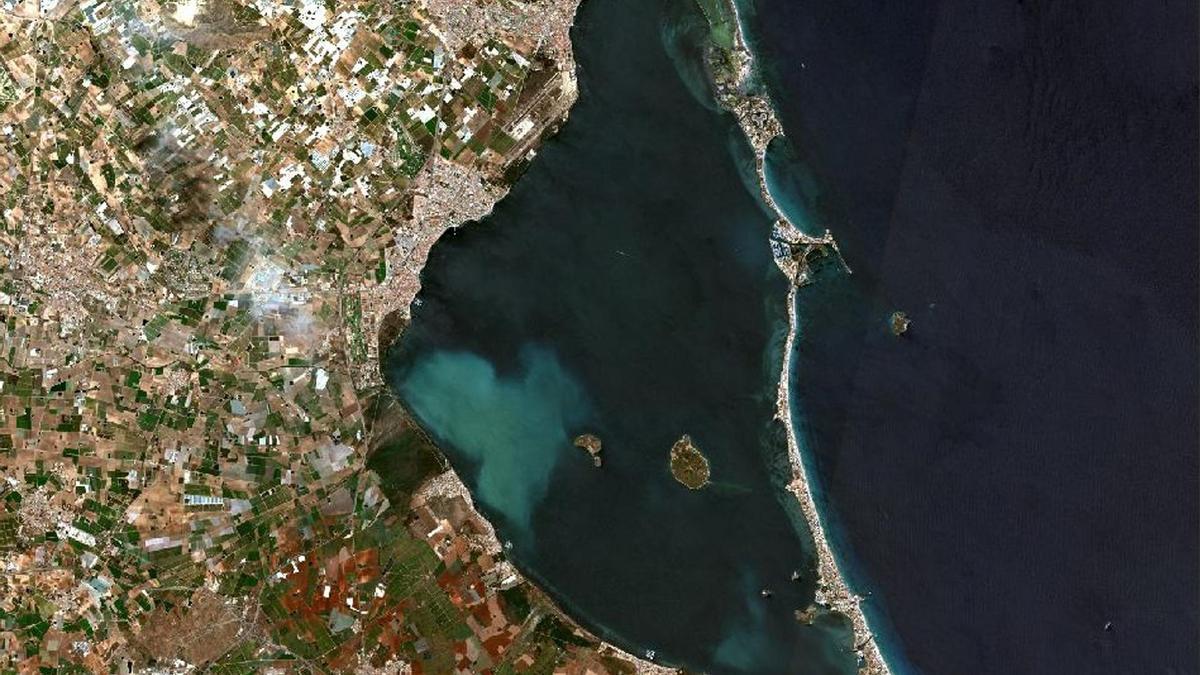
A MYSTERIOUS white stain spreading through Spain’s Mar Menor has devastated marine life in the worst affected part of the lagoon.
Researchers found only three fish species in the centre of the milky patch, compared with 21 in nearby healthy waters.
The finding amounts to an 86% fall in species diversity inside the most damaged area.
A team from the Spanish Institute of Oceanography and the University of Murcia studied more than 4,000 fish over the course of a year.
Their results reveal that the white discolouration is hiding severe damage beneath the surface.
The stain now covers around 12.3 square kilometres, roughly 9% of the Mar Menor.
Within its core, underwater vegetation has vanished across an area measuring almost 6.7 square kilometres.
The water appears white because it contains tiny crystals of calcite, a form of calcium carbonate.
These particles make the lagoon unusually cloudy and prevent sunlight from reaching the seabed.
Scientists found that the affected water was up to nine times more turbid than normal.
In healthy areas, around 18.3% of sunlight reached the bottom. Inside the damaged zone, that figure fell to just 3.9%.
The lack of light has destroyed underwater meadows which once provided food, shelter and breeding grounds for fish.
Species that depend on this vegetation have almost disappeared from the area.
More resilient fish, including the black goby, have been better able to survive.
The study, published in the journal Marine Pollution Bulletin, provides the clearest evidence yet of the stain’s ecological impact.
Scientists believe groundwater rich in bicarbonate is helping to sustain the phenomenon.
Changes in the surrounding aquifer have been linked partly to intensive irrigation, although researchers have not identified urban wastewater as the direct cause of the white patch.
The Mar Menor has already endured years of environmental decline, including the infamous ‘green soup’ crisis of 2016 and later episodes of mass fish deaths caused by low oxygen levels.
Researchers now want to know whether the destroyed vegetation can return and how far the stain could continue to spread.
Click here to read more Spain News from The Olive Press.