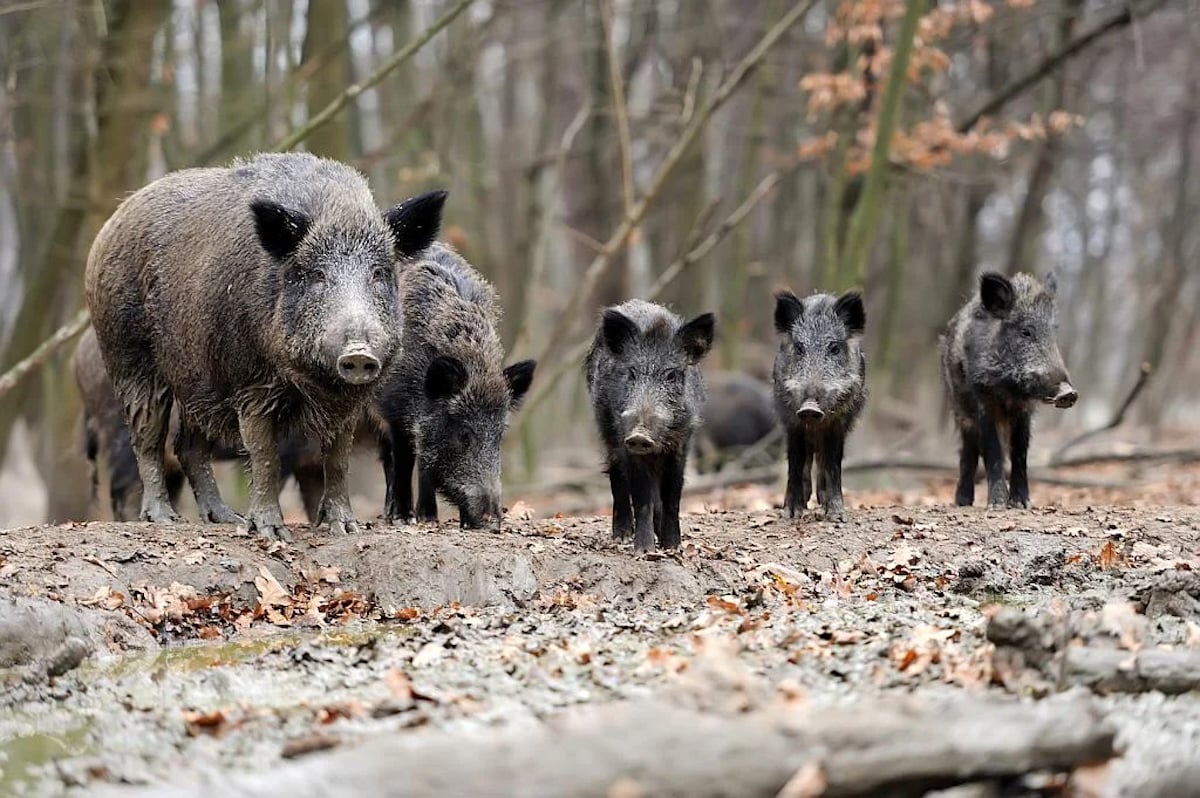
WILD boars roaming the Costa del Sol’s beaches and bins are riddled with disease – and more than eight in ten of them could pass it on to you.
That’s the stark warning from a new ‘One Health’ study, which found that over 80% of wild boars turning up in Malaga’s urban areas are carrying diseases capable of jumping to humans.
These aren’t small creatures either. Weighing up to 100kg, the boars are increasingly bold, wandering into towns and helping themselves to whatever they can find – and bringing a nasty cocktail of pathogens with them.
READ MORE: Flights diverted from airport in northern Spain after wild boars rush onto runway
Salmonella, parasites and hepatitis E were the most common diseases found by scientists.
Zoonoses cause millions of deaths and infections every year and are the cause of pandemics such as COVID-19 and ebola.
The investigation studied a total of 80 animals across the Costa del Sol, where 40% were from Marbella, 22.5% from Fuengirola, 7.5% from Benahavis and the rest from the capital of Malaga.

Of these, 86.3% were carrying contagious diseases. The study found 92.5% of the boars had at least one infection and that all of the animals that arrived from Benahavis and Fuengirola had two or more.
So why are they here? Experts point to a lack of natural predators, sky-high reproductive rates, and – perhaps most tellingly – easy pickings from urban bins.
It’s a combination that spells trouble for pets, livestock and residents alike.
Now health chiefs are urging local councils to ‘boar-proof’ rubbish access points, while residents are being told to steer clear of the animals and keep outdoor areas as clean as possible.
And disease isn’t the only headache. The boars are also blamed for a growing number of road accidents, as well as damage to crops and local ecosystems.
Doctors recommend that in the event of being bitten by a boar, victims should seek the relevant vaccinations and antibiotics as soon as possible.
Click here to read more Malaga News from The Olive Press.