
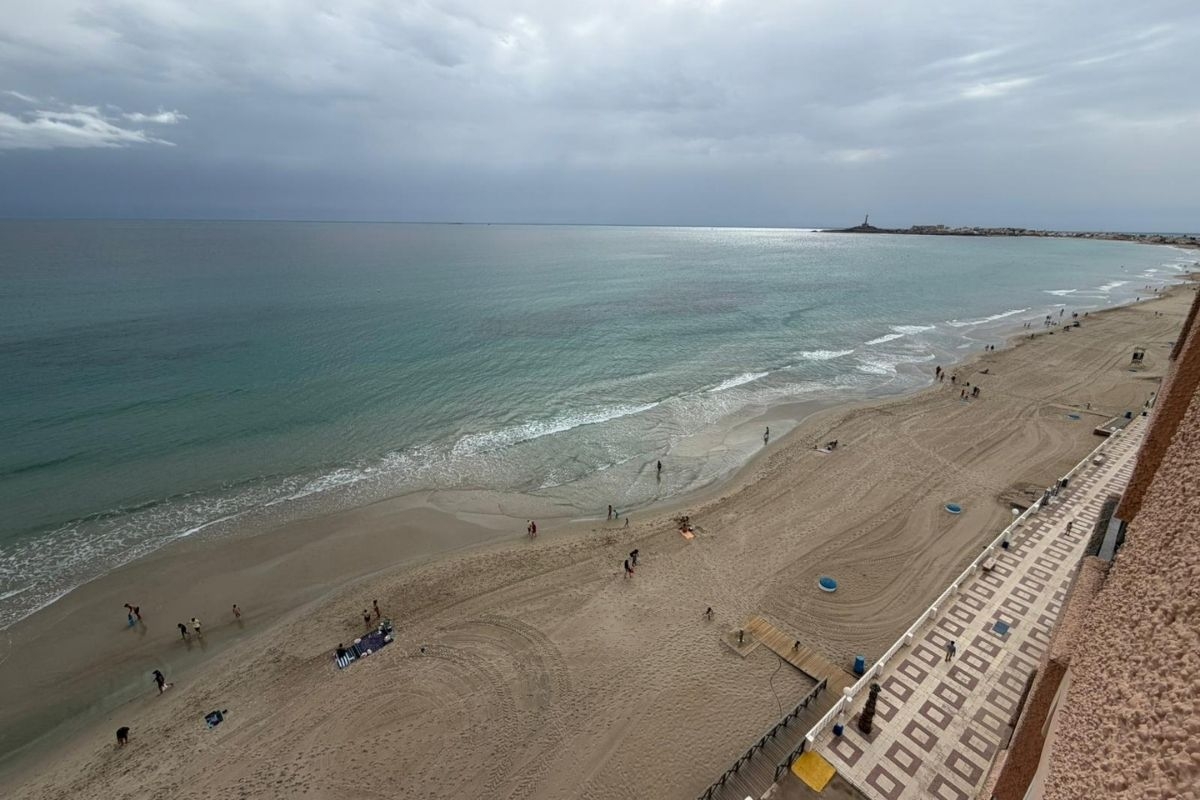
SWIMMING has been banned across popular beaches in La Manga, Murcia, after the Mediterranean sea suddenly retreated several metres.
Red flags have been raised along the coastline in Cartagena as a preventative measure.
Local authorities fear the sudden drop in water levels could precede a rapid and dangerous tidal surge.
The swimming ban affects all Mediterranean beaches in the municipality, including Cabo de Palos, La Azohia and El Portus.
Cartagena mayor Noelia Arroyo said the phenomenon is likely linked to tidal changes.
She added there is no objective data pointing to any other cause.
The 112 emergency service confirmed the sudden retraction of the sea is due to natural causes and poses no immediate danger.
Emergency services began receiving calls reporting the incident at 10.05am today from several points along the coast, especially La Manga del Mar Menor.
The National Geographic Institute has confirmed there is no earthquake or tsunami warning.
But the State Meteorological Agency (AEMET) has reported weather phenomena such as sudden changes in atmospheric pressure due to nearby storms, which could cause significant fluctuations in sea level.
Civil Protection officers have urged the public to avoid the shoreline and stay off promenades in case the water violently returns.
The bizarre event echoes past ‘meteotsunamis’ that have previously battered the Spanish coastline in the last week.
Unlike traditional tsunamis triggered by earthquakes, meteotsunamis are caused by sudden surges in air pressure during stormy weather.
Previous incidents have seen monster waves push up to 200 metres inland across tourist hotspots in the Valencian Community and the Balearic Islands.
In 2017, similar sudden sea level changes flooded beach bars and streets in Costa Blanca towns such as Santa Pola and Torrevieja.
Experts previously noted that these weather-driven events can cause sea levels to rise by up to 70cm in just five minutes.
Click here to read more Murcia News from The Olive Press.