
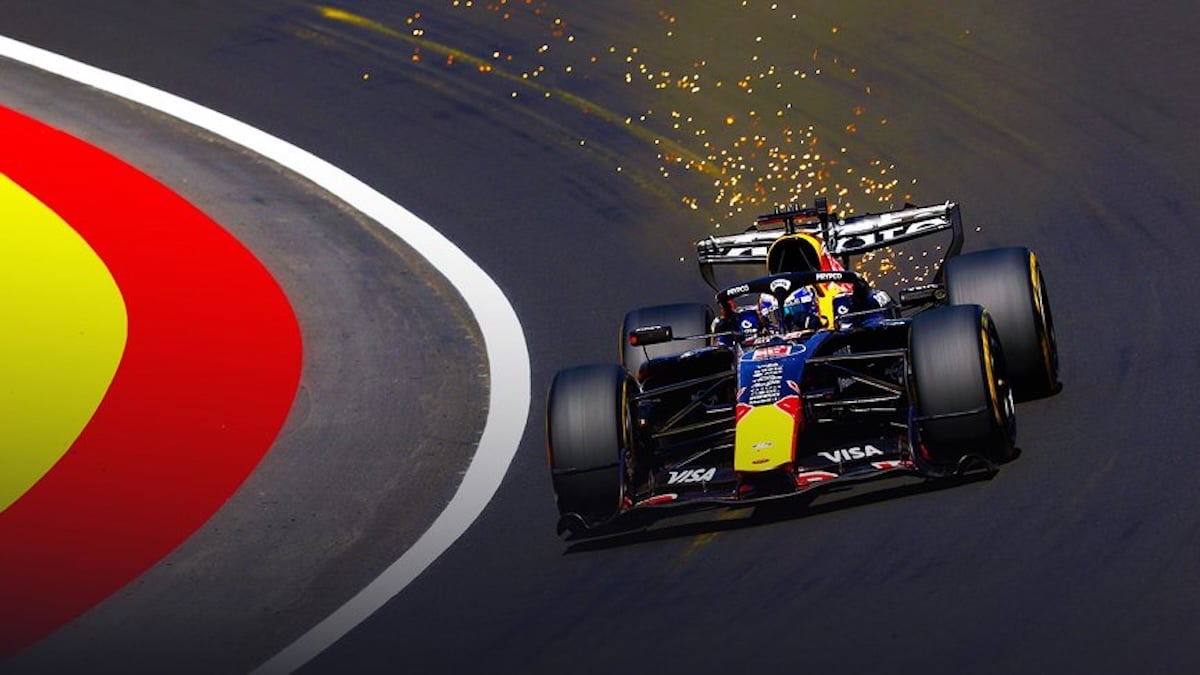
MADRID is preparing to host its inaugural F1 Grand Prix this weekend, as the pinnacle of motor racing comes to the Spanish capital.
While it’s the first time F1 has raced on the streets of the city, the Madring circuit will actually be the sixth track to hold the Spanish Grand Prix since the series first came to Spain in 1951 (and the second in Madrid).
So, where else in Spain has held an F1 race?
Pedralbes, Barcelona
Situated in the upmarket Barcelona suburb of the same name, the wide streets of Pedralbes were perfect for early F1.
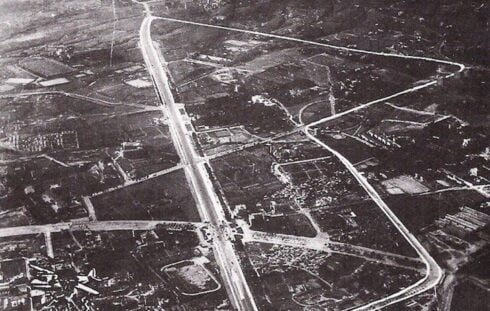
The track had already hosted races in the late 1940s, before the formation of the World Drivers Championship, and was popular with fans and drivers alike.
Following the sweeping safety reforms in the wake of the horrific 1955 Le Mans disaster, Pedralbes was retired from the calendar for safety reasons.
Jarama, Madrid
Pedralbes loss was Jarama’s gain, with F1 coming to the purpose-built circuit outside Madrid.
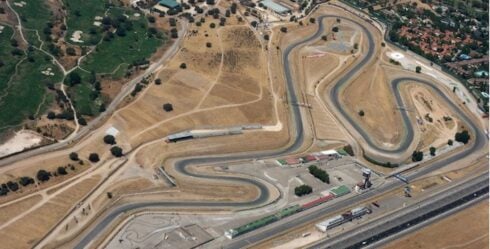
It was agreed that Jarama would host the Spanish Grand Prix in even-numbered years, starting in 1968.
The track, was designed by John Hugenholtz, who also created the legendary Suzuka circuit in Japan and Hockenheimring in Germany.
Most notably, Jarama was the site of Giles Villeneuve’s final victory, at the 1981 Spanish Grand Prix.
After that, the tight, twisty circuit would eventually be dropped from the calendar, when it was deemed too narrow for modern F1.
Montjuic, Barcelona
Whatever lessons motorsport thought it had learned from the events of Le Mans in 1955 were apparently quickly forgotten.
READ MORE: Spain’s Fernando Alonso hails British public ‘who know F1 like no other’ ahead of Silverstone
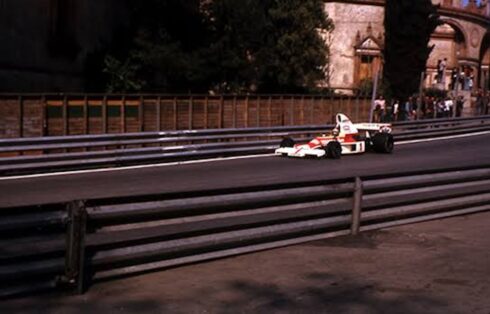
Returning to the streets of Barcelona in odd years between 1969-1975, F1 took to racing through the public roads of Montjuic park.
This had long been a popular venue for motorcycle racing, and it was decided that F1 was a natural next step.
This was exactly as dangerous as it sounded, and in at the 1975 edition of the race, a number of drivers, including world champion Emerson Fittipaldi, refused to participate.
After threats of legal action and rumours that the Guardia Civil were ready to seize any car that did not start the race, the event went ahead.
Unfortunately, tragedy struck when Rolf Stommelen’s Hill GH1 was launched into the crowd, killing 3 spectators and a fire marshall.
The race was abandoned and F1 would not return to Barcelona again until 1991.
Jerez, Andalucia
This time, F1 made the drive south to Andalucia.
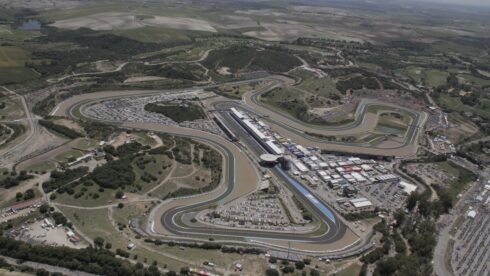
Initially trying to create a street circuit in Fuengirola for the 1984 and 1985 championship, the Andalucian government eventually constructed a purpose-built circuit at Jerez, near Seville.
Debuting in 1985, the track played host to 4 Spanish Grand Prix.
The remote location meant that turnout was often affected, and so organisers of the Spanish Grand Prix took the decision to leave Jerez and head back to Barcelona, where the brand new Circuito de Catalunya, in Montemelo, would host future rounds of the race.
Jerez was not done yet though. It hosted two rounds of the rotating European Grand Prix in 1994 and 1997.
It was in the 1997 race that Michael Schumacher achieved sporting infamy when he was disqualified for the entirety of the 1997 championship after attempting to ram championship rival Jacques Villeneuve off the track at the Curva Dry Sac.
That was not the only controversial incident (or ban) that took place that day. The Mayor of Jerez, Pedro Pacheco, stole a trophy intended to be presented by the President of Daimler-Benz and presented it himself.
Jerez was permanently banned as a host after this, and F1 has not returned since.
Montmelo, Barcelona
When most motor racing fans think of the Spanish Grand Prix, it is almost certainly the Circuit de Catalunya that they are thinking of.
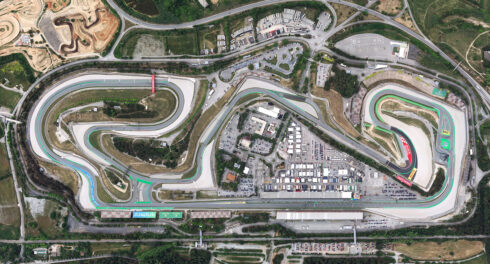
35 of the 55 Spanish Grands Prix have been hosted here.
Home to both the Spanish Grand Prix and, for years, pre-season testing, the track became synonymous with F1 in Spain.
The high cost of hosting a modern F1 race, believed to be as much as €26 million even for ‘traditional’ European tracks, meant that Barcelona was always vulnerable to a rival with deeper pockets.
When Madrid arrived with a 10-year deal, the Spanish Grand Prix name went with it.
Catalunya has not vanished entirely.
It keeps its place on the 2026 calendar under the new name of the Barcelona-Catalunya Grand Prix, and from next year it is set to alternate with the Belgian Grand Prix at Spa-Francorchamps.
Madring, Madrid
The latest track to host the race is the brand new Madring street circuit.
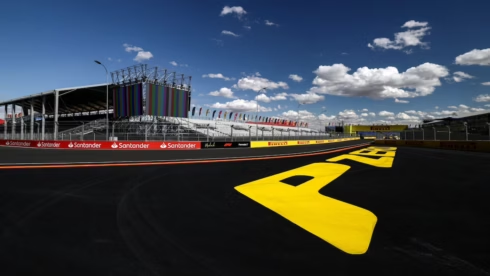
Located in the north of the city, a few minutes from Barajas airport, the 5.416km lap runs around the IFEMA exhibition centre and the Valdebebas district, mixing public roads with purpose-built sections in the style of Miami.
It has 22 corners, straights where cars are expected to reach 340 km/h, and room for 110,000 fans a day.
It also includes the ‘La Monumental’ corner, a long, steeply banked right-hander at turn 12 that is the longest banked curve in the sport.
It promises to be an exciting race – or at the very least an interrupted one.
Two days of Formula 3 testing at the circuit in late August produced 20 red flags, with 10 different drivers finding the walls.
Madrid local Carlos Sainz, who races for Williams and is an ambassador for the circuit, has described it as a very difficult track sitting somewhere between Jeddah, Baku and Macau, and expects a weekend of safety cars and red flags.
Honourable mention: Valencia street circuit
While the Valencia street circuit did host four European Grands Prix between 2008 and 2012, it never technically hosted a Spanish Grand Prix.
READ MORE: 11-year-old from Spain’s Mallorca becomes first female recruit at Mercedes F1 young driver programme
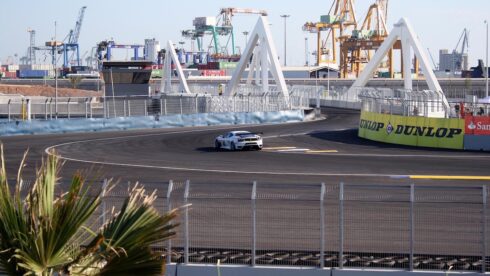
The layout around the port was quietly abandoned after 2012 and much of it now sits derelict.
Click here to read more Spain News from The Olive Press.