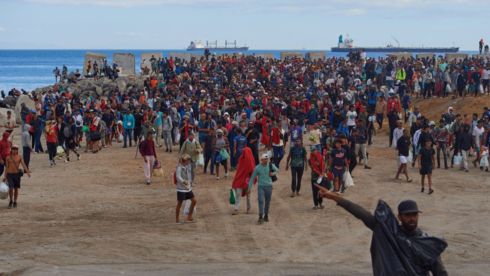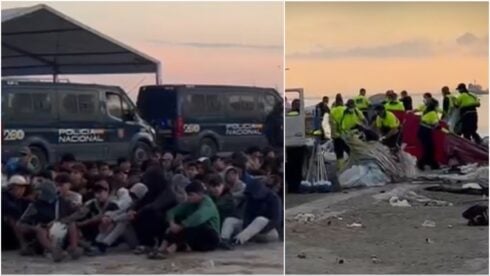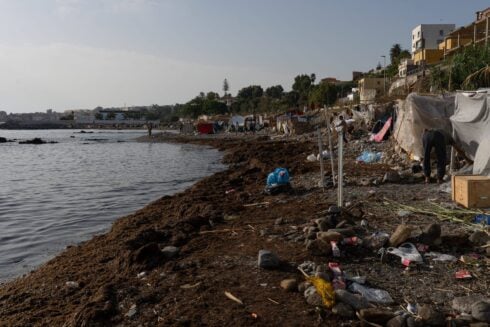

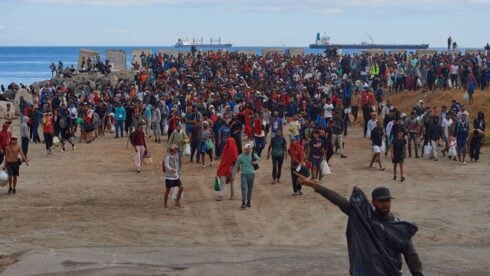
SPAIN’S political battle over the Ceuta migrant crisis erupted again this week after the government released 40 intelligence and security documents detailing what officials knew before more than 80,000 people crossed from Morocco into the Spanish enclave on July 30 and 31.
The documents showed that Spain’s CNI intelligence service warned officials on July 29 that social-media groups with a combined 180,000 followers were calling for people to enter Ceuta by land and sea the following day.
One message even said Moroccan security forces would be ‘busy’.
But the CNI itself acknowledged that it had not anticipated ‘the magnitude and nature’ of what followed, while Pedro Sanchez insisted that ‘nobody could anticipate’ the scale of the crisis.
The disclosures immediately became a fight over responsibility.
PP leader Alberto Nuñez Feijoo accused Sanchez of having ‘left his country unprotected’ and demanded elections, while the PP called for his resignation over what it described as a failure to act on the warnings.
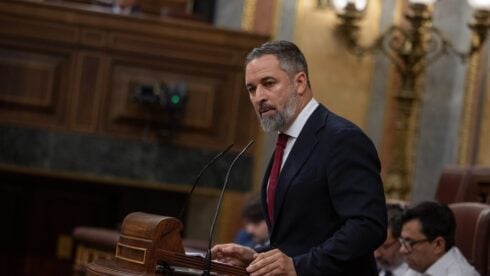
Vox leader Santiago Abascal went further, declaring that Spain’s presidency had effectively been ‘handed over to Morocco’.
Criticism also came from parties that often provide parliamentary support to the ghovernment: the PNV said officials continued claiming everything had been handled reasonably well when ‘everything was done reasonably badly’, while Junts spoke of ‘absolute chaos’.
The row then reached inside the administration itself.
The head of cabinet at the Government Delegation in Ceuta, Gonzalo Sanz, resigned after insisting that he had passed the CNI warnings upwards on July 29, contradicting his superior’s account.
Defence minister Margarita Robles nevertheless maintained that the Government remained united and that the sheer scale of the influx had been ‘unpredictable’.
The dispute has also spilled into Spain’s delicate relationship with Morocco.
Rabat rejected being made a ‘scapegoat’ for Spain’s domestic political battles and criticised what it called an ‘irrational and populist’ escalation, prompting the PP to reply that ‘nothing is above the defence of Spain’.
Meanwhile, Brussels has committed €114.7 million in emergency aid for Ceuta, including thermal cameras, floating surveillance buoys, underwater drones, reception facilities and assistance with returns, while border force Frontex and other EU agencies are preparing additional support.
King Felipe VI and Queen Letizia are also preparing their first official visit to Ceuta and Melilla, a trip the Royal Household says was planned before the crisis but which Sanchez has said will demonstrate the Spanish state’s ‘absolute commitment’ to the two cities.
Election countdown: Spain’s left begins positioning for 2027
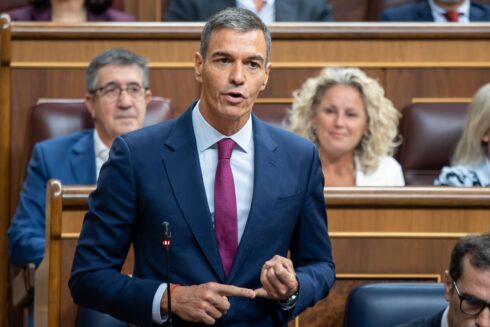
Spain’s left is beginning to move into election mode, with prime minister Pedro Sanchez confirming this week that he intends to seek another term as prime minister while the parties to the left of his PSOE begin deciding who will lead them and whether they can run together.
Sanchez said he still has the ‘desire and strength’ to stand again in the general election, which he confirmed will take place sometime in 2027.
He also said former socialist prime minister Jose Luis Rodriguez Zapatero would have a role in his campaign, despite Zapatero currently being investigated by Spain’s National Court.
The more complicated contest is developing to the PSOE’s left.
Podemos’ Irene Montero is formally launching her bid this weekend to lead a left-wing candidacy that she says should be ‘as broad as possible’.
Her campaign, presented under the slogan ‘Peace, home, work’, will focus on housing prices, reducing working hours, the cost of living, peace and climate change.
But there is an immediate obstacle to that call for unity: Podemos continues to veto Movimiento Sumar, despite the two having fought the 2023 general election together before Podemos later broke away from Sumar’s parliamentary group.
Sumar, meanwhile, is holding its own meeting as it prepares for 2027 without Yolanda Diaz, the deputy prime minister who has decided not to stand again as its candidate.
Movimiento Sumar, Izquierda Unida, Mas Madrid and the Comuns are reorganising their alliance and expect to choose a new candidate this autumn, while officially keeping the door open to Podemos.
For now, Sanchez is the clear PSOE candidate, Irene Montero is emerging as Podemos’s choice, while Sumar and its allies are still deciding who will lead them and whether they can build a broader electoral alliance.
Catalunya’s National Day: Independence rallies, rival protests and 18 arrests
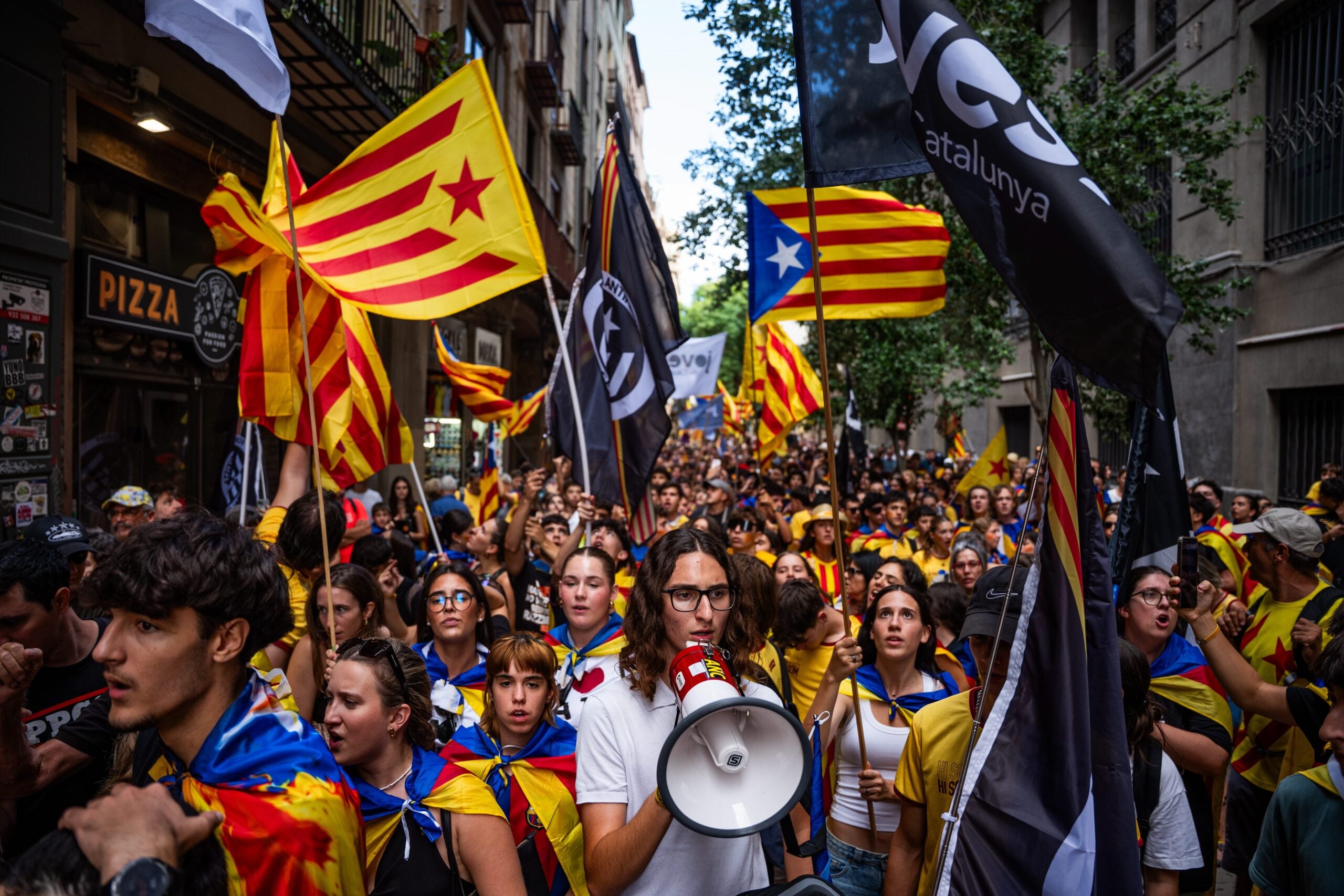
Eighteen people were arrested, ten of them minors, and nine Catalan police officers were injured as Barcelona’s streets became the meeting point of several thousands of people from competing political movements during Catalunya’s National Day.
They marched under this year’s slogan: “Hi soc. Hi som. Pel present i pel futur, independencia (I am here. We are here. For the present and the future, independence).”

This year, the day also brought Spanish ultra-nationalists and anti-fascist activists onto the streets.
Near the Verdaguer monument, the far-right Nucleo Nacional gathered behind the slogan ‘Catalan identity is Hispanic identity’, while around 1,000 anti-fascists assembled nearby.
Police lines separated the two camps as protesters tried to break through, with stones, bottles, fireworks and paint thrown towards officers.
The disorder later moved towards Passeig de Sant Joan and Arc de Triomf, where rubbish containers and street furniture were set ablaze.
The confrontation also exposed divisions within Catalan nationalism itself.
After the main independence march, anti-fascist activists headed towards Placa Catalunya, where Silvia Orriols, leader of the hard-right separatist Alianca Catalana, was among those present.
Riot police formed another line around her and stopped protesters reaching her.
The left-wing CUP, which held a separate march of its own, accused Alianca Catalana of trying to make the independence movement ‘exclusionary’, while also attacking the Socialist-led Catalan government for attempting to ‘pacify’ the conflict between Catalonia and Spain.
Click here to read more Spain News from The Olive Press.