

FOR Javier Cercas, books are born out of obsession.
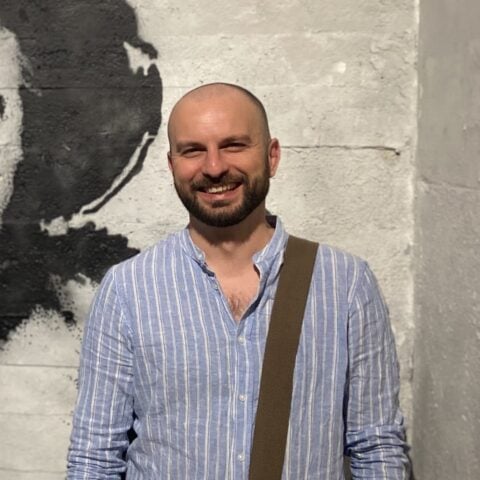
With dark, piercing eyes playing counterpoint to a warm smile, the acclaimed Spanish author has spent much of his career chasing questions that refuse to leave him alone – from the mysteries of Spain’s Civil War to those of memory and identity.
That is a blessing for any expat: reading his work offers an unparalleled understanding of modern Spain, as well as an insight into the struggles of millions of Spaniards as they emerged from Franco’s four-decade dictatorship.
Cercas’ latest book has remained true to his authorial calling. El periódico de la democracia (The Newspaper of Democracy) is a deeply personal account of the 50-year history of Spanish newspaper El País, told through Cercas’ own journey from teenage reader to contributor.
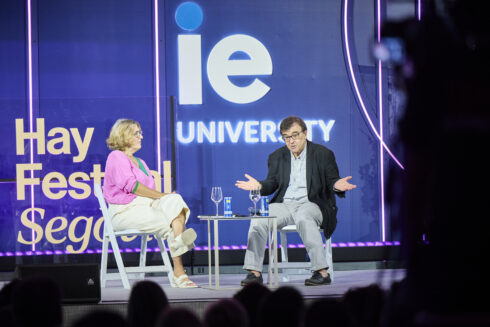
Tonight, Cercas will sit down with El País journalist and author Margaryta Yakovenko at Segovia’s Hay Festival – an annual international celebration of literature that brings writers, artists, journalists and thinkers from around the world to the historic city.
The event, marking 50 years of El País, will take place at the Teatro Juan Bravo at 8pm.
Just ahead of the festival, The Olive Press sat down exclusively with Cercas to discuss everything from his latest book to the rise of national populism, disinformation, immigration and his vision for the future of Europe.
Below, we reproduce our conversation, translated from Spanish and lightly edited for clarity, flow and brevity.
What is your earliest memory of reading El País?
The newspaper was founded in 1976, but I started reading it regularly around 1978 or 1979. In other words, the paper would have been two or three years old.
It was already a newspaper of the left, of progressivism. It was a serious newspaper, but at the same time it contained something that interested me enormously: literature, thought, reflection.
And literature in the true sense of the word.
So the impression it made on me was really quite extraordinary. In my book, I quote an American philosopher who said the unexpected success of a book is due to the chance conjunction of one person’s obsessions and the public needs of a society.
There were people who created the newspaper who were obsessed with the idea of making a different kind of newspaper: a modern newspaper, like the European ones, for a new era – the era that was opening up at that moment, after Franco’s death.
And there was obviously a need. This newspaper came along to meet a need: the need for a newspaper that openly supported democracy, that had no connection whatsoever with Francoism, that was progressive, pro-European, literary, at the forefront of intellectual thought, and so on.
And that was what El País represented at the time. For a 16-year-old boy like me, wow! It was extraordinary. My feeling, when I bought the newspaper, was that I had this little treasure in my hands every day, something I could read for hours.

I think the thread running through your work has always been, broadly speaking, a telling of Spain’s history through personal circumstances and events. Is your obsession an exploration of how Spain has changed over the past 50 years?
Yes, my books can undoubtedly be read that way. Absolutely.
Spain’s present doesn’t begin today. It begins with the Civil War and continues through the dictatorship and the Transition. My books can be read as a chronicle – in fact, they have been read that way – of the history of my country.
But this isn’t deliberate. It’s not that I’m trying to tell the history of Spain. It’s that when I tell a story, when I become obsessed with a question – because all my books begin with a question – the collective dimension appears, history appears.
Because we are individuals, but we are also part of a collective and part of a history. So history inevitably appears.
What worries you most about Spain and Europe today? Is it the rise of the far right, disinformation, or distrust in institutions?
I think you’ve isolated three fundamental things there that should concern all of us, and I think they’re inseparable.
Rather than the rise of the far right, I would talk about the rise of national populism. The far right is national populist, but there is national populism that isn’t always far right.
That’s what worries me.
When I talk about national populism, I’m talking about a political movement that emerged with the crisis of 2008.
It was a monumental crisis. We’ve forgotten about it, haven’t we? We’re still living with the consequences of that crisis.
Remember that it came close to destroying the euro. It was an earthquake across the entire West that came close to destroying the euro and, therefore, the European Union.
And the European Union is probably the most sensible thing we have invented in the world over the last… what, twenty-something years? It is also a major stabilising force for the world. We can see that particularly clearly now.
The 2008 crisis can only really be compared with the 1929 crash. Everyone agrees on that.
First, an economic crisis that turns into a political crisis.
The 1929 crisis led to the rise, or consolidation, of fascism and authoritarianism throughout the West. And it culminated in the Second World War.
That was the result. Fifty million dead.
National populism has caused an earthquake of comparable dimensions.
The 2008 crisis hasn’t brought about the return of fascism, but rather the birth of national populism. National populism contains elements of fascism. I don’t believe it is fascism. I think fascism was something else.
But national populism is, in a certain sense, even more dangerous than fascism because it presents itself as democratic.
READ MORE: Classic Shakespeare comedy showing at London’s Globe theatre gets a Spanish twist

It has different manifestations, but they share some very powerful elements and a very powerful common network.
The symbol of national populism is obviously Donald Trump in power. And Putin. And Xi Jinping.
Today, just as in the 1930s, this movement is – let’s put it gently – barely democratic. It has a profoundly authoritarian soul.
It is everywhere, and in Europe it is growing at an alarming rate.
And that movement is inseparable from disinformation, from social media.
Not social media itself, but our lack of control over social media.
Social media could be used for good things. In fact, it is used for good things. The problem is that we haven’t controlled it, and the problem is the perverse use that has been made of social media since its very beginning.
The major milestones of national populism have been preceded by storms of disinformation, by lies for which social media has been the perfect vehicle.
As in Ceuta. But also elsewhere: Donald Trump’s rise to power, Brexit, and so on.
All the major manifestations have been linked to disinformation, to systematic lying.
We have to remember – I mention this in the book – that the Gospel says, ‘the truth will set you free,’ which means that lies make people slaves.
And that is what national populism wants, just like every form of authoritarianism: slaves, submissive people.
How would you link the rise of national populism to the growing distrust in institutions?
Well, they are strongly connected. In fact, what national populism wants is to discredit institutions. Or rather, to undermine democratic institutions.
There is one element that acts as the fundamental fuel of national populism right now, and it is immigration. Right now, in Europe, immigration is the fundamental fuel.
There are several things that unite the various national populist movements and the far right across the world: a demonising view of immigration, often complemented by Islamophobia.
We want rich immigrants. What we don’t want are poor immigrants.
And I think the great project we have ahead of us – the most necessary, most ambitious political project of the 21st century – is the unification of Europe. Not the European Union – the unification of Europe.
The creation of a truly united Europe. In other words, a federal Europe. That is what I aspire to: the United States of Europe, as Victor Hugo aspired to in the 19th century.
That is the most ambitious, most necessary, most urgent project. And national populism is putting it at risk. The main enemy of national populism is a united Europe. There’s no doubt about that.
A united Europe is Trump’s and Putin’s main enemy, and the main enemy of their allies in Europe. Because they know that the European Union is the great bastion of democracy that remains in the world today. That is a fact.
So we Europeans have to decide whether we want to continue being the great bastion of democracy or whether we don’t. And that is what is at stake right now.
What national populism wants is the dismantling of Europe.
Click here to read more La Cultura News from The Olive Press.