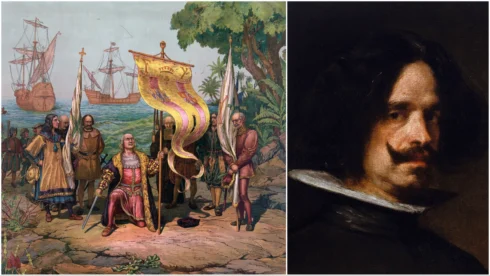


THE Valencian Community celebrates a major historical event this Friday with the Valencia Day bank holiday.
It commemorates the conquest of the city by King Jaume I of Aragon in 1238 who removed the Muslim occupiers of the city of Balansiya- renamed Valencia.
The day brings together history, politics, folklore, and fireworks.
In addition, this year sees the 750th anniversary of Jaume’s death who is viewed as the founder of the Kingdom of Valencia.
On October 9, 1238, Jaume entered the city after a long siege and the Muslim king Zayyan surrendered.
The Kingdom of Valencia was then founded within the Crown of Aragon.
It soon developed its own legal code, known as the Fueros de Valencia with its own currency and political identity.
The importance of what happened in 1238 was acknowledged early on and by the 14th century, October 9 was marked with civic and religious ceremonies.
These early commemorations underlined the symbolic role of the conquest as a moment of foundation.
Down the centuries, civic processions and military parades gave the date an official presence.
When King Philip V abolished the Fueros de Valencia in 1707 after the War of Spanish Succession, the day became noted for resistance and remembering lost freedoms.
In the 20th century, especially during Spain’s transition to democracy, October 9 regained public importance.
In 1976, Valencians celebrated it as a day of regional identity, and in 1982 the new Statute of Autonomy for the country’s regions made it the official ‘Day of the Valencian Community’.
The day in Valencia City is marked by ceremonies that combine civic pride, history, and spectacle.
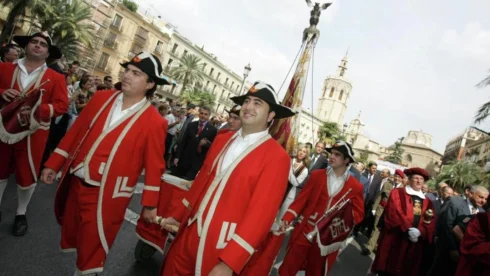
The most symbolic act is the Civic Procession of the Senyera, when the city’s flag is lowered from the Town Hall and carried through the streets without bowing to any authority.
October 9 also includes religious tributes and a Moors and Christians parade as a representation of what happened in 1238.
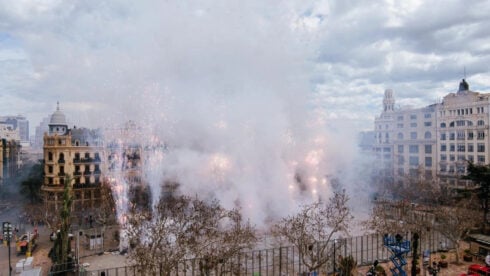
Fireworks and concerts are also part of this Friday’s schedule.
There is also a romantic element to October 9 as it is the feast day of Saint Dionysius, a martyr from the third century.
He is seen as as the patron saint of Valencian lovers, giving the holiday a second identity alongside its civic meaning.
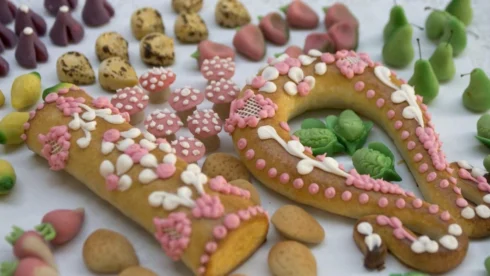
A big tradition is the Mocadora where couples exchange a symbolic gift: a silk or cotton scarf (mocador) which is tied around small marzipan sweets shaped like fruits, vegetables, and firecrackers.
The fruits recall the fertility of Valencia’s farms and the firecracker shapes are a nod back to an 18th-century ban on gunpowder, when pastry chefs humorously turned fireworks into sweets.
Click here to read more Valencia News from The Olive Press.