
MALAGA reservoirs now hold enough water to supply the whole province for more than two years, easing shortage concerns following years of drought.
Water levels at seven key reservoirs across the Costa del Sol have reached an average 80% of capacity after the summer, according to data from Andalucia’s water watchdog SAIH Hidrosur.
The figure is more than double that of the same period last year, quelling fears of drought after a water shortage crisis in 2024 forced authorities to ration supplies for months.
Malaga province currently has 494 billion litres of water in storage, compared with 262 billion litres at the same time last year.
Based on normal annual demand of around 200 billion litres, the current reserves are enough to supply the province for more than two and a half years even if there is no further rainfall.
The biggest reservoir system is the Guadalhorce-Guadalteba complex, which holds 255 billion litres and is at more than 91% of capacity.
It is the main source of drinking water for Malaga city and also supplies irrigation in the Guadalhorce Valley. At current levels, it could supply the area for more than four years on its own.
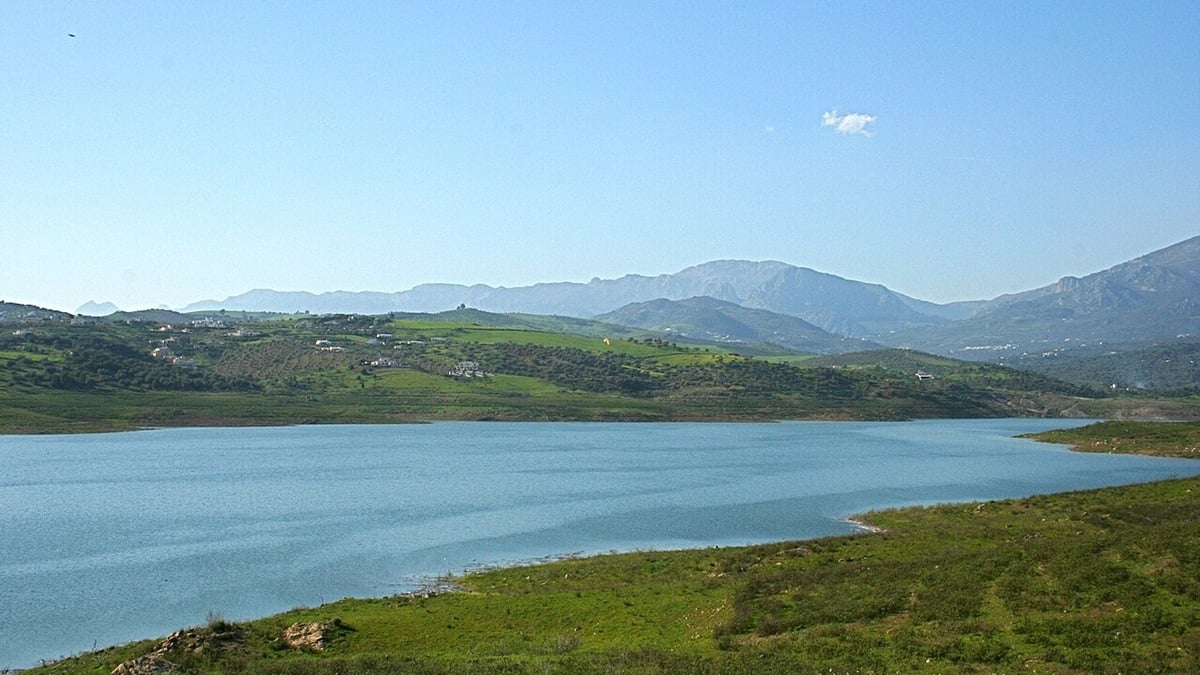
Further east, the La Viñuela reservoir has made a dramatic recovery after being close to critically low levels last year.
The reservoir now holds 141 billion litres, or 85% of its capacity, providing around four years of water for the Axarquia.
It supplies the area’s population as well as the region’s important tropical fruit farms, including its avocado and mango growers.
READ MORE: Malaga launches water watchdog after a summer of Costa del Sol beaches plagued by bacteria closures
On the western Costa del Sol, the La Concepcion reservoir near Marbella is holding 33 billion litres, or 53% of capacity.
Unlike most of the province’s reservoirs, its levels are slightly lower than at the same point last year, reflecting the huge demand for water along the coast during the summer.
The reservoir has a capacity of just 62 billion litres and provides water for Marbella and the surrounding Costa del Sol municipalities, with a desalination plant in Marbella helping to meet demand during periods of high consumption.
The Conde de Guadalhorce reservoir, near the Desfiladero de los Gaitanes, is currently 67% full, with 44 billion litres in storage.
It forms part of the system supplying the Malaga metropolitan area and provides almost two years of water at current levels.
Closer to Malaga city, the Limonero reservoir on the Guadalmedina river is 64% full, holding 14 billion litres.
It acts both as a reserve for the capital’s water supply and as an important flood-control barrier, with its current reserves equivalent to around six months of Malaga’s consumption.
READ MORE: How quickly do solar panels and battery storage pay for themselves in Spain?
The Casasola reservoir, near Almogia, is the least full of the province’s main reservoirs, at around 32% of capacity.
However, it was designed primarily to protect the Guadalhorce Valley from flooding, meaning it is deliberately kept well below capacity to leave room for heavy autumn rains.
Despite the healthy reserves, officials remain cautious about the future because of the volatility of the Mediterranean climate.
The recovery has also not eliminated the need for long-term investment, with a €201.5 million desalination plant planned for the Axarquia to reduce the area’s dependence on rainfall.
The recovery marks a dramatic turnaround from the water crisis that gripped Malaga province in 2023 and 2024.
Years of below-average rainfall left reservoirs across the province at critically low levels, with La Viñuela among the worst affected.
By early 2024, authorities had imposed strict restrictions on water use across the Costa del Sol, including a daily limit of 160 litres per person.
The situation became particularly acute during the summer, when demand soared as millions of tourists arrived on the coast while little rain was forecast.
Restrictions were gradually eased after heavy rainfall began replenishing reservoirs in late 2024 and early 2025, bringing an end to the most severe phase of the drought.
Click here to read more Costa Del Sol News from The Olive Press.