THREE Kings Day – or ‘Reyes’ in Spanish – is known to Anglosaxons as ‘the Epiphany’.
It falls on January 6, and while it’s no great shakes to most expats, it’s actually Spain’s Christmas Day, and the one for giving and receiving presents.
But it also has a wider significance in Spain, as Michael Coy has found out, for music and the Ibex, now extinct in the Pyrenees.
MANUEL DE FALLA – His dead body brought back to Spain on the Reyes 1947 – against his wishes
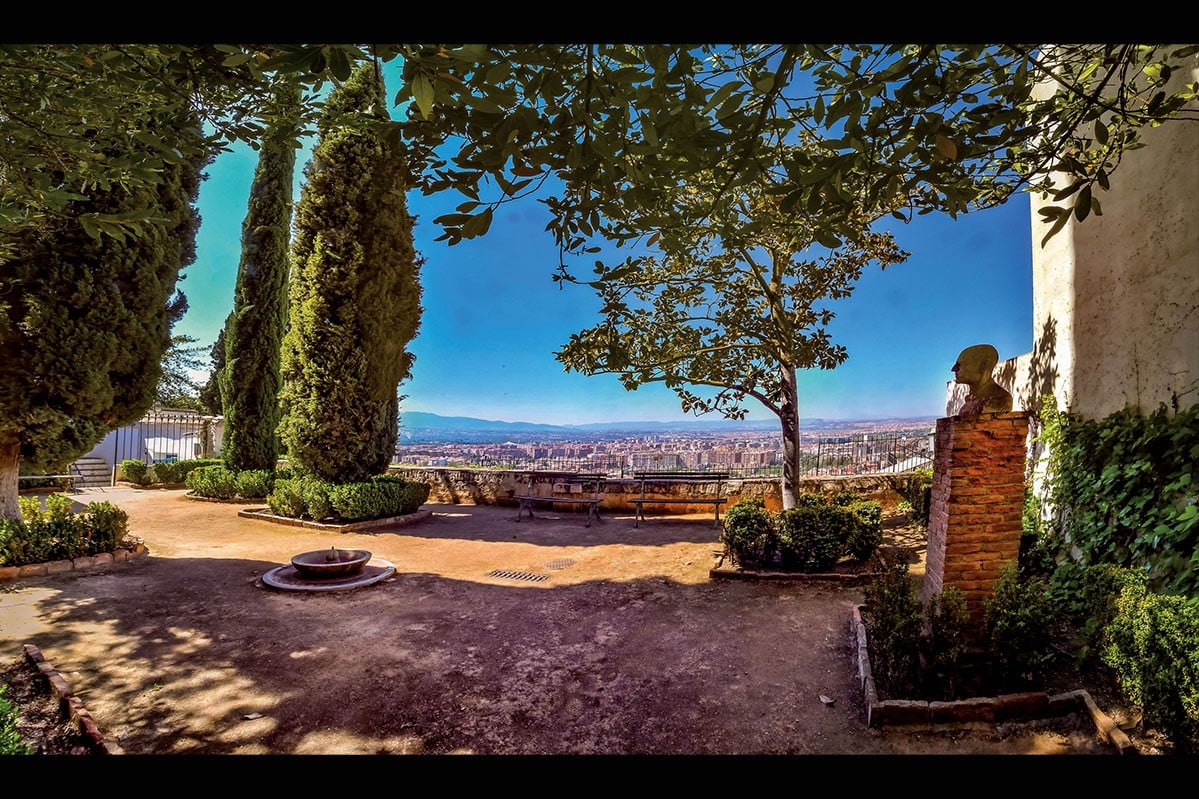
A ‘carmen’ is a special thing, usually only found in Granada.
It’s a walled garden, and it typically contains a fountain, a cypress tree and beautifully-scented shrubs, such as jasmine and what Spaniards call ‘the Lady of the Night’ (damas de noche).
There are few better examples than the one of Spain’s famous composer Manuel de Falla, where he composed many orchestral pieces.
Among his many ballets, operas and zarzuelas, one of his best-known works is ‘Nights in the Gardens of Spain’ (completed 1916) and inspired by his garden.
It was in Granada that Manuel, born in Cadiz in 1876, met and befriended Spain’s most cherished poet and playwright, Federico García Lorca.
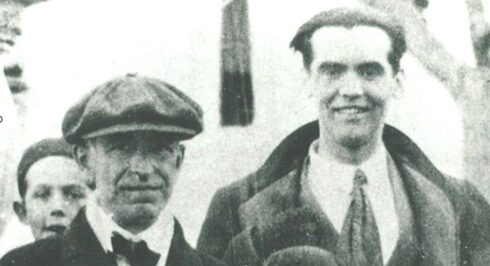
The two men shared a love of flamenco music, finding it capable of immense technical sophistication, and also excellent for expressing powerful emotions.
But because the gypsies of Andalucía were regarded as low-lifes and criminals, it was sidelined and discouraged… and the gypsies were marginalised to live in the Granada suburb of Sacromonte, where they dug caves into the hillside. Many are still putting on excellent flamenco shows to this day.
Wanting to change flamenco’s fortunes, it was in 1927, that Manuel and Federico hired the Alhambra Palace Hotel and staged a flamenco show for Granada’s upper class.
The concert has gone down in gypsy lore as the day when flamenco went ‘legit’, and started being taken seriously as art.
Sadly though the 1930s in Spain were a turbulent time, pockmarked by a savage civil war and after dictator Franco won, Manuel moved to Argentina in 1939.
It was a big blow to lose such a talent for political reasons and Franco went on to offer him a knighthood and a large pension if he would return, but he refused – it was Franco’s men who had murdered his friend Lorca, after all, in 1936.
When he died in late 1946, Spain tried to exploit his death in order (as the government supposed) to reflect glory on Franco.
The problem was in his will he expressed strictly his will to be buried in Argentina, but the Spanish Embassy somehow gained possession of his remains.
And so on January 6, 1947, Spain’s newsreel cameras were waiting in Santa Cruz, Tenerife, to ‘welcome’ the coffin of De Falla as it arrived back on Spanish soil.
It’s a shame Lorca wasn’t still alive when that ship arrived, to write a satire about the desecration of a great Andalucian’s memory.
To learn more you can visit the De Falla carmen in Granada (Paseo de los Mártires) which is set to be re-opening to the public after renovation work this month.
Its visiting hours (until May) are 10am to 5pm, Tuesday to Saturday. Sunday the house closes at 3pm. From June to September, the opening hours are longer.
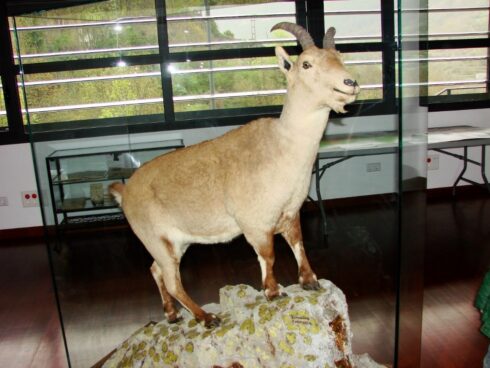
CELIA – the last of the Pyrenees mountain goats, who died on the Reyes in 2000
While somehow the Ibex, or Spanish mountain goat, is still alive around some parts of Spain, unfortunately, the separate Pyrenean Ibex became extinct in the year 2000, when the last surviving goat – named Celia – died.
There are various theories as to how the ibex got to Spain.
One is that they slowly migrated here from southern Russia, in prehistoric times. Another is that the Romans brought them as farm animals, but some escaped – and thrived in the warm Spanish mountains, free of human interference.
Ibex moult, just like domestic cats and dogs. The female can be distinguished from the male because her fur is always brown (males are often black) and her horns are short and straight.
Though the Pyrenean strain of the ibex was plentiful in the Middle Ages, its numbers dwindled sharply after the Napoleonic period.
Experts say there are two causes of the demise – more use of domestic goats (forcing the ibex to compete for food) and poaching.
So it is sad then that the last-ever Pyrenean Ibex, Celia, who lived in the Ordesa Valley of the Pyrenees died on January 6, 2000, when a tree fell on her.
Click here to read more La Cultura News from The Olive Press.